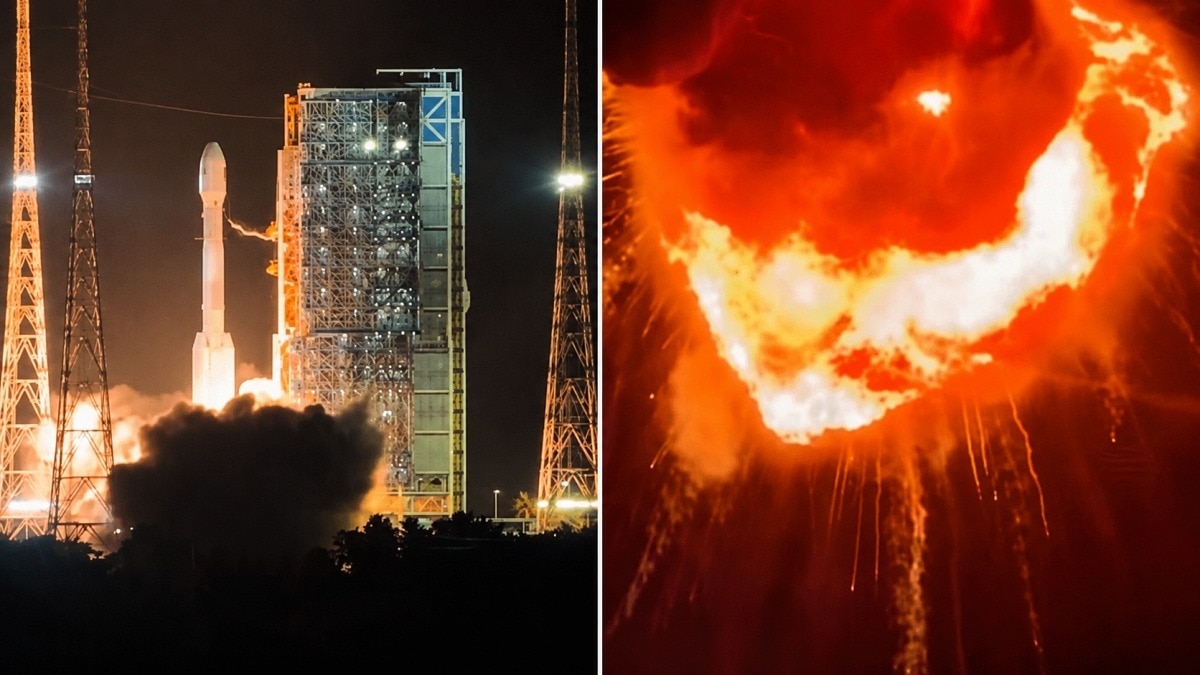
China's space ambitions suffered a setback as the Long March 7A rocket exploded shortly after takeoff. Experts are diving deep into the technical anomalies that led to this catastrophic failure.
Key Takeaways
- The Long March 7A rocket suffered a catastrophic explosion shortly after launch.
- The failure threatens to delay China's aggressive timeline for lunar and planetary missions.
- Preliminary assessments suggest propulsion instability or structural failure.
The Long March 7A, often described as the workhorse of China's space logistics, met with a disastrous end during its most recent launch attempt. Moments after clearing the tower, the vehicle disintegrated in a massive fireball, resulting in the total loss of the payload and the launch vehicle.
Analyzing the Technical Failure
Aerospace engineers suggest that the explosion may have been triggered by a malfunction in the liquid-propellant system or a failure in the second-stage ignition sequence. The transition between atmospheric layers creates immense mechanical stress; any minor flaw in the rocket's hull or fuel valves can lead to a rapid decompression and subsequent explosion. Chinese space authorities are currently scrubbing through gigabytes of flight data to pinpoint the exact second of failure.
Why This Matters
BozokMedia analysis shows that this incident is a significant blow to the perceived reliability of the Long March series. As China competes with SpaceX and NASA in the race for lunar dominance, the reliability of its 'workhorse' rockets is paramount. A systemic flaw in the 7A variant could force a complete redesign of several upcoming missions.
"In the realm of orbital mechanics, there is no room for error; a single faulty valve can turn a multi-million dollar asset into space debris in seconds."
Historical Background
The Long March family of rockets has been the backbone of the China National Space Administration (CNSA) for decades. The 7A variant was specifically engineered to optimize payload delivery to Low Earth Orbit (LEO) while reducing operational costs. While China has maintained a high launch cadence, this failure underscores the inherent volatility of chemical propulsion.
Frequently Asked Questions
Q1: Were there any casualties in the explosion?
A: No, the launch was uncrewed, and the explosion occurred at an altitude that prevented ground casualties.
Q2: Will this stop China's moon missions?
A: It is unlikely to stop them entirely, but it will likely cause significant delays for safety re-evaluations.