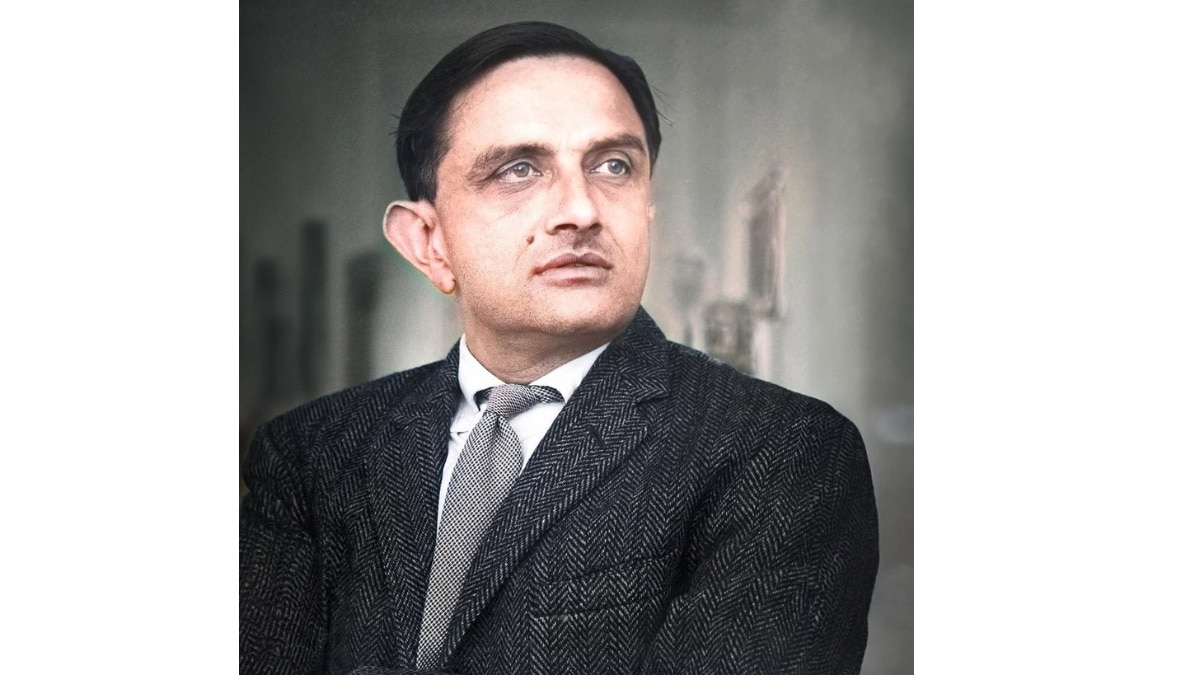
More than just the father of the Indian space program, Dr. Vikram Sarabhai was a master institution-builder who founded IIM Ahmedabad and paved the way for ISRO. Discover the legacy of a true polymath.
Key Takeaways
- Founded INCOSPAR, the precursor to the Indian Space Research Organisation (ISRO).
- Established world-class institutions like IIM Ahmedabad and ATIRA.
- Pioneered the Satellite Instructional Television Experiment (SITE) for rural education.
Vikram Sarabhai is remembered today not merely as the father of the Indian space program, but as a prolific institution-creator and enabler. His legacy transcends the launch of rockets; it lies in the creation of 'knowledge temples' that continue to shape modern India's intellectual and industrial landscape.
A Visionary Beyond Space
Sarabhai's genius lay in his ability to identify systemic gaps and fill them with imaginative solutions. Long before focusing on the stars, he addressed industrial needs by founding the Ahmedabad Textile Industries Research Association (ATIRA) to modernize the textile sector. His commitment to excellence led to the birth of the Indian Institute of Management (IIM), Ahmedabad, transforming management education in the country.
| Domain | Institution/Project | Primary Objective |
|---|---|---|
| Space | INCOSPAR/ISRO | Space Research & Satellite Development |
| Management | IIM Ahmedabad | Elite Management Education |
| Industry | ATIRA | Textile Industrial Research |
Democratizing Technology via Space
In 1962, Sarabhai became the first chairman of the Indian National Committee for Space Research (INCOSPAR). His core philosophy was that technology must serve the common man. This belief manifested in the Satellite Instructional Television Experiment (SITE), which functioned as one of the world's first large-scale cable TV networks, bringing education to the masses.
Why This Matters (BozokMedia analysis)
BozokMedia analysis shows that Sarabhai’s approach was uniquely holistic. While other nations viewed space as a Cold War race for prestige, Sarabhai viewed it as a tool for social development. By integrating satellite communication with rural education, he laid the groundwork for what we now call the 'Information Age' in India.
Vikram Sarabhai didn't just build rockets; he built the intellectual infrastructure that allowed India to dream of the moon and Mars.
Though the launch of India's first satellite, Aryabhata, and the full implementation of SITE occurred after his untimely passing, these milestones were the direct result of his relentless drive. He was a rare individual who could scale a dream into a national program.
Frequently Asked Questions
Q1: What were the key institutions founded by Vikram Sarabhai?
A: He was instrumental in founding ISRO (via INCOSPAR), IIM Ahmedabad, and the Ahmedabad Textile Industries Research Association (ATIRA).
Q2: What was the significance of the SITE project?
A: The Satellite Instructional Television Experiment (SITE) was a groundbreaking initiative to use satellite technology to provide educational programming to rural Indian villages.