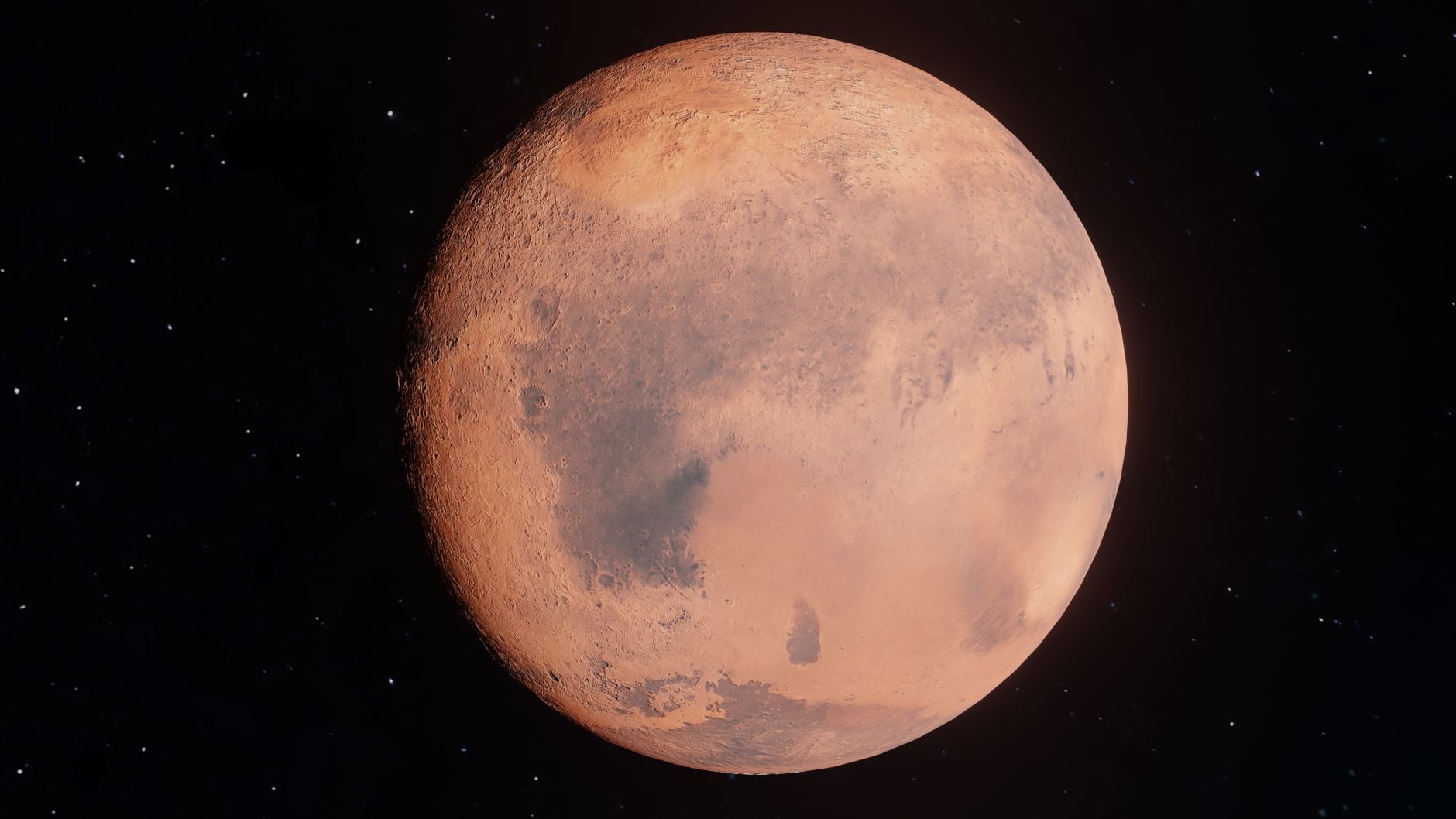
A dark green Martian meteorite found in Algeria has successfully filled a massive chronological gap in the history of Martian shergottites, dating back 1.273 billion years.
Key Takeaways
- The NWA 13441 meteorite fills a critical gap in the shergottite timeline between 600 million and 2.4 billion years ago.
- Dated to approximately 1.273 billion years, it provides new insights into Martian volcanic activity.
- The rock's chemical composition suggests complex interactions within the Martian mantle.
A significant breakthrough in planetary science has occurred with the confirmation of the age of a dark green Martian rock, known as NWA 13441. Found near Rafsa, Algeria, in 2019, this meteorite has been dated to 1.273 billion years, effectively filling a massive historical void in the study of Martian shergottites.
Bridging the Geological Gap
For decades, the collection of Martian meteorites has presented a puzzling timeline. Most shergottites—the most common class of Martian meteorites—were dated to less than 600 million years ago, with a few exceptions dating back 2.4 billion years. This left a massive 'blank space' in our understanding of Mars's middle history. NWA 13441 sits precisely in that gap, offering a rare glimpse into the planet's past.
Why This Matters
BozokMedia analysis shows that this discovery is not merely about adding a date to a chart; it is about understanding the internal dynamics of another world. The meteorite’s unique chemical signature—specifically its iron-to-manganese ratios and oxygen isotopes—confirms its Martian origin and suggests that the planet's mantle may have had undifferentiated reservoirs that we are only just beginning to sample.
Filling a gap in the geological record does not complete history, but it exposes how much of our current understanding is shaped by a very selective sample set.
The rock shows evidence of extreme conditions, including melt glass and mineral deformation caused by shock pressures of 28 to 34 gigapascals. This indicates a violent ejection event that sent the rock hurtling from Mars toward Earth.
The Science of Dating
To determine the age, researchers utilized samarium-neodymium isotope dating. By measuring the decay of samarium-147 into neodymium-143, the team was able to pinpoint when the minerals within the rock first crystallized from Martian magma. It is important to note that this date represents the rock's birth on Mars, not its arrival on Earth.
Frequently Asked Questions
1. What are shergottites?
Shergottites are the most abundant type of Martian meteorite found on Earth, characterized by their basaltic composition.
2. Why was there a gap in the timeline?
The gap existed because we hadn't yet found a shergottite that crystallized during that specific billion-year interval, not necessarily because Mars was inactive.