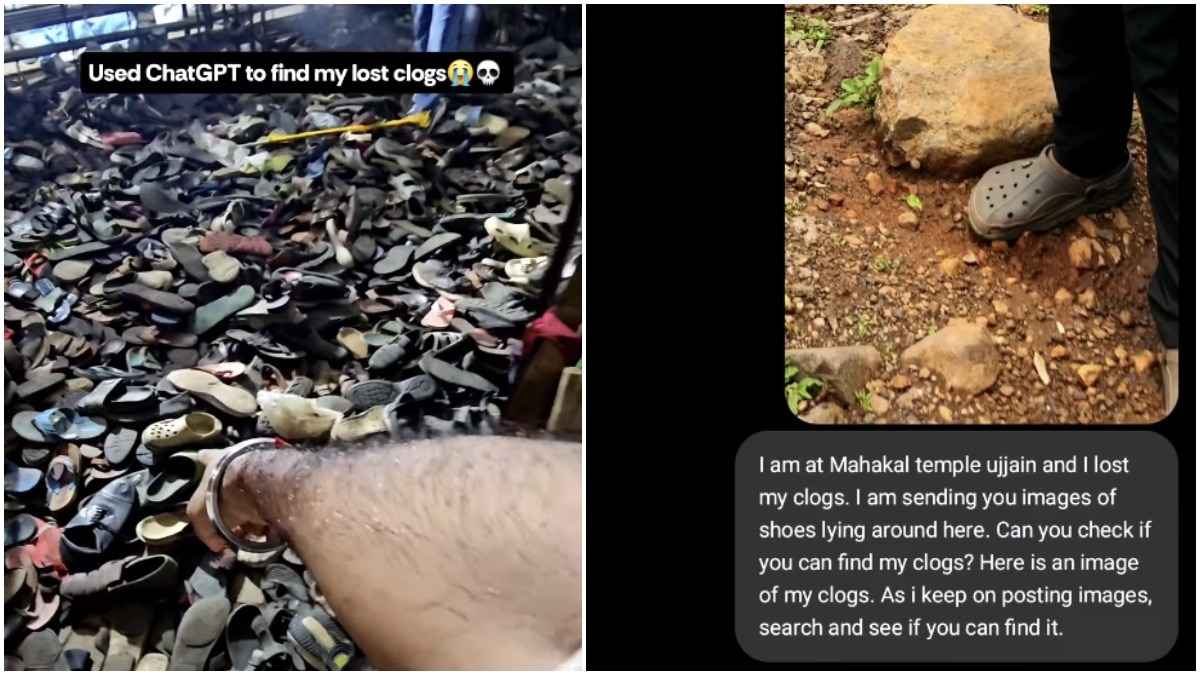
After misplacing his clogs outside Ujjain's Mahakal Temple, a Goa resident turned to ChatGPT, uploading photos of crowded shoe racks to pinpoint his pair, sparking amusement and a fresh look at everyday AI applications.
Key Takeaways
- A Goa man named Shubhang Borkar used AI to locate his missing clogs at a crowded temple shoe rack.
- ChatGPT analyzed multiple images and identified the correct pair among dozens of shoes.
- The stunt highlighted a novel, everyday use case for artificial intelligence.
Incident Overview
While visiting the Mahakal Temple in Ujjain, Shubhang Borkar misplaced his clogs among a sea of footwear left outside the shrine. He recorded the shoe racks, uploaded the footage and a reference picture of his clogs to ChatGPT, asking the model to locate the exact pair.
How the AI Search Worked
The AI scanned each frame, comparing visual features against the reference image. After processing several shots, ChatGPT pointed Borkar to the right‑hand side of the rack, midway down the pile, indicating that the pair matched his lost clogs.
Social Media Reaction
The video quickly went viral, with users amused by the unconventional request. Many commented that they had never imagined using ChatGPT for such a mundane task, while others joked about simply picking the most attractive shoes instead.
Historical Background
Since 2020, AI models have expanded from language generation to robust image‑recognition capabilities. This incident showcases how those advances are now permeating everyday life, turning ordinary problems into showcases for cutting‑edge technology.
Why This Matters
BozokMedia analysis shows that viral, low‑stakes AI experiments like this boost public confidence in machine‑learning tools, paving the way for broader adoption in consumer‑grade services.
"When AI proves useful in the smallest of tasks, it reshapes public perception and accelerates trust in emerging technologies," notes tech analyst Raj Patel.
Frequently Asked Questions
- Can other AI platforms perform similar shoe‑identification tasks? Yes, services like Google Lens and Microsoft Azure Vision also offer image‑matching features.
- Are there privacy concerns when uploading personal photos to AI? Users should avoid sharing sensitive information, as uploaded images may be stored or used to improve model performance.