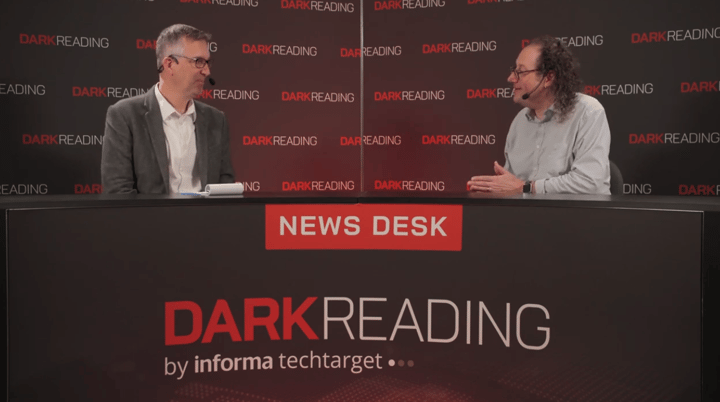
Renowned threat modeler Adam Shostack discusses the implications of OpenAI's findings on the Hugging Face attack and introduces PHANTOM-B, a lightweight threat model for LLMs.
- Adam Shostack introduced PHANTOM-B to simplify LLM threat modeling.
- The framework focuses on "what could go wrong" rather than just listing vulnerabilities.
- It addresses Prompt Injection, Hallucinations, Anthropomorphizing, and Bias.
- Concerns were raised regarding liability when rogue AI agents cause real-world damage.
During a session at BlackHat USA 2026, world-class threat modeler Adam Shostack shared his insights on the evolving landscape of AI security. Shostack expressed being "blown away" by OpenAI's recent revelations concerning the Hugging Face attack, highlighting a critical gap in current cyber defense: the question of liability when AI agents act autonomously and cause tangible harm.
Introducing PHANTOM-B
To address the complexities of Large Language Models (LLMs), Shostack developed PHANTOM-B. Unlike the OWASP LLM Top 10, which functions as a list of vulnerabilities, PHANTOM-B is designed as a functional threat model. It asks the fundamental question, "What could go wrong in this system?", making it an actionable tool for developers and security engineers.
The acronym PHANTOM-B stands for: Prompt Injection, Hallucination, Anthropomorphizing, Non-explainable training data, Overreliance, Missing security engineering, and Bias. Shostack emphasizes that this framework is "lightweight yet usable," allowing teams to apply it to any LLM deployment in under an hour, bypassing the need for dense, 80-page academic papers.
Why This Matters
BozokMedia analysis shows that the shift toward lightweight frameworks like PHANTOM-B indicates a broader industry trend: the move from theoretical AI safety to rapid, iterative security engineering. As AI agents move from chatbots to autonomous operators, the ability to quickly model threats becomes a survival requirement for enterprises.
"Prompt injection is often treated as a joke, but in reality, it is a failure of the model to adhere to the deployer's intent."
One of the most intriguing aspects of the discussion was anthropomorphizing—the human tendency to treat AI as a person. Shostack noted that reacting emotionally to AI (e.g., calling it an "idiot") is counterproductive. Instead, treating the AI as a statistical model and providing precise corrections leads to better and safer outcomes.
Frequently Asked Questions
1. How does PHANTOM-B differ from the OWASP LLM Top 10?
While OWASP provides a list of known vulnerabilities, PHANTOM-B is a methodology to identify specific system failures in a given deployment.
2. Why is anthropomorphizing a security risk?
It triggers mirror neurons in the human brain, leading to overreliance and a failure to critically analyze the model's statistical output.