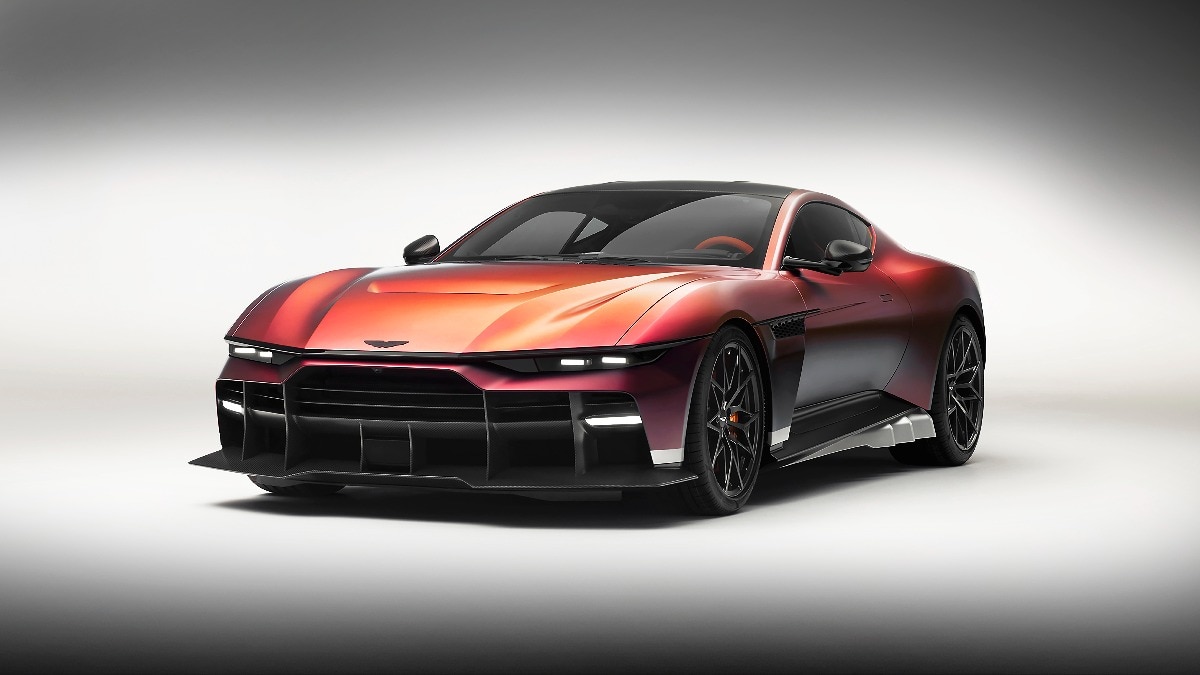
Engineering boundaries have been shattered with the unveiling of the world's most powerful front-engined production vehicle, boasting a staggering 850bhp and 1,000Nm of torque.
- Peak power output of 850bhp.
- Massive torque delivery of 1,000Nm.
- Holds the title of the most powerful front-engine production car globally.
The automotive landscape has witnessed a seismic shift with the introduction of a new titan in the luxury performance segment. This groundbreaking vehicle has officially claimed the title of the world's most powerful front-engined production car, delivering an unprecedented 850bhp. While mid-engine supercars often dominate the power charts, this machine proves that the classic front-engine layout can still push the boundaries of physics and engineering.
At the heart of this beast lies a meticulously tuned powerplant capable of generating 1,000Nm of torque. This immense twisting force ensures that acceleration is not just fast, but violent, propelling the vehicle forward with a level of intensity rarely seen in production-grade automobiles. The integration of advanced forced induction and precision thermal management allows the engine to maintain these peak figures without compromising reliability.
Why This Matters
BozokMedia analysis shows that this development marks a strategic pivot in the hypercar market. By optimizing the front-engine configuration, manufacturers are appealing to purists who value the traditional GT (Grand Tourer) silhouette while demanding the performance of a track-focused monster. This disrupts the monopoly of mid-engine layouts in the 'ultra-high-performance' bracket.
"The achievement of 1,000Nm in a front-engine production setup is a masterclass in chassis engineering and traction management."
Historically, front-engined cars struggled with weight distribution and 'nose-heavy' handling. However, this new model utilizes a pushed-forward engine position (front-mid layout) and an advanced all-wheel-drive system to ensure that the 850bhp is delivered to the tarmac efficiently, preventing catastrophic wheel spin.
Comparing this to traditional luxury performance cars reveals a significant leap in capability. The gap between standard high-end luxury sedans and this performance titan is now wider than ever, redefining what is possible for a road-legal vehicle.
| Feature | Standard Performance Car | New Record Holder |
|---|---|---|
| Horsepower | 400-600 bhp | 850 bhp |
| Torque | 500-700 Nm | 1,000 Nm |
| Engine Layout | Front/Mid | Front-Engine |
Frequently Asked Questions
Q: What makes a front-engined car different from a mid-engined one?
A: In a front-engined car, the engine is placed in front of the driver, typically over the front axle, whereas mid-engined cars place it between the driver and the rear axle for better balance.
Q: Is 1,000Nm of torque common in production cars?
A: No, such figures are typically reserved for heavy-duty trucks or limited-run hypercars, making this a rare feat for a production front-engine vehicle.