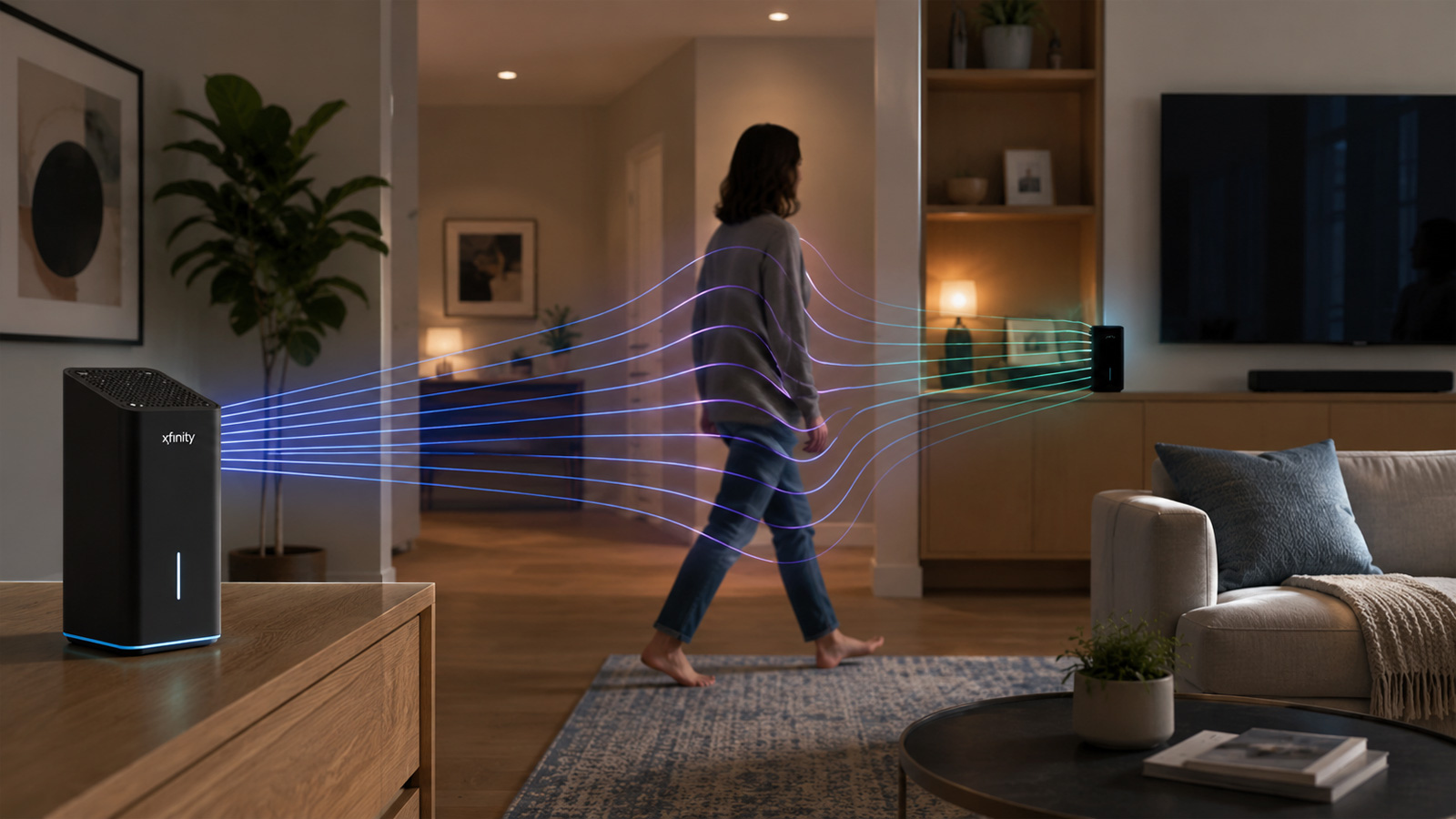
Comcast is introducing WiFi-based motion detection via its new Xfinity Shield platform. This innovative feature uses existing Wi-Fi signals to sense movement throughout a home without the need for cameras or physical sensors.
- Comcast's Xfinity Shield uses radio frequency disruptions to detect movement.
- The feature requires no additional hardware like cameras or dedicated motion sensors.
- WiFi Motion is included for free with compatible Xfinity Internet gateways.
- A premium 'Shield Select' tier is available for $15/month with added hardware.
- Privacy concerns persist regarding how motion data is handled for legal requests.
Comcast has officially unveiled its new Xfinity Shield home protection platform, a suite designed to merge cybersecurity with physical home monitoring. The standout feature of this announcement is 'WiFi Motion,' a technology that turns standard Wi-Fi radio links into virtual motion sensors. This allows homeowners to monitor activity within their living spaces without the intrusive presence of cameras or the clutter of traditional motion sensors.
How the Science Works
The mechanics behind WiFi Motion are rooted in signal disruption. As wireless signals travel between an Xfinity Gateway and stationary devices—such as smart speakers or thermostats—any physical object moving through that path alters the signal's behavior. By analyzing the scattering and reflection of these radio waves, the system can detect that an object has moved through a specific zone.
By utilizing radio frequency patterns rather than visual imagery, Comcast is attempting to bridge the gap between high-level security and consumer privacy.
BozokMedia analysis shows...
BozokMedia analysis shows that while this move positions Comcast as a leader in integrated smart-home security, it creates a complex landscape for data ethics. The platform offers two distinct tiers: the standard WiFi Shield, which is included at no extra cost for compatible gateway users, and the Shield Select plan. At $15 per month, Shield Select adds tangible hardware like indoor cameras, door/window sensors, and 24/7 urgent response capabilities.
Historical Context and Patent Insights
While marketed as a new frontier, the underlying technology has been in development for years. A patent filed by Comcast in late 2023 and published in 2025 details methods for presence detection using wireless signal characteristics. Furthermore, consumer reports and Reddit discussions dating back to 2024 suggest that the core functionality of detecting signal disruptions has been available to some users for quite some time, even if the formal 'Shield' branding is new.
Privacy and Legal Implications
The deployment of such sensitive technology raises significant questions. Comcast's documentation notes that the company may disclose information generated by WiFi Motion to third parties in the event of law enforcement investigations, court orders, or legal disputes. While the company asserts it does not 'monitor' individual movements, the lack of transparency regarding data retention periods remains a point of contention for privacy advocates.
Frequently Asked Questions
1. Can the system distinguish between a pet and a person?
Comcast provides adjustable sensitivity levels to filter out movement from pets weighing under 40 pounds, but the system may still struggle to distinguish between a small child and a large pet.
2. Does this feature track my exact location?
No, Xfinity states the system is designed to detect that movement occurred between a connected device and the gateway, rather than pinpointing an individual's exact coordinates or identity.