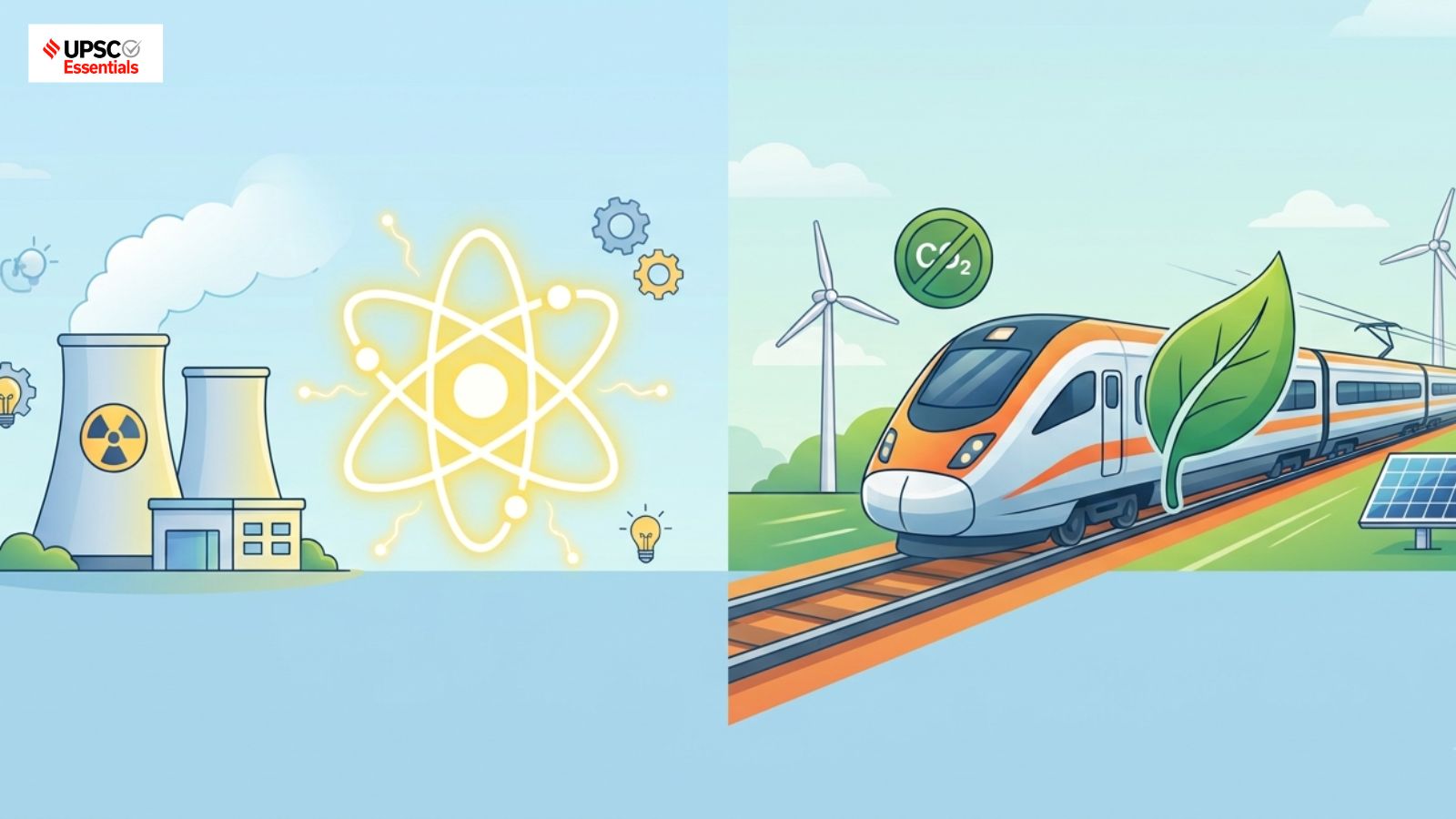
As India targets 100 GW of nuclear power by 2047 and a carbon-neutral railway network, UPSC aspirants must master these critical GS Paper 3 themes. This analysis explores the intersection of energy security, emerging technologies, and sustainable transport.
- India aims for 100 GW of nuclear capacity by 2047 to power AI and data centers.
- The shift toward Small Modular Reactors (SMRs) represents a strategic move toward flexible, scalable energy.
- Indian Railways is aggressively pursuing a net-zero carbon emitter status through electrification and green energy.
India is currently navigating a pivotal transition in its energy landscape. With the rapid proliferation of Artificial Intelligence (AI), semiconductor manufacturing, and massive data centers, the nation's electricity demand is projected to skyrocket. To meet this challenge, Prime Minister Narendra Modi has outlined an ambitious roadmap to expand nuclear power capacity to 100 GW by 2047, emphasizing the commissioning of five new reactors within this decade.
The Nuclear Leap: From PHWRs to SMRs
The cornerstone of India's strategy is a dual approach: continuing the deployment of large-scale Pressurized Heavy Water Reactors (PHWRs) while pioneering Small Modular Reactors (SMRs). Unlike traditional plants, SMRs offer lower capital costs and greater flexibility in location, making them ideal for industrial decarbonization. India is currently developing three indigenous SMR types, including the BSMR-200, with a goal to have five operational units by 2033.
This expansion is deeply rooted in India's historic three-stage nuclear power programme. By moving from natural uranium to fast breeder reactors and eventually leveraging its vast thorium resources, India seeks absolute fuel self-reliance, reducing dependence on volatile global uranium markets.
Why This Matters
BozokMedia analysis shows that the integration of nuclear energy is no longer just about electricity; it is about national strategic autonomy. As emerging technologies demand a constant 'baseload' of power that intermittent renewables like solar and wind cannot provide, nuclear energy becomes the only carbon-neutral alternative capable of sustaining a 24/7 digital economy.
The transition to SMRs will democratize nuclear energy, allowing smaller industrial hubs to access clean, high-capacity power without the massive footprint of traditional plants.
Green Tracks: The Road to Net-Zero Railways
Parallel to the nuclear push, Indian Railways is undergoing one of the world's largest transitions toward sustainable transport. The goal is to become a net-zero carbon emitter, a move that involves the total electrification of broad-gauge networks and the adoption of hydrogen-powered trains.
The challenges are significant, ranging from the massive financial outlay required for infrastructure upgrades to the logistical nightmare of transitioning legacy systems. However, the shift toward cleaner energy is essential to reduce the carbon footprint of the world's fourth-largest rail network.
| Feature | Nuclear Power (100 GW Goal) | Net-Zero Railways |
|---|---|---|
| Primary Driver | AI, Data Centers, Energy Security | Climate Commitments, Urban Mobility |
| Key Technology | SMRs, Thorium, Fast Breeders | Electrification, Hydrogen Fuel |
| Major Challenge | Nuclear Liability, High Initial Cost | Infrastructure Scale, Funding |
Frequently Asked Questions
Q1: What are Small Modular Reactors (SMRs)?
SMRs are advanced nuclear reactors with a power capacity of up to 300 MW per module, designed to be built in factories and transported to sites, offering more flexibility and lower cost than traditional large reactors.
Q2: Why is nuclear energy preferred over renewables for AI data centers?
AI data centers require a constant, uninterrupted supply of electricity (baseload power). While solar and wind are intermittent, nuclear energy provides a steady, carbon-free flow of electricity around the clock.