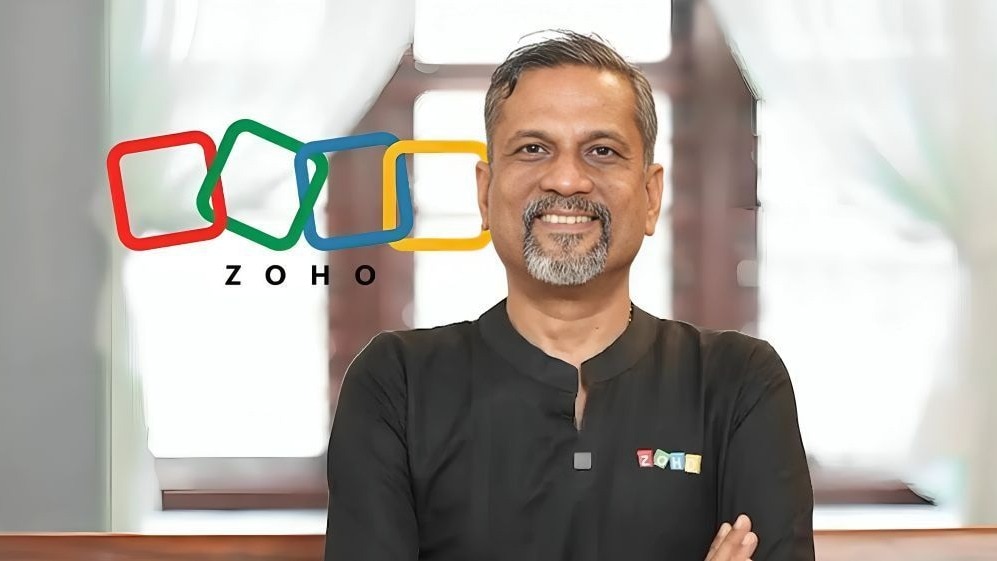
Zoho founder Sridhar Vembu encourages a positive outlook on Artificial Intelligence (AI) as a driver of growth, despite the increasing costs of laptops and smartphones.
- Sridhar Vembu advocates for a positive mindset regarding AI integration.
- Rising costs of smartphones and laptops present a barrier to entry.
- AI is viewed as a catalyst for productivity regardless of hardware pricing.
Sridhar Vembu, the visionary founder and CEO of Zoho Corporation, has emphasized the need to remain optimistic about the trajectory of Artificial Intelligence (AI). This comes at a time when the consumer electronics market is witnessing a steady climb in the prices of essential hardware, such as high-end laptops and smartphones, which are often required to run advanced AI models locally.
Vembu posits that AI represents a fundamental shift in the paradigm of computing. Rather than viewing AI as a luxury that requires expensive hardware, he suggests that the intelligence layer of software will eventually decouple from the physical constraints of the device. This transition means that the value will migrate from the 'box' to the 'brain' of the operation.
Why This Matters
BozokMedia analysis shows that Zoho's perspective highlights a critical pivot in the tech industry: the move toward 'Intelligence-as-a-Service'. As hardware becomes a commodity with rising costs, the competitive edge will be defined by how effectively AI is integrated into workflows to drive efficiency, thereby offsetting the initial capital expenditure on devices.
"AI is not a replacement for human intelligence but a powerful catalyst that will redefine the boundaries of productivity and creativity."
Historically, every major technological leap—from the mainframe to the PC and then to the mobile phone—was accompanied by a period of high entry costs. However, these costs typically plummet as the technology matures and scales. Vembu believes that the democratization of AI will follow a similar path, where cloud-based processing allows users to access cutting-edge intelligence without needing a thousand-dollar machine.
Furthermore, the global implications of this shift are profound. For small and medium enterprises (SMEs), AI provides a way to automate mundane tasks and compete with larger corporations. By lowering the operational barrier through intelligent software, the global economy could see a surge in micro-innovation and decentralized productivity.
Hardware vs. AI Value Proposition
| Factor | Traditional Hardware | AI-Driven Software |
|---|---|---|
| Cost Trend | Increasing (Component Costs) | Decreasing (Scalability) |
| Utility | Fixed Physical Capability | Expanding Cognitive Capability |
| Accessibility | Device Dependent | Cloud Accessible |
Frequently Asked Questions
1. Why is Sridhar Vembu positive about AI?
He believes AI will exponentially increase productivity and simplify complex problem-solving across various industries.
2. Will expensive hardware hinder AI adoption?
Not necessarily, as the shift toward cloud computing allows powerful AI to be accessed via basic hardware interfaces.