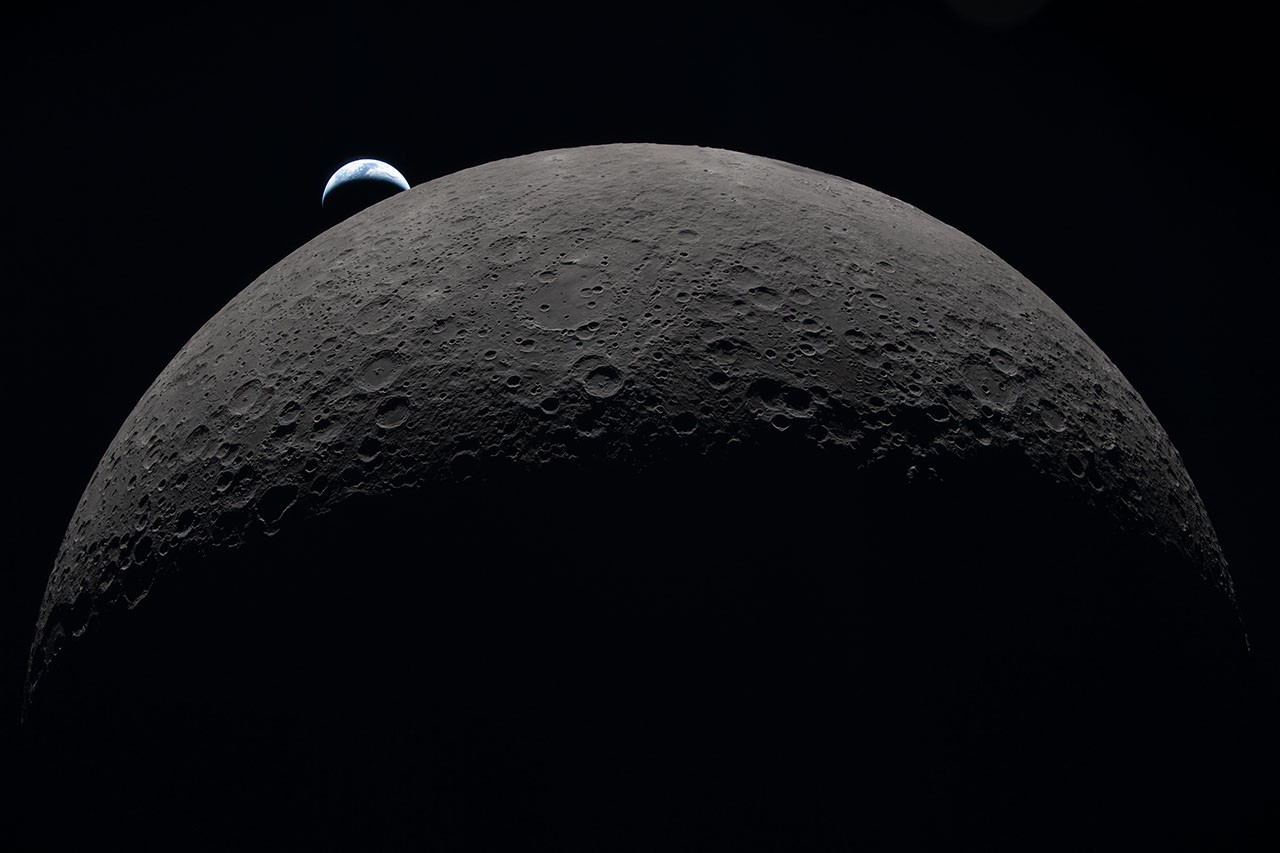
NASA's Lunar Reconnaissance Orbiter (LRO) has successfully imaged a fresh crater on the Moon caused by the impact of a SpaceX Falcon 9 upper stage. The images reveal critical details about lunar surface composition.
- A new crater was formed on the Moon by a SpaceX Falcon 9 upper stage impact.
- NASA's LRO captured detailed imagery showing a 60-foot wide crater.
- The mission validated planetary defense trajectory prediction models.
NASA’s Lunar Reconnaissance Orbiter (LRO) has captured a series of stunning images of a newly formed crater on the Moon. The impact occurred on August 5, 2026, when a SpaceX Falcon 9 upper stage struck the lunar surface following the Firefly Blue Ghost 1 mission. These images provide an unprecedented look at the immediate aftermath of a man-made celestial impact.
Precision Engineering and Timing
Capturing these images required extreme precision. The LRO orbits the Moon at an altitude of approximately 60 miles, traveling at a staggering speed of 1 mile per second. Engineers had to tilt the spacecraft to point the cameras toward the impact site at the exact moment of passing. The margin for error was razor-thin: a timing discrepancy of just 10 seconds would have resulted in the target drifting 10 miles off-center. It took six days for the Moon's rotation to align the crater perfectly with the orbiter's path.
Geological Findings and Surface Composition
Using its highly sensitive Narrow-Angle Camera, which can detect features as small as 3 feet, scientists have measured the crater to be approximately 60 feet wide and less than 10 feet deep. The imagery reveals a fascinating contrast in materials. Darker streaks surrounding the crater consist of weathered surface dust and rocks, altered by solar winds and cosmic rays. In contrast, the bright rays extending from the rim consist of 'fresh' material excavated from beneath the lunar regolith during the collision.
The ability to observe real-time surface changes from an orbital perspective is vital for understanding the long-term evolution of the lunar landscape.
Why This Matters
BozokMedia analysis shows that this event serves as a critical test case for the Planetary Defense program. By coordinating with independent astronomers and the Korea Pathfinder Lunar Orbiter (Danuri) team, NASA was able to validate and refine tools used to predict the trajectories of near-Earth objects. This collaboration demonstrates the power of global scientific synergy in space exploration.
Historical Background
For decades, lunar craters were primarily formed by natural bolides and meteoroids. However, as commercial spaceflight increases, 'artificial impacts' are becoming a new area of study. Understanding how man-made debris interacts with the lunar environment is essential for the safety of future lunar bases and Artemis missions.
Frequently Asked Questions
Question 1: What caused the crater on the Moon?
Answer: The crater was created by the impact of a SpaceX Falcon 9 upper stage rocket.
Question 2: How accurate was the impact prediction?
Answer: The prediction was highly accurate, with the Danuri mission finding the site within approximately 0.6 miles of the predicted coordinates.
