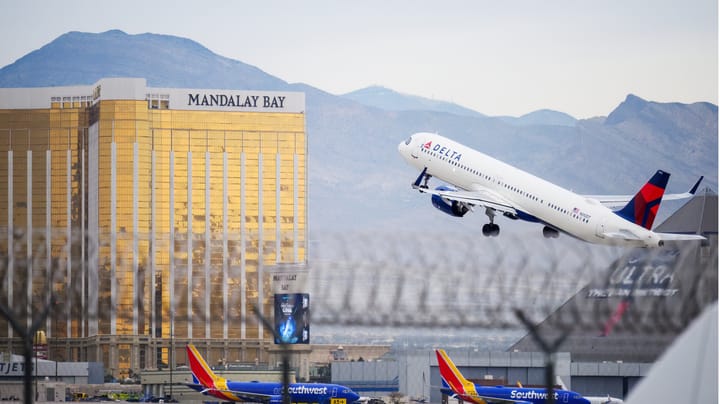
A Delta Air Lines flight from Las Vegas to Atlanta faced a major disruption when a passenger hijacked the in-flight Wi-Fi to deploy a phishing network.
- A passenger on Delta Flight 591 replaced the official Wi-Fi with a fake network named 'Delta WiFi Fast'.
- The fake network was used to redirect passengers to a phishing page for credential harvesting.
- Authorities and the FBI are investigating the incident following the DEF CON conference.
In a startling breach of in-flight security, Delta Air Lines flight 591, traveling from Las Vegas to Atlanta, was targeted by a Wi-Fi hijacking incident. According to reports discussed by Dark Reading editors Rob Wright and Alex Culafi, a passenger successfully disrupted the aircraft's legitimate Wi-Fi service and replaced it with a rogue access point titled 'Delta WiFi Fast'.
The Anatomy of the Attack
The rogue network appears to have been designed to facilitate a phishing attack. Once connected to the fake 'Delta WiFi Fast' network, passengers were reportedly presented with a deceptive portal—resembling a Google login page—intended to harvest sensitive credentials. Experts suggest the attacker may have utilized a Wi-Fi Pineapple, a common tool used in penetration testing and malicious Wi-Fi spoofing, which is frequently discussed at cybersecurity conferences like DEF CON.
Broader Aviation Vulnerabilities
This incident highlights a growing concern regarding the intersection of cybersecurity and physical aviation safety. Beyond simple Wi-Fi spoofing, recent academic research presented at the Usenix conference demonstrated that a small, inexpensive hardware implant could potentially compromise the flight management systems of a Boeing 737 via maintenance ports.
The transition of cyber threats from digital data theft to potential interference with flight systems represents a new frontier of aviation risk.
Why This Matters
BozokMedia analysis shows that as airlines become increasingly reliant on interconnected digital ecosystems to provide passenger services, the attack surface for malicious actors expands significantly. The ability of a single passenger to manipulate local network environments poses a reputational and security challenge for the entire aviation industry.
Frequently Asked Questions
1. Was the plane's flight control system compromised?
In this specific Delta incident, the disruption was limited to the Wi-Fi network for phishing purposes, though separate academic studies have explored deeper system vulnerabilities.
2. Why did the crew suspect DEF CON attendees?
The timing of the incident, occurring shortly after the major cybersecurity conference in Las Vegas, led to immediate suspicion regarding potential 'pranks' or unauthorized testing by attendees.

