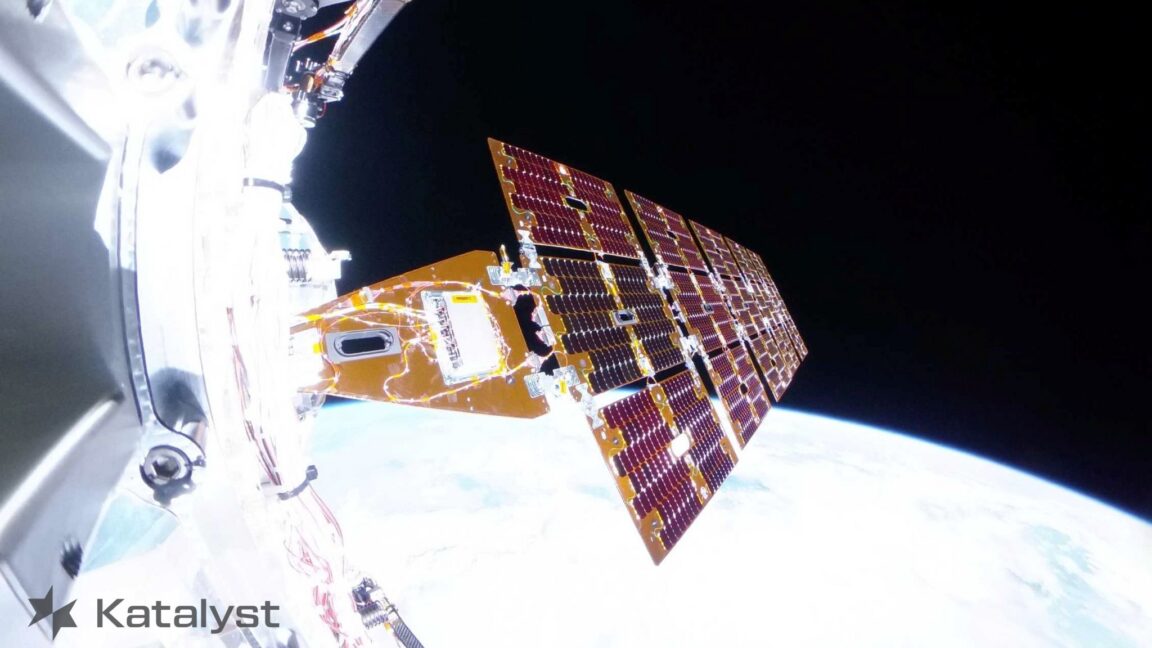
NASA and Katalyst Space Technologies have called off the robotic mission intended to save the Swift Observatory from orbital decay. Technical issues with the 'Link' satellite have forced the cancellation of the rescue attempt.
- Katalyst Space Technologies' 'Link' satellite failed due to ongoing attitude control issues.
- The Swift Observatory is expected to reenter Earth's atmosphere later this year.
- The mission will pivot to a demonstration of close-in navigation systems.
In a significant setback for orbital servicing efforts, NASA and Katalyst Space Technologies announced on Wednesday that they are abandoning the robotic mission to rescue the Neil Gehrels Swift Observatory. The mission was designed to intercept the aging gamma-ray telescope before its orbit decayed significantly, leading to an uncontrolled reentry into Earth's atmosphere.
The rescue spacecraft, known as Link, was launched on July 3 with a highly specialized mission profile. Roughly the size of a household refrigerator, Link was equipped with two solar arrays and three xenon-fueled electric thrusters. Its primary objective was to rendezvous with the Swift Observatory, capture it using three sophisticated robotic arms, and boost its altitude to a safer, higher orbit.
The Cause of Failure
According to Katalyst, the startup spearheading the initiative, the mission was compromised by persistent "attitude control issues." In spacecraft engineering, attitude control is critical for maintaining the correct orientation in space. Without precise control, the Link satellite cannot accurately navigate toward its target or deploy its robotic arms, rendering the rescue attempt impossible.
Why This Matters
BozokMedia analysis shows that this development highlights the immense technical complexity and high stakes involved in the emerging field of in-orbit servicing. As space becomes more crowded, the ability to repair or refuel satellites is vital for sustainability. The loss of the Swift Observatory, a cornerstone of high-energy astrophysics, represents a significant loss of scientific capability for the global astronomical community.
The failure of the Link mission serves as a stark reminder that the frontier of orbital mechanics and robotic servicing remains one of the most challenging domains in modern aerospace engineering.
Despite the cancellation of the rescue, Katalyst intends to salvage scientific value from the attempt. The company plans to utilize Link's remaining operational capacity to attempt a close-proximity maneuver near Swift. This will serve as a live demonstration of their advanced close-in navigation systems, providing critical data for future commercial space servicing missions.
Frequently Asked Questions
1. What will happen to the Swift Observatory now?
Without a successful boost to its orbit, the observatory is projected to reenter and burn up in Earth's atmosphere later this year.
2. What was the purpose of the Link satellite?
Link was a specialized robotic satellite designed to capture and reposition satellites that are losing orbital altitude.


