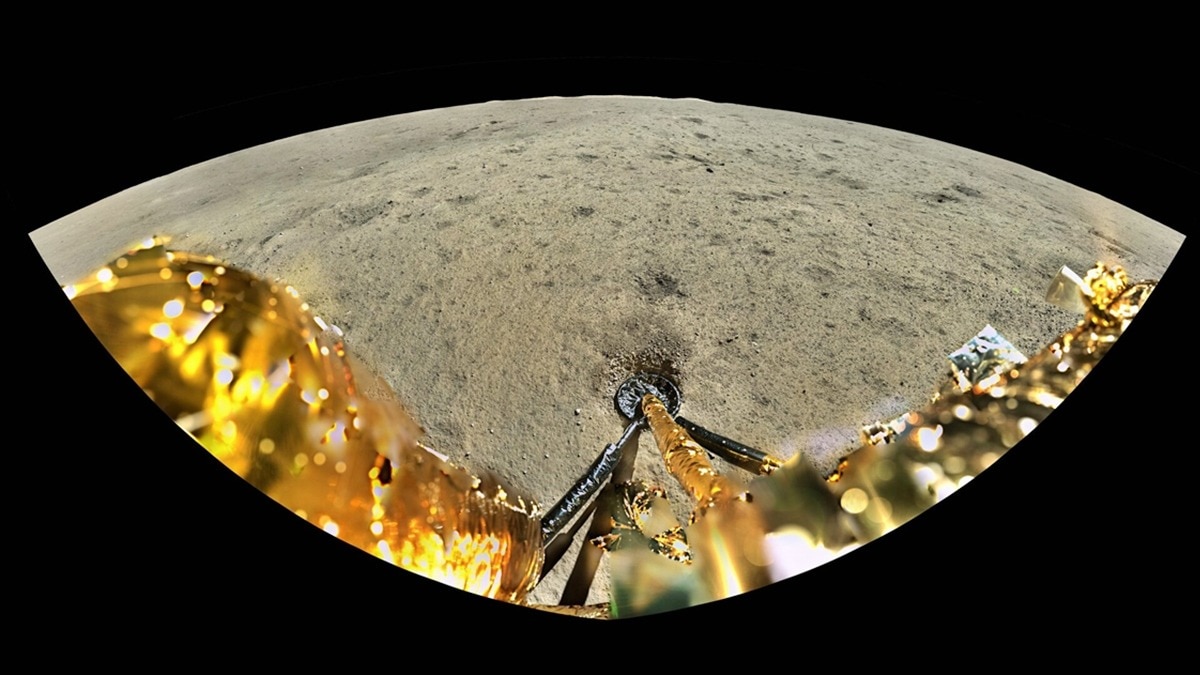
China is preparing to launch its ambitious Chang'e-7 spacecraft this Monday, targeting the Moon's South Pole in a high-stakes search for water ice. This mission is a critical precursor to permanent lunar bases.
- The Chang'e-7 spacecraft will launch via a Long March 5 rocket from Hainan on Monday.
- The primary mission goal is to locate water ice in permanently shadowed lunar craters.
- The mission utilizes a unique 'hopping' probe to navigate extreme terrain.
China has successfully rolled its ambitious Chang'e-7 spacecraft to the launch pad, marking a pivotal moment in the global race for lunar resources. Scheduled to launch this Monday from the Wenchang Space Launch Site in Hainan aboard a Long March 5 rocket, the mission aims to explore the Moon's South Pole—one of the most extreme environments in our solar system.
The mission's core objective is to hunt for water ice trapped within deep craters that have remained untouched by sunlight for billions of years. These regions, known as permanently shadowed regions (PSRs), act as natural deep freezers. Finding accessible ice could revolutionize space travel, as it can be processed into drinking water, breathable oxygen, and even rocket propellant, significantly reducing the cost of deep-space exploration.
Why This Matters
BozokMedia analysis shows that the ability to harvest resources in-situ (on-site) is the 'holy grail' of space colonization. The nation that masters lunar resource extraction will hold a significant strategic advantage in the upcoming era of interplanetary travel.
The search for water on the Moon is effectively a search for the fuel that will power humanity's journey to Mars.
Technologically, Chang'e-7 introduces a groundbreaking 'hopping' robotic probe. Unlike traditional wheeled rovers that struggle with the jagged, uneven terrain of lunar craters, this probe uses small thrusters to jump into dark, shadowed areas. After conducting scientific analysis with specialized water analyzers and radars, it can 'hop' back into sunlit areas to recharge its power systems.
Historical Background: The lunar landscape has become a crowded arena of scientific competition. Following India's Chandrayaan-3 success in 2023, which landed near the lunar south pole, global agencies including NASA, ESA, and Roscosmos are intensifying their efforts to target the same scientifically valuable terrain.
This expedition is a foundational step toward China's broader vision: a crewed lunar landing before 2030 and the establishment of a permanent international lunar research station. The data gathered will be instrumental for the upcoming Chang'e-8 mission planned for 2029.
Frequently Asked Questions
1. Why is the Moon's South Pole so important?
It contains permanently shadowed craters that likely hold vast reserves of water ice, essential for long-term human habitation.
2. How is the Chang'e-7 probe different from previous rovers?
It features a unique hopping mechanism that allows it to navigate steep and dark crater environments where wheeled rovers cannot go.