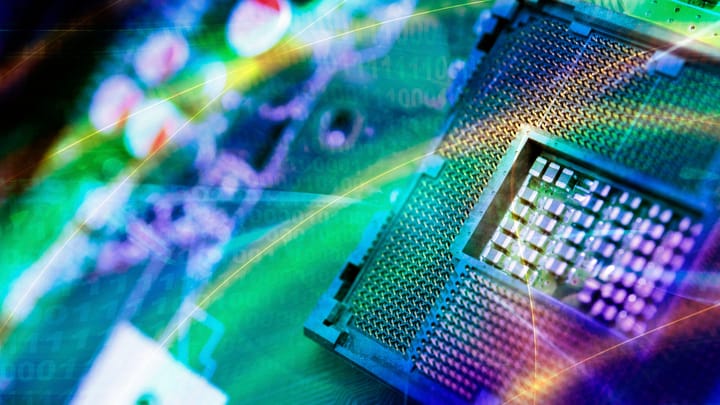
As quantum computers threaten to shatter current encryption standards, chipmakers like Intel and Nvidia are integrating Post-Quantum Cryptography (PQC) directly into hardware to prevent future data breaches.
- Quantum computers pose a massive threat to current RSA and ECC encryption algorithms.
- Major players like Intel and Nvidia are baking PQC acceleration into next-gen hardware.
- The 'Harvest-now-decrypt-later' attack strategy makes current data vulnerable.
- NIST standardized PQC algorithms in 2024 to protect digital signatures and data.
The race to secure the digital frontier has entered a new phase. As super-powerful quantum computers approach reality, they threaten to render today's most sophisticated encryption algorithms obsolete. In response, the world's leading hardware manufacturers have begun the critical task of integrating Post-Quantum Cryptography (PQC) directly into their silicon.
The urgency stems from a growing concern known as 'harvest-now-decrypt-later' attacks. In this scenario, malicious actors intercept and store encrypted sensitive data today, waiting for the moment quantum computing becomes powerful enough to crack it. Anand Pashupathy, VP at Intel, emphasized at the Google Cloud Next conference that the threat is not a distant problem, stating, "the time is now." Intel has already begun providing PQC-capable support in its Xeon 6 server hardware chips.
Why This Matters
BozokMedia analysis shows that this transition is a fundamental shift in cybersecurity architecture. Moving encryption from software to hardware-based acceleration is essential because hardware-level defenses are significantly faster and harder to bypass, providing a necessary shield against the brute-force capabilities of future quantum systems.
"You don't want to be stuck in the harvest now, decrypt later kind of attacks, because the time is not three years out, the time is now." — Anand Pashupathy, Intel
Nvidia is also taking aggressive steps. Daniel Rohrer, VP of software security at Nvidia, confirmed that the company is diligently implementing post-quantum standards into the security layers that underpin confidential computing. This ensures that data exchange remains secure even in a post-quantum landscape.
While IBM led the charge with its z16 mainframe in 2022, the industry is realizing that hardware upgrades are a long-term endeavor. NIST standardized these algorithms in 2024, but the physical implementation in chips takes years. For instance, while AES was published in 2001, it took nearly a decade to become standard in major processors.
Experts warn that enterprises cannot afford to wait. Jack Gold, a principal analyst, points out that much of the existing infrastructure may be impossible to upgrade, necessitating a complete hardware replacement. While symmetric encryption like AES-256 remains relatively quantum-resistant, the asymmetric handshakes that secure the internet must be protected by PQC.
Frequently Asked Questions
1. What is Post-Quantum Cryptography (PQC)?
PQC refers to cryptographic algorithms (usually asymmetric) designed to be secure against the massive processing power of quantum computers.
2. Why is 'Harvest-now-decrypt-later' a concern?
It means hackers are stealing encrypted data today to decrypt it later once they have access to quantum technology, making current data theft a future catastrophe.
| Feature | Traditional Encryption (RSA/ECC) | Post-Quantum Cryptography (PQC) |
|---|---|---|
| Quantum Resilience | Low (Vulnerable) | High (Resistant) |
| Mechanism | Mathematical complexity (Factoring) | Quantum-resistant mathematical structures |
| Industry Status | Standard/Legacy | Emerging/Mandatory Transition |


