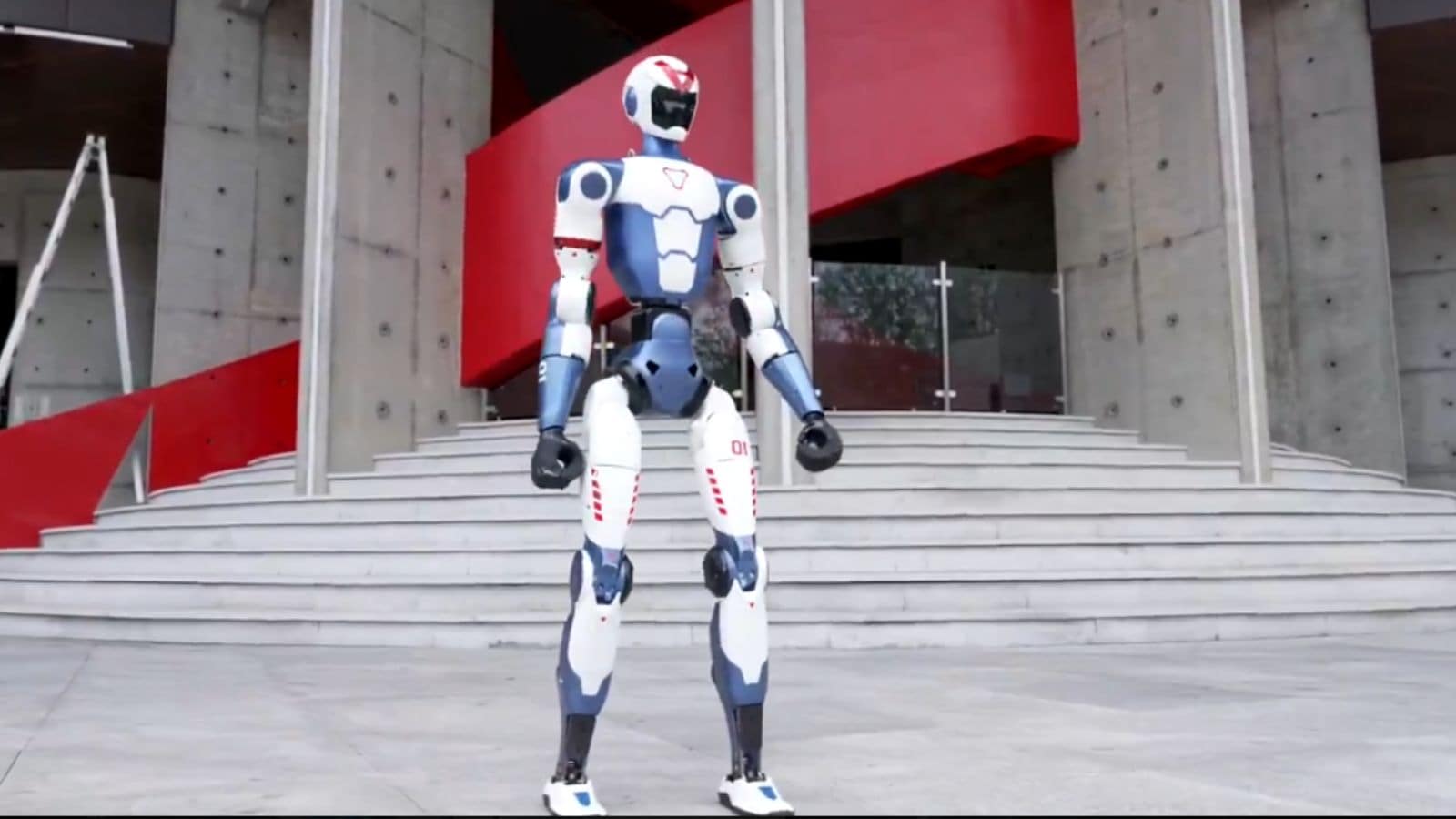
Unitree CEO Wang Xingxing predicts a revolutionary breakthrough in robotics, akin to the ChatGPT explosion, where humanoid robots can navigate unfamiliar environments using simple voice commands. China currently dominates 97% of the global humanoid robot market.
- Unitree CEO predicts an imminent 'ChatGPT moment' for embodied intelligence in robotics.
- China delivered over 40,000 humanoid robots in the first half of 2026 alone.
- Experts suggest robots could perform 70-80% of daily tasks by 2028.
- The US has implemented bans on certain foreign robots citing national security.
The era of truly intelligent machines is approaching. Wang Xingxing, the founder and CEO of the Chinese humanoid robot unicorn Unitree, announced at a major robotics conference in Beijing that the industry is on the cusp of a 'ChatGPT moment' for robot brains. This breakthrough, he suggests, will involve 'embodied intelligence'—the ability for AI to inhabit and interact with physical forms.
Just as ChatGPT revolutionized large language models in late 2022, Wang believes that 'world models'—simulations that allow robots to understand and navigate the real world—are about to reach a similar inflection point. The vision is ambitious: a robot being placed in an unfamiliar household and successfully completing approximately 80% of tasks through nothing more than simple voice or text instructions.
Why This Matters
BozokMedia analysis shows that this technological leap is not just about convenience; it is a strategic response to global demographic shifts. As populations age and workforces shrink, particularly in China, humanoid robots are being positioned as the primary solution for repetitive, low-value, and hazardous labor. The transition from specialized industrial machines to general-purpose domestic assistants represents a massive shift in global economic potential.
The 'ChatGPT moment' for robotics will be the point where machines stop following rigid code and start understanding the context of their environment.
However, industry experts remain cautiously optimistic. Georg Stieler, head of automation at robotics consultancy Stieler, noted that while the enthusiasm is high following Unitree's successful IPO, a significant leap in robot software might still be 2 to 10 years away. The current bottleneck lies in the AI models' ability to handle complex, real-world decision-making.
The scale of China's dominance in this sector is staggering. According to recent industry data, China accounted for 97% of global shipments of humanoid robots in the first half of this year, delivering over 40,000 units. This rapid scaling is backed by strong government support and a massive manufacturing ecosystem.
This dominance has triggered geopolitical friction. The United States has already moved to protect its domestic interests, with the Federal Communications Commission (FCC) banning future imports of certain foreign-made humanoid and quadruped robots due to national security concerns. This highlights how robotics has become a new frontier in the ongoing U.S.-China technology rivalry.
Frequently Asked Questions
Question 1: What is 'embodied intelligence'?
Answer: It refers to AI that is integrated into a physical body, allowing the machine to perceive, learn from, and interact with the physical world in real-time.
Question 2: When will robots become common in homes?
Answer: While estimates vary, industry leaders like Wang He of Galbot suggest that by 2028, robots may be able to perform up to 80% of everyday tasks without specialized training.