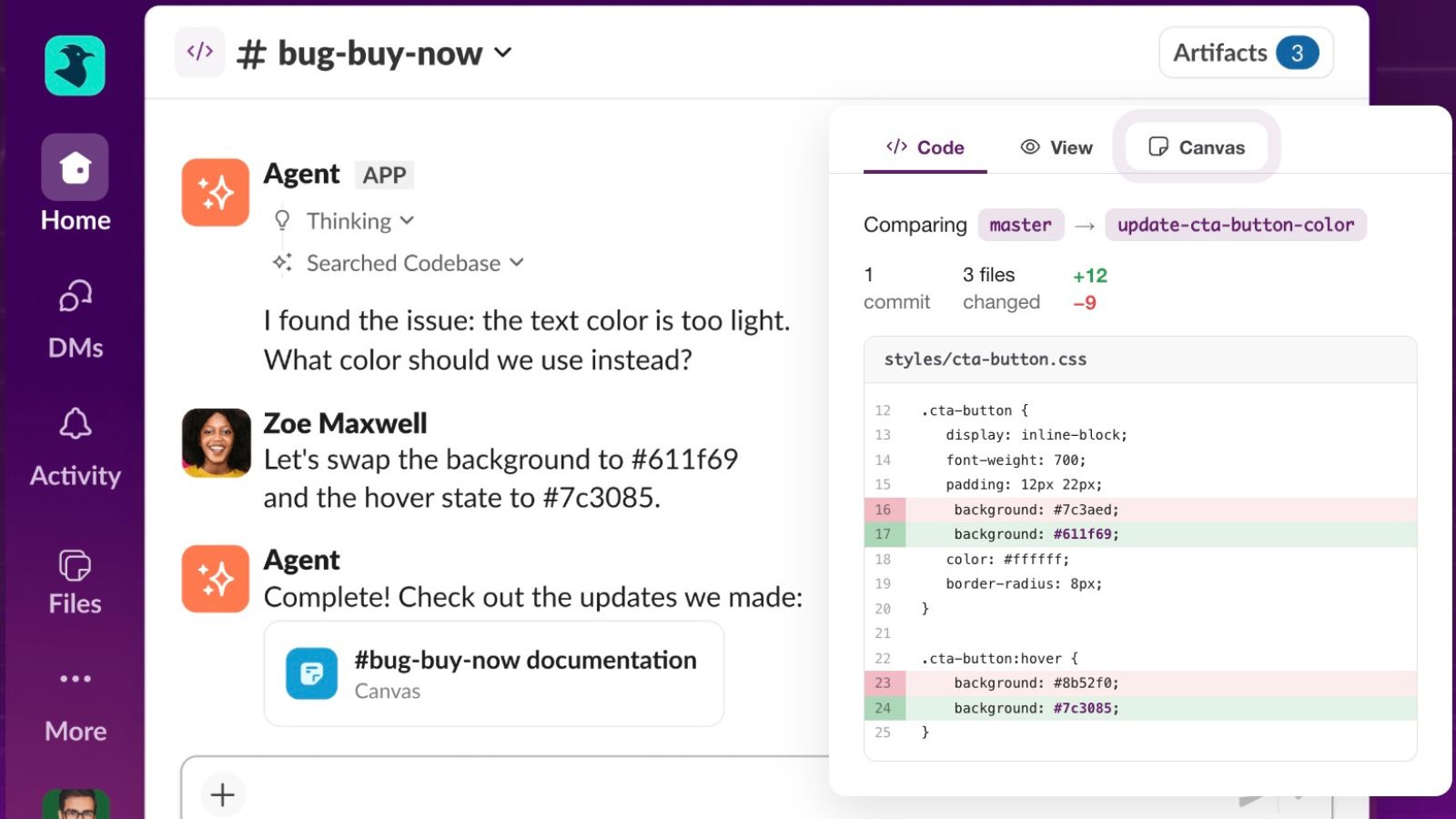
Slack has launched 'Slack Code,' a groundbreaking feature that integrates AI coding agents directly into shared team channels, allowing for real-time collaborative software development.
- Slack launched 'Slack Code' to bring AI coding agents into dedicated team channels.
- Developers, PMs, and designers can now collaborate, review, and steer AI sessions together.
- Features include automatic channel creation/archiving and real-time HTML previews.
- The tool solves the problem of 'invisible coding' by making AI-driven work visible to the entire team.
In a major move to revolutionize collaborative software engineering, Slack has introduced 'Slack Code'. This new capability allows users to develop code via shared rooms directly within the platform, bringing AI coding agents into the heart of team communication. Instead of working in isolation, developers can now steer AI agents in real-time while their teammates watch, review, and contribute.
The launch comes at a critical time when AI-assisted coding is exploding with tools like Claude Code, GitHub Copilot, and Devin. Historically, while these agents have boosted individual productivity, the work they perform often happens in a 'black box' outside of team chat. This lack of visibility leads to lost context, delayed reviews, and fragmented workflows. Slack Code aims to bridge this gap by making AI coding a collective experience.
Why This Matters
BozokMedia analysis shows that the next frontier of software productivity is not just about how fast an AI can write code, but how effectively a human team can govern that AI. By integrating the agent into the communication layer, Slack is transforming the developer experience from individual execution to collective orchestration.
AI coding agents are evolving from mere autocomplete tools into active digital teammates that participate in the collaborative lifecycle.
The functionality of Slack Code is highly sophisticated. It utilizes project-based channels that map specific code sessions to dedicated spaces. A standout feature is the automated lifecycle management: users can simply tag a coding agent in any conversation to trigger the creation of a new code channel. Once the task is completed, the channel archives itself, ensuring the audit log remains intact without cluttering the workspace.
Visibility is a core pillar of this update. With dedicated tabs and code diffs, every team member can see exactly what changes the AI has proposed or implemented. Furthermore, the ability to run live HTML output allows designers and product managers to provide immediate feedback on visual changes before the code is ever shipped to production.
Historical Background
The evolution of coding has moved from manual syntax entry to high-level abstraction. With the rise of Large Language Models (LLMs), we are now entering the era of 'Agentic Workflows,' where AI doesn't just suggest code but actively executes tasks. Slack’s integration positions it as the essential command center for this new era of software engineering.
Frequently Asked Questions
1. How does Slack Code improve team workflow?
It eliminates the silos between coding tools and communication tools, allowing for real-time reviews and shared context.
2. Can non-developers use Slack Code?
Yes, product managers and designers can use the live previews and visibility features to participate in the development process.