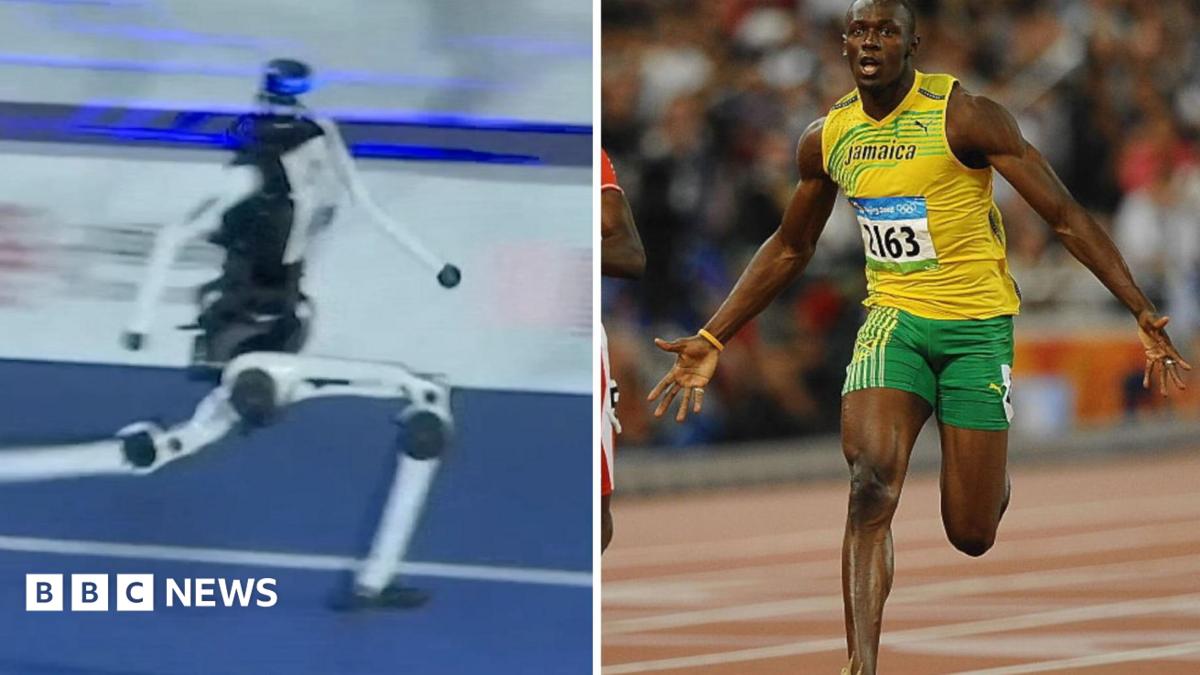
In a stunning display of technological prowess, Chinese humanoid robots have shattered human-level records in the 100m sprint and high jump during the Beijing Robot Games.
- Chinese humanoid robots set new benchmarks in 100m sprint and high jump.
- The feat occurred during the high-profile Beijing Robot Games.
- This marks a significant leap in AI-driven physical mobility and balance.
The world of athletics and robotics collided in spectacular fashion at the Beijing Robot Games, where cutting-edge Chinese humanoid robots demonstrated capabilities that have left experts stunned. These machines didn't just compete; they smashed performance benchmarks in the 100m sprint and high jump, rivaling or exceeding human athletic standards.
This milestone is not merely a spectacle of engineering but a profound demonstration of advancements in Artificial Intelligence (AI) and mechanical synchronization. The ability of these robots to maintain balance during high-speed maneuvers and explosive vertical jumps indicates a massive breakthrough in sensor integration and real-time processing.
Why This Matters
BozokMedia analysis shows that this event signals a shift in the global technological hegemony. As China continues to pour resources into humanoid development, the gap between biological capability and synthetic performance is narrowing at an exponential rate.
The transition from industrial machines to agile, athletic humanoids marks the dawn of a new era in machine intelligence.
Historically, robotics has been confined to structured environments like factory floors or repetitive tasks in logistics. However, the agility displayed in Beijing suggests that these machines are evolving to handle unpredictable, complex physical environments, which is essential for the next generation of service and companion robots.
The implications of this technology extend far beyond the sports arena. The same algorithms that allow a robot to sprint efficiently can be applied to search-and-rescue operations, elderly care, and advanced manufacturing where human-like dexterity and mobility are required.
Frequently Asked Questions
Question 1: Are these robots meant to replace human athletes?
Answer: No, they currently serve as benchmarks for technological capability and research.
Question 2: What makes these robots different from previous models?
Answer: Their advanced ability to manage dynamic balance and rapid kinetic energy transfer.