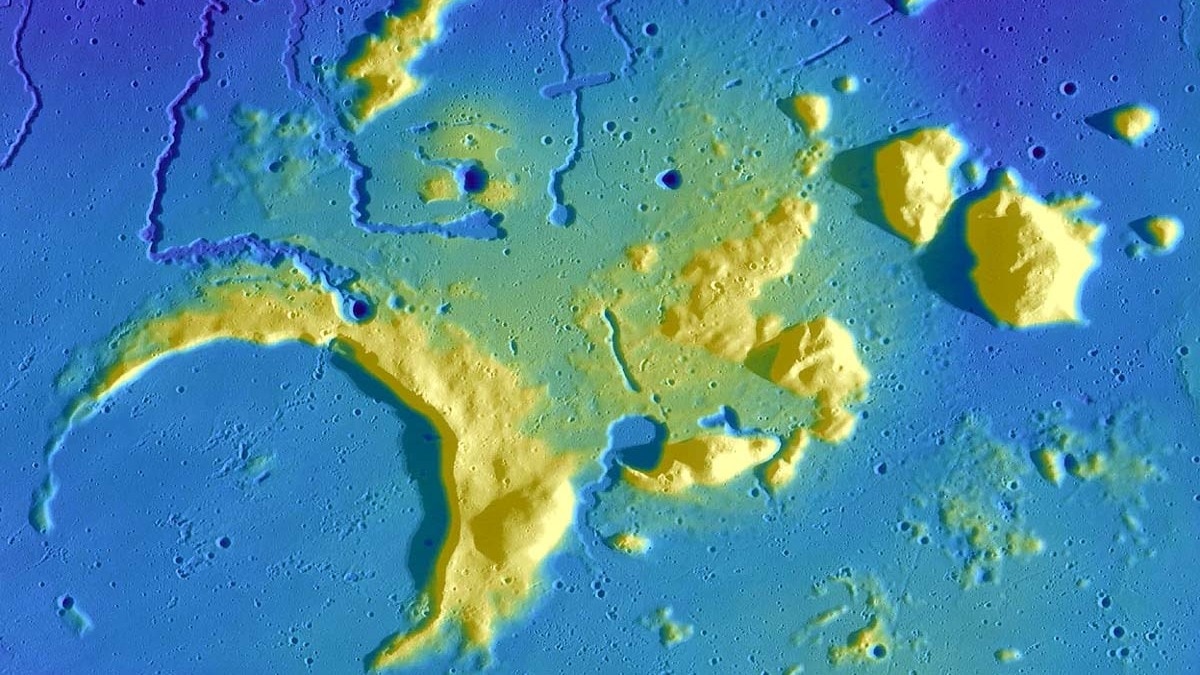
Scientists have identified two enormous shield volcanoes on the lunar surface, providing groundbreaking evidence of intense volcanic activity billions of years ago.
- Two massive shield volcanoes, roughly 80km wide, have been discovered on the Moon.
- These structures prove the Moon was geologically active billions of years ago.
- One volcano in the Prinz-Harbinger region stands 239 meters high.
- The discovery provides insights into lunar magma formation and thermal evolution.
For decades, the Moon has been perceived as a cold, dormant, and lifeless world. However, a groundbreaking discovery has shattered this perception. Scientists have identified two massive volcanic structures on the lunar surface, offering undeniable evidence of intense volcanic activity that occurred billions of years ago, rewriting parts of our lunar history.
Giant Structures in the Prinz-Harbinger Region
Using high-resolution lunar imagery and topographic data, researchers have pinpointed a significant structure in the Prinz-Harbinger region. This is a 'shield volcano' spanning approximately 78 to 80 kilometers in width and rising about 239 meters above the surrounding terrain. At its center lies a crater roughly 4 kilometers wide, believed to have served as the primary vent for volcanic eruptions in the ancient past.
Why This Matters
BozokMedia analysis shows that this discovery shifts our fundamental understanding of lunar evolution. Identifying these structures allows scientists to map the thermal history of the Moon and understand how internal heat drove surface changes billions of years ago.
These massive structures on the Moon are not merely mountains; they are the scars of a time when the Moon's interior was raging with heat.
The identification process went beyond simple visual recognition. Scientists meticulously analyzed the slopes, shapes, and surrounding lava traces. In the Prinz-Harbinger area, winding channels have been observed, which are likely the remnants of ancient lava flows that carved paths across the lunar landscape.
Understanding Shield Volcanoes
Shield volcanoes differ significantly from the steep, conical volcanoes often seen on Earth. They are characterized by broad, gentle slopes, resembling a warrior's shield. This unique shape is the result of highly fluid, low-viscosity lava that travels great distances before cooling and solidifying, creating a massive, wide-based structure.
| Feature | Shield Volcano | Stratovolcano |
|---|---|---|
| Shape | Broad and wide | Tall and conical |
| Lava Type | Thin and fluid | Thick and viscous |
| Slope | Gentle/Low | Steep/High |
The implications for lunar science are profound. Preliminary data suggests that the volcanic activity in the Prinz-Harbinger region may have occurred as far back as 3.4 billion years ago. Studying these sites will allow geologists to reconstruct how magma was generated within the Moon and how it reached the surface.
Frequently Asked Questions
1. Are there active volcanoes on the Moon today?
No, the Moon is currently considered geologically quiet, but these discovered volcanoes date back billions of years.
2. What defines a shield volcano?
A shield volcano is characterized by its wide base and gentle slopes, formed by the eruption of fluid lava.