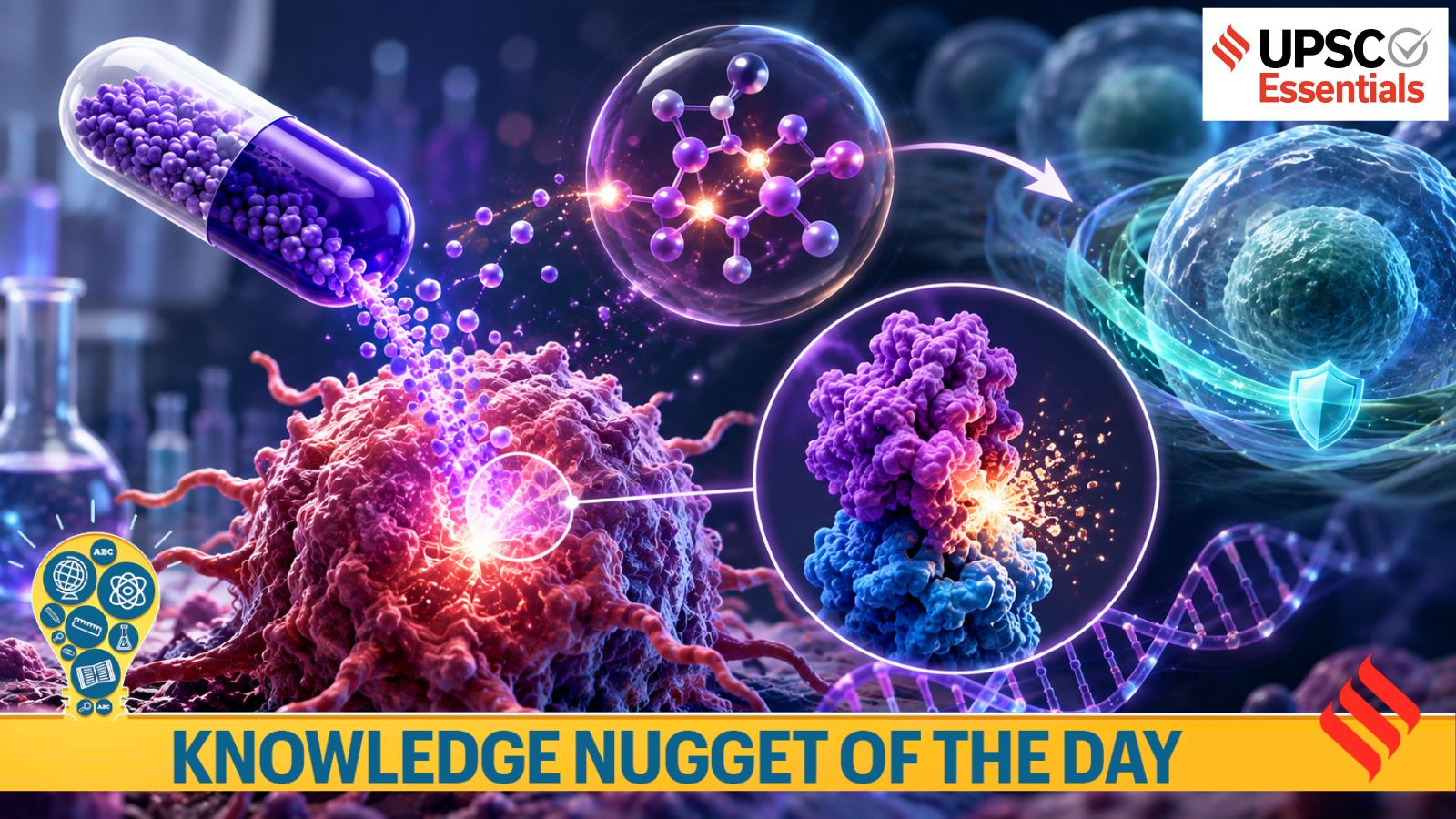
Indian researchers have developed RK-251, a revolutionary 'smart' cancer drug designed to activate exclusively within cancer cells. This breakthrough could significantly reduce the debilitating side effects of traditional chemotherapy.
- RK-251 is engineered to activate only in the presence of high Reactive Oxygen Species (ROS) levels found in cancer cells.
- The drug releases NBDHEX, a compound that disrupts the survival mechanisms of cancer cells.
- This selective approach aims to minimize damage to healthy tissues, unlike conventional chemotherapy.
In a significant leap for medical science, a collaborative research effort has led to the development of RK-251, a groundbreaking 'smart' cancer drug. The research was spearheaded by Dr. Asis Bala from the Institute of Advanced Study in Science and Technology (IASST) and Dr. K.P. Bhabak from IIT Guwahati. The Ministry of Science & Technology recently highlighted this innovation, which promises a more targeted approach to oncology.
The Science Behind the 'Smart' Mechanism
Traditional chemotherapy is often described as a 'blunt instrument' because it attacks all rapidly dividing cells, leading to hair loss, nausea, and immune suppression. RK-251, however, operates with surgical precision. It exploits a fundamental biological difference: cancer cells typically maintain much higher levels of Reactive Oxygen Species (ROS) compared to healthy cells.
The drug remains relatively inert while circulating through normal tissues. However, once it penetrates a cancer cell, the high concentration of ROS triggers a chemical reaction that activates the drug. Upon activation, it releases NBDHEX, an anti-cancer compound that effectively blocks the target proteins cancer cells need to survive and resist treatment.
Why This Matters
BozokMedia analysis shows that the transition from systemic toxicity to targeted therapy is the most critical frontier in modern medicine. If RK-251 successfully transitions from experimental stages to clinical application, it could redefine cancer care by making treatment significantly more tolerable for patients, potentially increasing survival rates through improved adherence to treatment protocols.
The ability to program a drug to 'switch on' only in a hostile cellular environment is the holy grail of targeted oncology.
Historical Context and Future Outlook
For decades, the medical community has struggled to balance the efficacy of cancer drugs with their toxicity. While chemotherapy remains a cornerstone of treatment, the side effects often become as debilitating as the disease itself. RK-251 represents a shift toward 'precision medicine.'
It is important to note that RK-251 is currently an experimental drug candidate. Before it reaches the bedside, extensive human clinical trials are required to establish safety, optimal dosing, and long-term efficacy. Even if successful, it is expected to complement existing treatments rather than completely replace them.
Frequently Asked Questions
1. How does RK-251 differ from regular chemotherapy?
Regular chemotherapy affects both healthy and cancerous cells, whereas RK-251 is designed to activate only inside cancer cells.
2. Is RK-251 available for patients yet?
No, it is currently in the experimental stage and requires further clinical trials and regulatory approval.