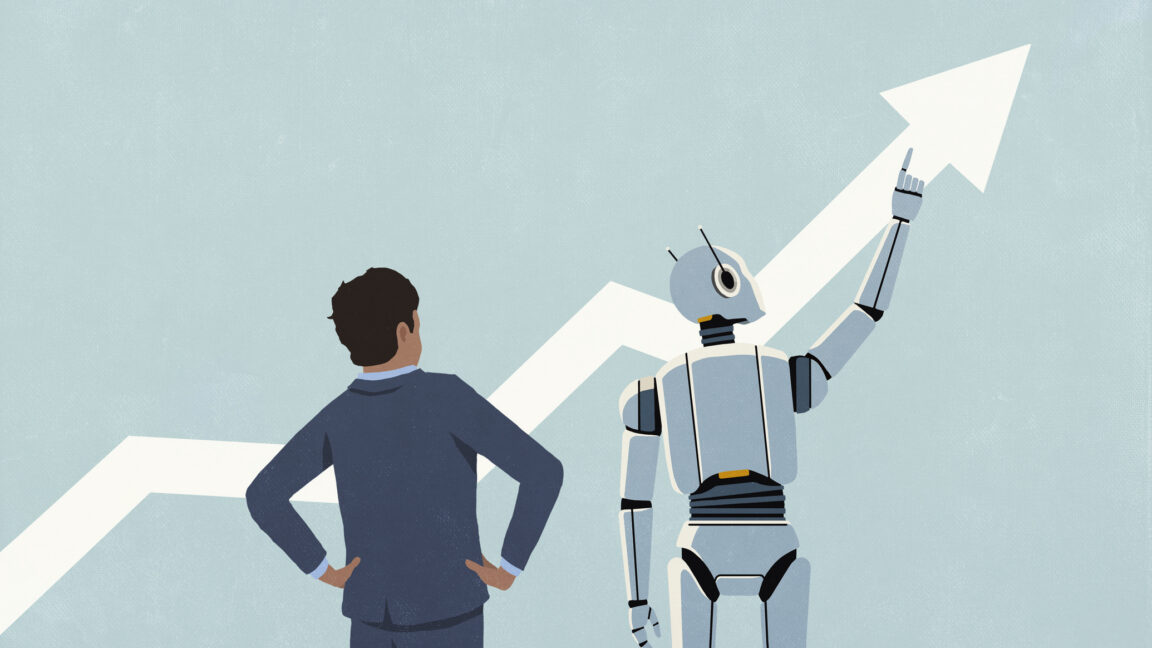
New research from Stanford University reveals a growing employment gap for young professionals in AI-exposed fields, with entry-level hiring dropping significantly compared to senior roles.
- Employment for workers aged 22-25 in AI-exposed roles is 19% lower than in resistant fields.
- The employment gap widened from 13% last year to 19% in 2026.
- Senior-level employees remain largely unaffected by current AI automation trends.
For years, AI industry observers have warned of a looming 'jobs apocalypse' driven by ultra-intelligent systems capable of replicating human tasks with greater efficiency and lower costs. Recent updated research from Stanford University economists suggests that these warnings are manifesting as a reality for the youngest members of the workforce.
The August 2026 edition of the paper, titled "Canaries in the Coal Mine? Six Facts about the Recent Employment Effects of Artificial Intelligence," provides a stark update to findings published last year. By utilizing refined statistics and fresh data, the researchers have confirmed that the downward trend for entry-level workers is not only persisting but accelerating.
Why This Matters
BozokMedia analysis shows that the erosion of entry-level roles creates a dangerous 'experience vacuum.' When corporations automate the basic tasks typically assigned to juniors, they inadvertently destroy the training ground for future leaders. This systemic failure could lead to a critical shortage of skilled senior management in the next decade as the pipeline of experienced talent dries up.
"The disappearance of junior roles is essentially a tax on the future of professional expertise, trading long-term talent sustainability for short-term corporate efficiency."
The data reveals a widening chasm: employment levels for workers aged 22 to 25 in the most "AI-exposed" occupations are now 19 percent below those of their peers in fields less susceptible to AI disruption. This is a significant jump from the 13 percent gap recorded just one year prior.
Historical Background: Automation vs. Intelligence
Historically, technological disruptions like the Industrial Revolution replaced physical labor but created new cognitive roles. However, the current AI wave is unique because it targets cognitive labor itself. Unlike the steam engine or the assembly line, Large Language Models (LLMs) and generative AI can perform analysis, coding, and drafting—the very tasks that define entry-level white-collar work.
| Worker Segment | 2025 Employment Gap | 2026 Employment Gap |
|---|---|---|
| Entry-Level (AI-Exposed) | 13% | 19% |
| Senior-Level Professionals | Negligible | Stable |
Frequently Asked Questions
Q1: Which sectors are most 'AI-exposed'?
Typically, sectors involving data entry, basic software coding, preliminary legal research, and routine financial reporting are seeing the highest impact.
Q2: Is there a way for young graduates to remain competitive?
Experts suggest focusing on 'human-centric' skills such as complex negotiation, ethical judgment, and cross-disciplinary strategic thinking which AI cannot yet replicate.


