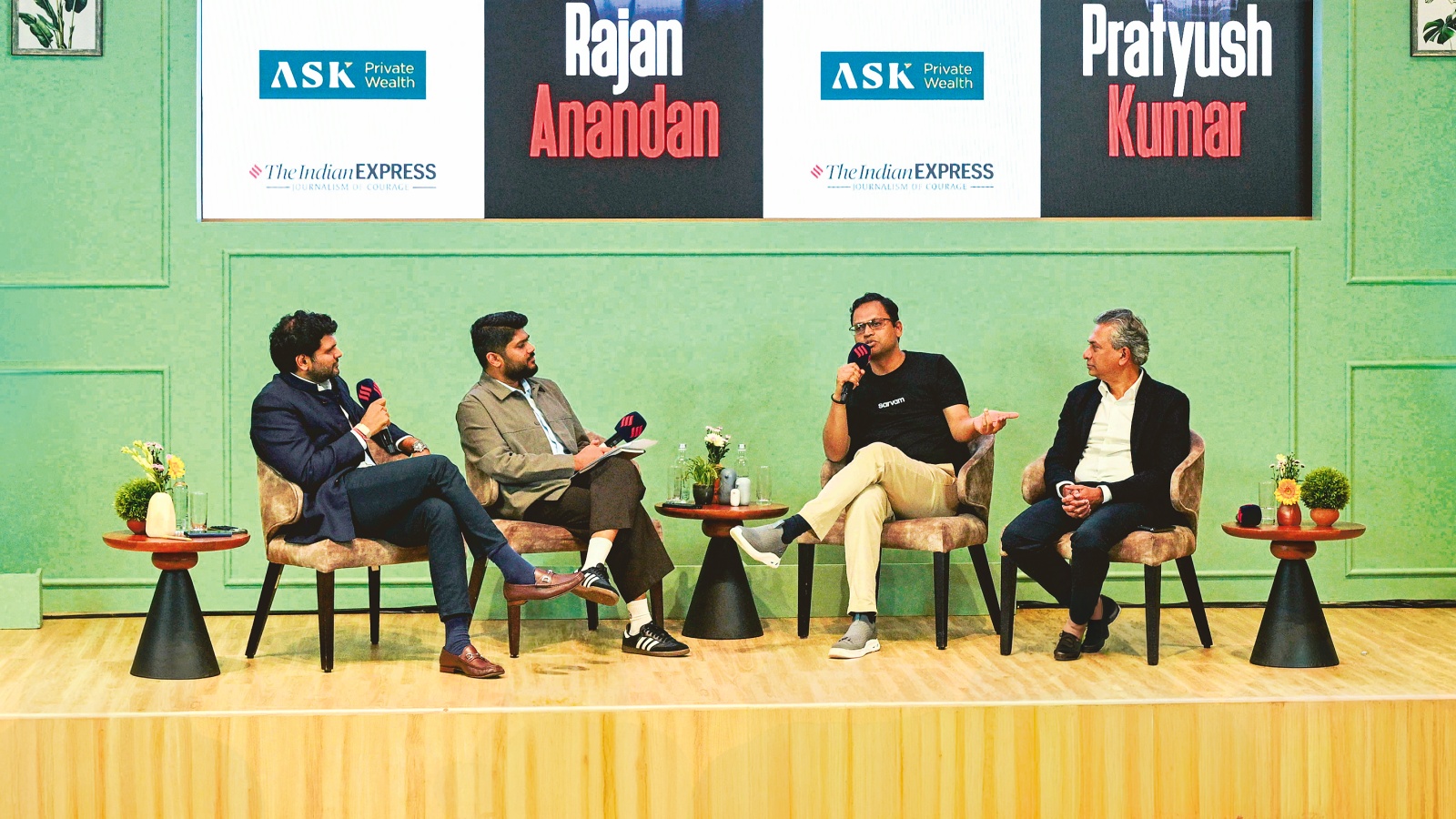
AI leaders Pratyush Kumar and Rajan Anandan discuss India's massive $400B AI capex, the rise of homegrown models, and the 10-year timeline for India's AI verdict.
- India officially entered the AI race in 2026 with massive infrastructure investments.
- Major players like Reliance, Adani, Tata, and AWS have announced over $400 billion in AI capex.
- Homegrown models like Sarvam AI and BharatGen are providing cost-effective alternatives to global giants.
- The true verdict on India's AI dominance will arrive in 8 to 10 years.
In a profound discussion on the future of technology, AI luminaries Rajan Anandan (MD, PeakXV Partners) and Pratyush Kumar (Co-founder, Sarvam AI) addressed the skepticism surrounding India's position in the global Artificial Intelligence landscape. While critics suggest India might be sitting out the AI revolution, the experts painted a much more optimistic picture of an ecosystem on the verge of an explosion.
Rajan Anandan highlighted that 2026 marks a pivotal turning point. He noted that while global capital often seeks 'pure-play' AI companies in equity markets, the private innovation ecosystem is thriving. The massive influx of capital—exceeding $400 billion from conglomerates like Reliance, Adani, and Tata, alongside hyperscalers like Google and Amazon—is set to unlock the computing constraints that previously hindered Indian progress.
Why This Matters
BozokMedia analysis shows that India's strategy is shifting from application-layer services to foundational infrastructure. By investing in compute and homegrown models, India is attempting to break the monopoly of Western frontier labs and establish a sovereign AI ecosystem.
Pratyush Kumar emphasized the competitive advantage of optimization. Instead of attempting to build massive, expensive, 'one-size-fits-all' models, Indian startups are focusing on high-efficiency, low-cost solutions. He revealed that Sarvam AI models are currently five times cheaper than GPT-mini and nine times cheaper than Gemini Flash, making them highly attractive for localized enterprise use cases.
AI is a horizontal technology, and because of its sheer economic value, India's eventual victory in this space is inevitable.
The experts drew a parallel to India's digital payment revolution. Just as India went from being a laggard in 2016 to a global leader in real-time payments today, the AI trajectory is expected to follow a similar pattern of rapid, massive adoption and dominance over the next decade.
Frequently Asked Questions
1. Why is India focusing on smaller AI models?
Smaller models are more cost-effective, easier to optimize for local languages, and have lower latency for specific enterprise needs.
2. How much investment is being made in Indian AI?
Over $400 billion in AI-related capital expenditure has been announced by major Indian and global corporations.