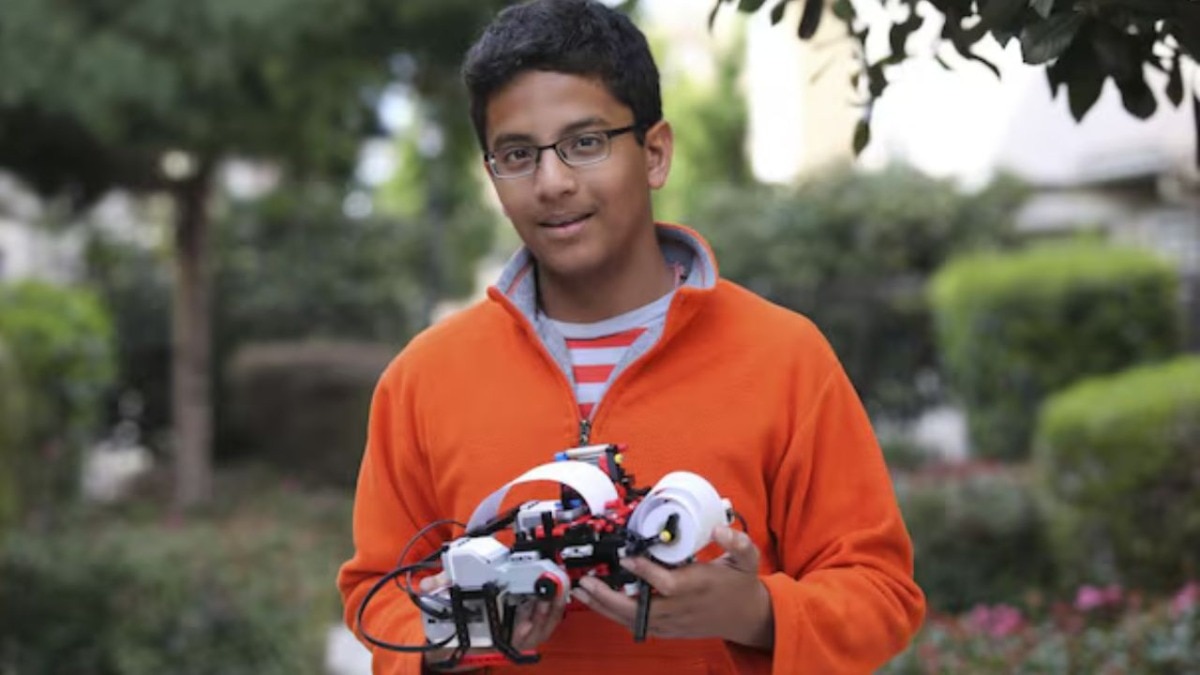
Thirteen-year-old Shubham Banerjee revolutionized assistive technology by creating a functional Braille printer using a Lego kit, attracting major investment from Intel Capital.
- Shubham Banerjee developed a prototype using a Lego Mindstorms EV3 kit.
- The cost was reduced from $2,000+ to approximately $350.
- The project led to the founding of Braigo Labs and investment from Intel Capital.
In a remarkable display of youthful ingenuity, a 13-year-old from Santa Clara, California, has turned a simple curiosity into a global technological breakthrough. Shubham Banerjee, an eighth-grader, set out to answer a fundamental question: "How do blind people read?" His discovery that commercial Braille embossers cost upwards of $2,000 sparked a mission to democratize access to tactile reading through affordable hardware.
Utilizing his Lego Mindstorms EV3 robotics kit, Banerjee spent weeks at his kitchen table, iterating through multiple designs. After seven attempts, he successfully engineered a prototype that could produce the raised-dot patterns essential for Braille reading. This device, which he dubbed Braigo, utilized three motors to precisely manipulate the paper and the printing head.
Why This Matters
BozokMedia analysis shows that Banerjee’s innovation addresses a critical gap in assistive technology. While digital screen readers have become prevalent, the fundamental need for physical Braille materials remains vital for literacy and education among the visually impaired. By slashing the cost from thousands of dollars to just $350, Banerjee opened doors for institutions and individuals who were previously priced out of the market.
True innovation often lies not in inventing something entirely new, but in making existing essential tools accessible to all.
The project's impact was validated when Henry Wedler, a blind doctoral student at UC Davis, tested the device. This collaboration ensured that the technology transitioned from a mere mechanical success to a user-centric tool, addressing the practical needs of its target audience.
From Science Fair to Intel Investment
What began as a school science project quickly escalated into a professional venture. After winning the Outreach Foundation n+1 Prize at the Synopsys Santa Clara County Science Fair, Banerjee founded Braigo Labs. The name itself is a clever portmanteau of "Braille" and "Lego."
The entrepreneurial momentum peaked when Intel Capital announced an investment in Braigo Labs. This milestone made Banerjee one of the youngest entrepreneurs to receive venture capital funding from Intel. While the original Lego-based model served as a proof of concept, the company evolved to develop purpose-built, quieter, and more efficient printers that moved beyond the limitations of toy components.
Frequently Asked Questions
1. Was the Lego printer a final product?
No, the Lego version was a prototype used to prove the concept; Braigo Labs later developed specialized hardware.
2. How much cheaper was the prototype?
The prototype cost roughly $350, compared to the $2,000+ price tag of traditional Braille printers.

