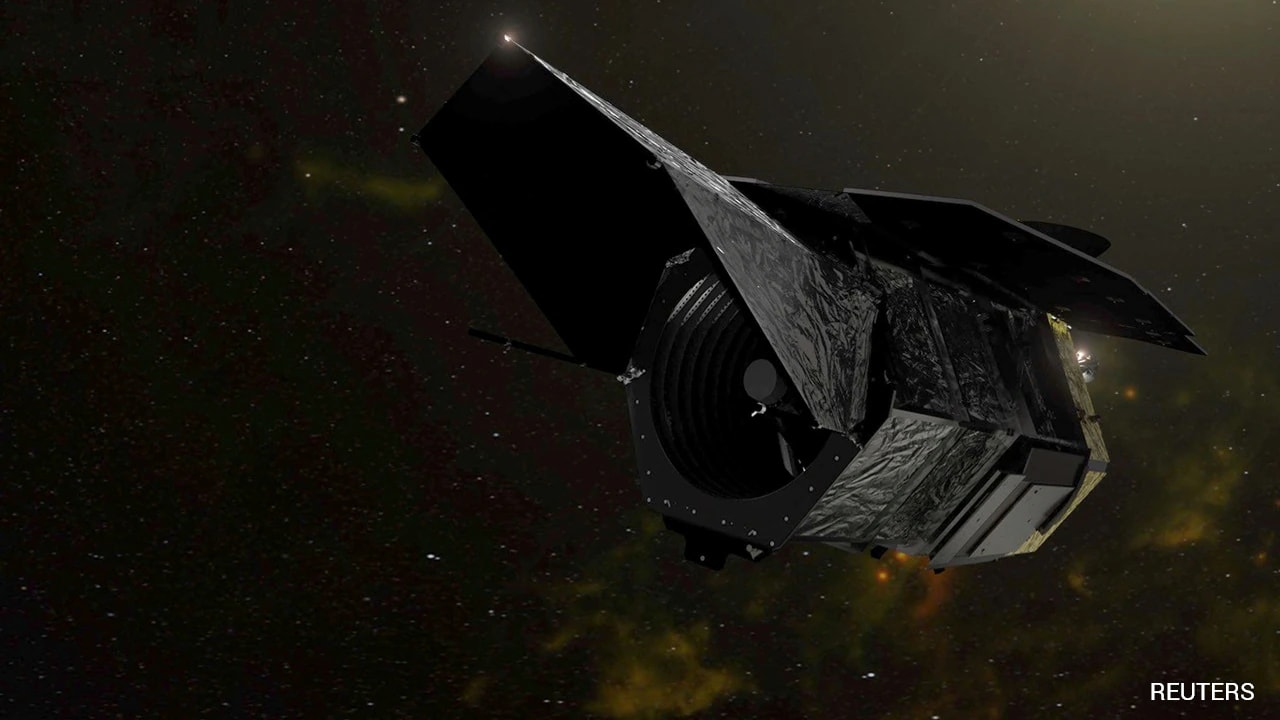
The Nancy Grace Roman Space Telescope, a $4 billion NASA initiative, is set to revolutionize our understanding of exoplanets and dark energy. This mission follows the legacy of Hubble and James Webb.
- The Nancy Grace Roman Space Telescope is a $4 billion flagship mission.
- It focuses on studying exoplanets and the mysteries of dark energy.
- The mission serves as a successor to the Hubble and James Webb telescopes.
The launch of the Nancy Grace Roman Space Telescope, a monumental project valued at approximately $4 billion, is poised to transform our understanding of the cosmos. Scheduled to launch from NASA's Kennedy Space Center in Florida, this mission represents the next frontier in deep-space observation.
The Roman Telescope is designed to tackle two of the most profound mysteries in modern astrophysics: the nature of dark energy and the prevalence of exoplanets. By utilizing a wide field of view, it will be able to survey large portions of the sky with unprecedented efficiency, providing data that single-point telescopes cannot achieve alone.
Why This Matters
BozokMedia analysis shows that the Roman Telescope is not just a hardware upgrade; it is a strategic leap in observational capacity. While the James Webb Space Telescope (JWST) looks deep into the past using infrared, the Roman Telescope will look 'wide,' mapping the distribution of matter and energy across the universe to explain why cosmic expansion is accelerating.
The Roman Space Telescope will bridge the gap between deep-field precision and wide-field surveying, fundamentally changing how we map the heavens.
Historical Background: The lineage of great space observatories is clear. From the Hubble Space Telescope, which provided our first clear windows into distant galaxies, to the James Webb Space Telescope, which peered through cosmic dust, NASA has consistently pushed the boundaries of the visible. The Roman Telescope integrates these lessons to provide a massive-scale survey of the universe.
Frequently Asked Questions
1. What is the main difference between Hubble and Roman?
While Hubble provides high-resolution images of specific targets, Roman provides a much wider field of view, allowing it to capture much more area in a single shot.
2. Why is dark energy important?
Dark energy is the mysterious force driving the accelerated expansion of the universe, and understanding it is crucial to knowing the ultimate fate of our cosmos.