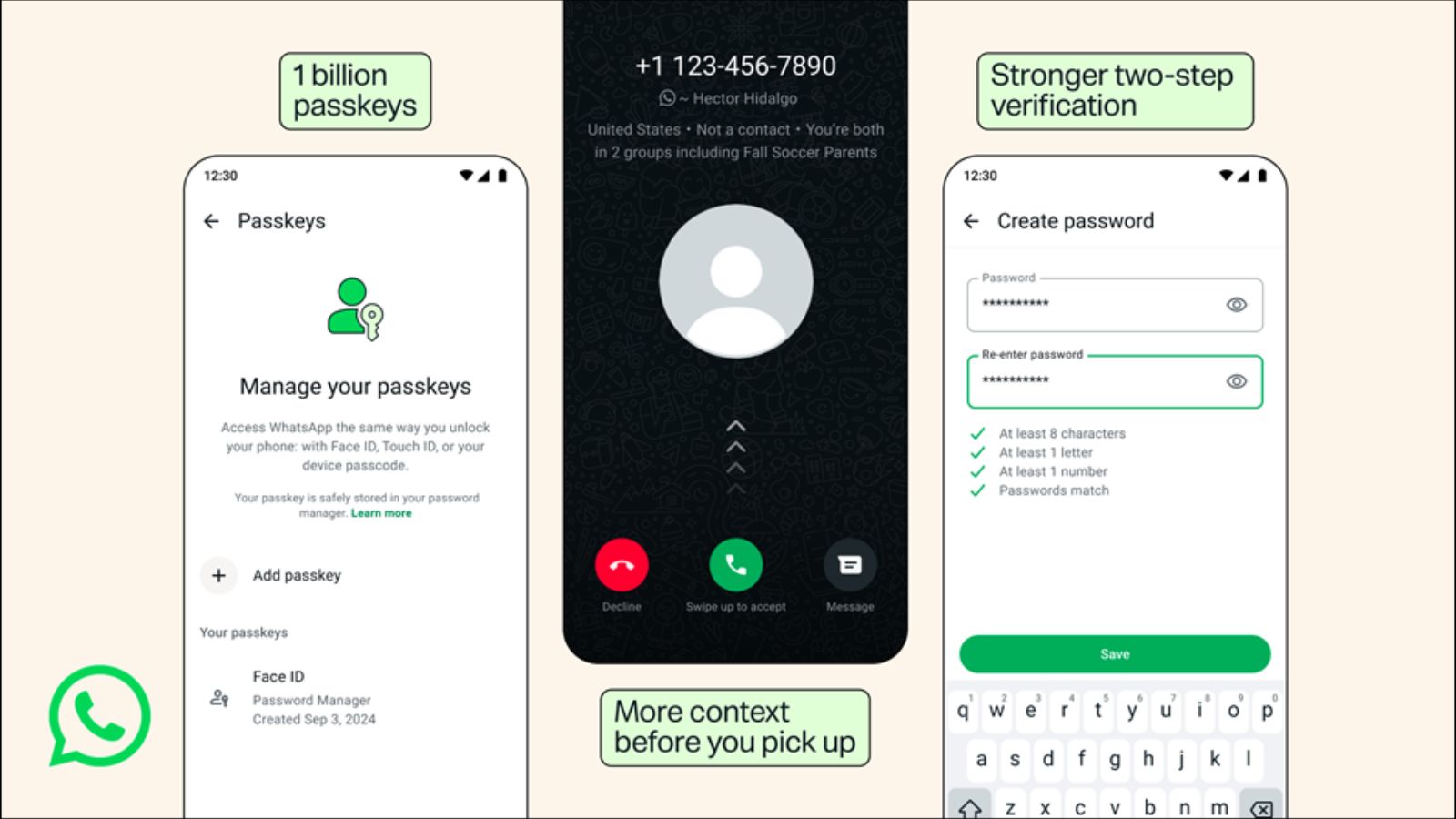
WhatsApp has rolled out significant security updates, allowing users to identify unknown callers more easily and offering advanced two-step verification options.
- Users can now see context about unknown callers, such as their country of origin.
- Two-step verification can now be upgraded from a 6-digit PIN to a complex alphanumeric password.
- Support for multiple passkeys has been added for cross-device users (Android & iOS).
WhatsApp, the Meta-owned messaging giant, is aggressively fortifying its security infrastructure to combat the rising tide of digital fraud. In its latest update, the platform has introduced features designed to give users critical context before they engage with unknown numbers, significantly reducing the risk of falling victim to social engineering scams.
Enhanced Caller Intelligence
For Android users, the platform is introducing a layer of transparency regarding incoming calls from unsaved contacts. Users will now be able to see whether an unknown caller is from a different country or if they share common WhatsApp groups. This preemptive information is crucial in identifying potential scammers who often use high-pressure tactics to deceive victims.
Why This Matters
BozokMedia analysis shows that as phishing and hacking attempts become increasingly sophisticated, messaging platforms must evolve beyond simple encryption. By providing contextual data about callers, WhatsApp is moving from reactive security to proactive user defense, keeping pace with rivals like Signal and Telegram.
Security updates are no longer optional features; they are essential shields in an era of hyper-sophisticated digital crime.
Advanced Authentication: Alphanumeric Passwords & Passkeys
Beyond caller ID improvements, WhatsApp is overhauling its Two-Step Verification (2FA). Users can now replace the standard six-digit PIN with a more robust alphanumeric password, making account hijacking via OTP interception significantly more difficult. Furthermore, users operating on both Android and iOS can now implement multiple passkeys, allowing for seamless and secure logins via fingerprint, Face ID, or screen locks.
Historical Background
The passkey feature, initially rolled out in 2024, was designed to eliminate the vulnerabilities associated with traditional username-and-password combinations. To date, more than a billion users have transitioned to using passkeys, marking a massive shift toward biometric-based security in the messaging ecosystem.
| Security Feature | Previous Standard | New Update |
|---|---|---|
| 2FA Method | 6-Digit PIN | Alphanumeric Password |
| Login Mechanism | Password/OTP | Multiple Biometric Passkeys |
| Unknown Call Info | Minimal Data | Country & Group Context |
Frequently Asked Questions
1. How do I set up my passkey?
Navigate to WhatsApp Settings > Account > Passkeys to manage and add your biometric credentials.
2. Does this update affect my existing chats?
No, these are security layers for account access and caller identification; your end-to-end encrypted chats remain untouched.