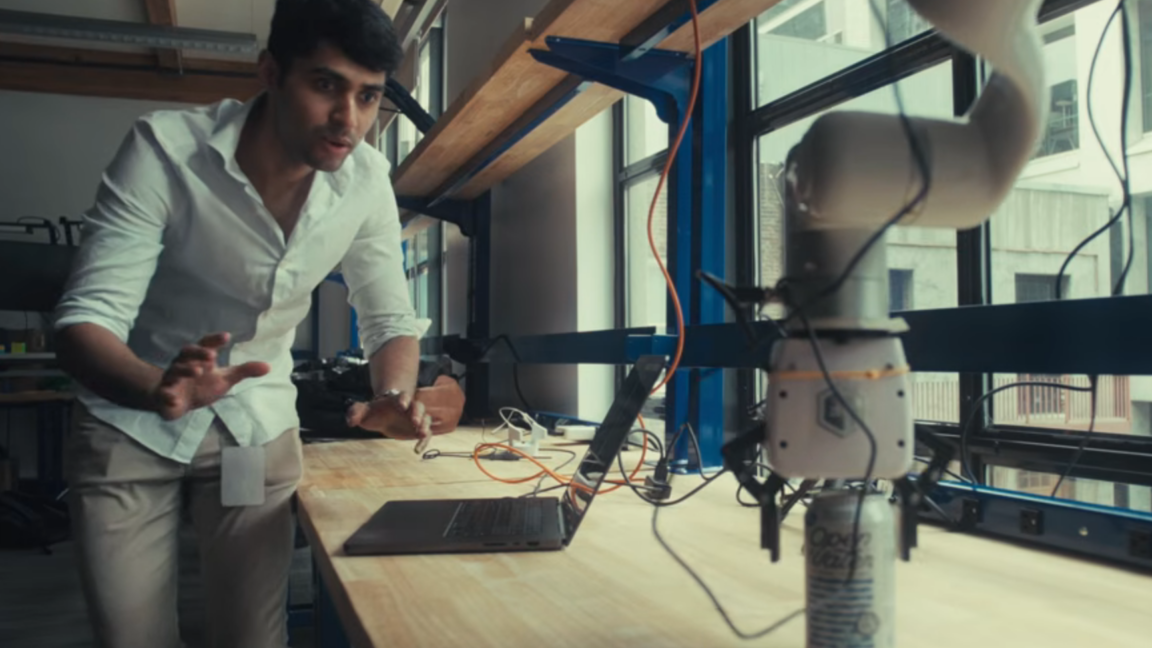
Anthropic has introduced the Model Hardware Standard (MHS), a groundbreaking driver interface designed to bridge the gap between AI agents and physical devices.
- Anthropic introduced the Model Hardware Standard (MHS) to connect AI with physical hardware.
- The standard aims to eliminate the need for bespoke software translators between devices.
- MHS could reduce complex scientific setup times from months to mere minutes.
While the surge in agentic AI over the past year has focused on text, code, and digital data, the true potential of AI remains locked within the computer screen. Anthropic is now working to break these digital shackles. The company has announced the Model Hardware Standard (MHS), a set of standardized drivers designed to allow AI agents to interface with and control arbitrary physical devices.
Currently in its 'research preview' stage, MHS is primarily aimed at the scientific community. Traditionally, setting up complex experiments requires scientists to write extensive custom software to get disparate components—like sensors, lasers, and cameras—to work together. MHS provides a common language and format for data sharing, allowing devices to communicate across a network without requiring a bespoke 'translator' program for every single connection.
Revolutionizing Scientific Research
The implications for laboratory automation are profound. According to Anthropic, this standardized system could compress experimental setup times that previously took weeks or months into just hours or minutes. This efficiency could accelerate the pace of global scientific discovery by orders of magnitude.
MHS represents the transition of AI from a purely cognitive tool to a physical actor capable of interacting with the tangible world.
The inspiration for this standard came from a real-world observation. Anthropic Technical Staffer Alek Kemeny noted that the idea was sparked by watching neuroscientist Arco Bast conduct experiments on memory formation at the HHMI Janelia Research Campus in Ashburn, Virginia. Bast had successfully developed an interface to coordinate rotating laser beams, microscopes, and cameras through a single common interface.
Why This Matters
BozokMedia analysis shows that Anthropic is positioning itself at the forefront of the 'embodied AI' movement. By standardizing how AI interacts with hardware, they are creating the infrastructure for a future where AI agents can operate laboratories, factories, and even household environments autonomously. This moves AI from being a chatbot to being a functional operator of the physical world.
Frequently Asked Questions
1. What is the primary goal of MHS?
The goal is to provide a universal interface so that AI agents can talk to and control various hardware devices seamlessly.
2. Who is the target audience for this technology right now?
It is currently being released as a research preview primarily for scientists and researchers conducting complex experiments.