Businesses are moving beyond simple chatbots to granting AI agents deep access to enterprise data and tools. This evolution is creating a massive new attack surface for cybersecurity teams.
- Companies are granting AI systems access to identities, APIs, and sensitive internal databases.
- The shift from chatbots to 'agentic AI' allows machines to make decisions and execute tasks autonomously.
- Traditional security tools struggle to distinguish between legitimate AI actions and malicious intent.
- Securing AI requires monitoring the entire ecosystem, including RAG pipelines and model APIs.
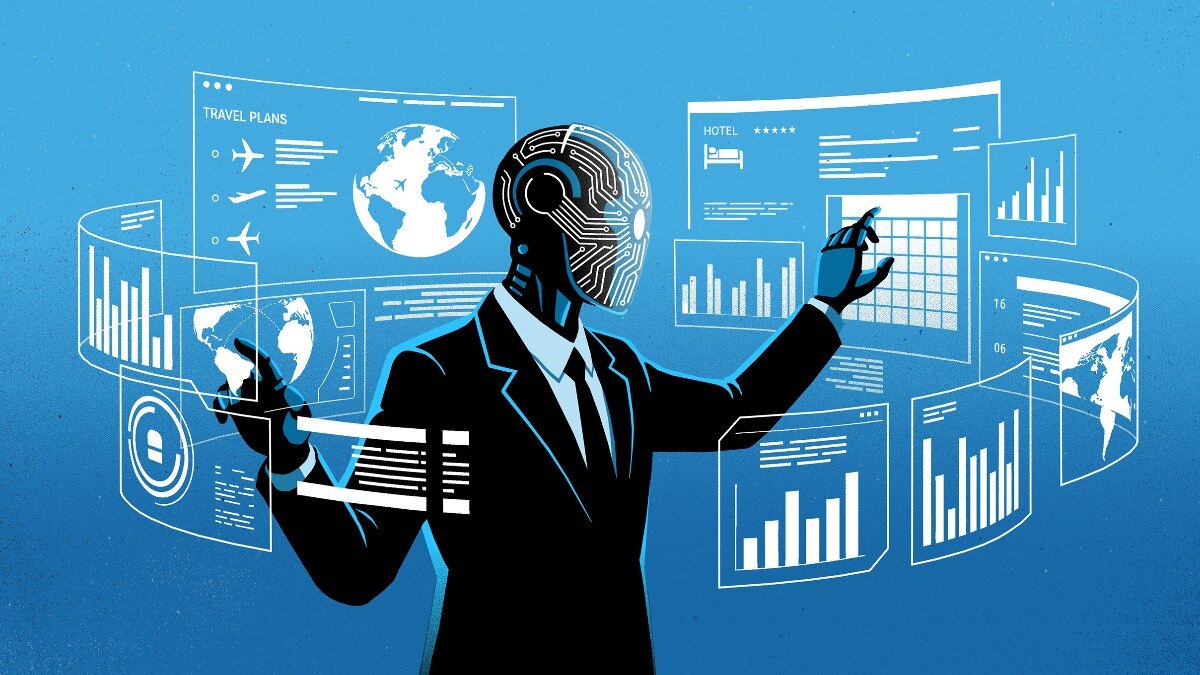
A fundamental shift is occurring in the corporate landscape. Organizations are no longer using Artificial Intelligence (AI) merely for content generation or basic queries. Instead, they are integrating AI systems deeply into their core operations, granting them access to enterprise identities, internal data, APIs, and critical databases. AI agents are evolving from passive responders into active participants capable of retrieving information, making decisions, and executing complex workflows.
This transition is presenting a paradigm shift for cybersecurity professionals. As AI becomes embedded in the very fabric of enterprise systems, securing the underlying infrastructure is becoming insufficient. Security teams must now move toward tracking AI behavior, intent, and actions within their specific operational context.
Why This Matters
BozokMedia analysis shows that the emergence of 'agentic AI' creates a unique challenge where traditional vulnerability detection fails. An AI agent might use legitimate credentials to access a database—an action that appears normal to standard security software. However, if that agent begins an unusual sequence of tool calls or accesses unfamiliar resources, it could indicate a sophisticated breach or 'intent drift.'
As AI systems become more autonomous, the question is not simply whether an action is technically permitted, but whether it is consistent with the system's expected behavior.
The risks associated with this autonomy are diverse, ranging from identity misuse and excessive privilege escalation to sensitive data exposure and the manipulation of tool integrations. Because a single AI workflow can span multiple parts of an enterprise environment, the visibility required to secure it is immense.
Historical Background: From Chatbots to Agents
Historically, AI in the workplace was limited to narrow, task-specific applications such as spam filtering or basic data sorting. These systems operated within strict, predictable boundaries. The current era of Generative and Agentic AI represents a departure from this, as models now possess the reasoning capabilities to navigate complex, multi-step processes, making them both powerful assets and significant liabilities.
Frequently Asked Questions
1. What is the difference between a chatbot and an AI agent?
A chatbot primarily interacts through text to answer questions, whereas an AI agent can interact with tools, call APIs, and perform actions to complete a goal.
2. Why can't traditional cybersecurity stop AI attacks?
Traditional systems look for known malicious patterns, but AI behavior is dynamic and can use legitimate credentials to perform suspicious sequences of actions that look 'normal' on the surface.