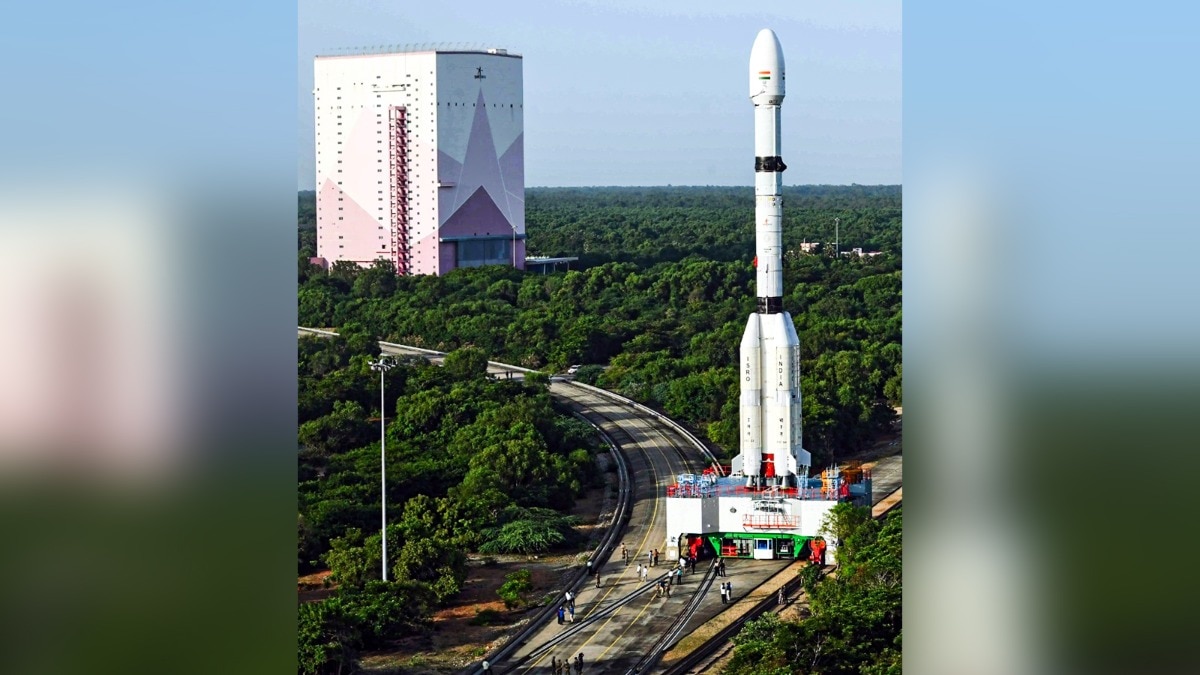
Five years after the setback of the GISAT-1 mission, ISRO is gearing up to launch the EOS-05 Earth observation satellite via the GSLV-F17 rocket. This mission marks a pivotal moment for India's geosynchronous imaging capabilities.
- EOS-05 will be India's first imaging satellite to operate from a geosynchronous orbit.
- The launch will utilize the GSLV-F17 rocket from the Satish Dhawan Space Centre.
- The mission serves as a critical recovery effort following the 2021 GISAT-1 failure.
The Indian Space Research Organisation (ISRO) is preparing for a high-stakes return to its ambitious Earth observation ambitions. The upcoming launch of EOS-05 aboard the GSLV-F17 rocket comes nearly five years after the disappointing failure of the GISAT-1 mission. This mission is poised to be a defining moment in India's space odyssey.
EOS-05 is a state-of-the-art Earth observation spacecraft designed to function from a geosynchronous orbit. Unlike traditional Earth observation satellites that pass over a specific location periodically, a geosynchronous satellite remains positioned over the same region. This capability provides an unprecedented advantage in monitoring rapidly evolving weather patterns, cyclones, and natural disasters in real-time.
Why This Matters
BozokMedia analysis shows that the success of this mission is vital for India's strategic autonomy in space-based surveillance and disaster management. By establishing a continuous eye in the sky, India can significantly improve its response time to environmental crises and meteorological shifts across the subcontinent.
The EOS-05 mission is not just a satellite launch; it is a test of ISRO's resilience and its ability to master complex cryogenic technologies.
The launch vehicle, GSLV-F17, represents the 19th flight of India's Geosynchronous Satellite Launch Vehicle program. It is scheduled to lift off from the Second Launch Pad at the Satish Dhawan Space Centre in Sriharikota. The rocket will feature a specialized four-metre-diameter Ogive composite payload fairing to carry the satellite into a Sub-Geosynchronous Transfer Orbit (Sub-GTO).
Historical Background
The road to EOS-05 has been marked by significant challenges. In August 2021, ISRO attempted to launch GISAT-1 (also known as EOS-03) using the GSLV-F10. However, a malfunction in the cryogenic stage prevented the satellite from reaching its intended orbit, leaving a gap in India's continuous observation capabilities. EOS-05 is the direct answer to that technical setback.
Frequently Asked Questions
Question 1: What makes EOS-05 different from previous satellites?
Answer: It will be the first Indian imaging satellite to operate from a geosynchronous orbit, allowing for continuous monitoring of a single area.
Question 2: Why did the previous GISAT-1 mission fail?
Answer: The mission failed due to technical issues encountered in the cryogenic stage of the GSLV-F10 rocket.