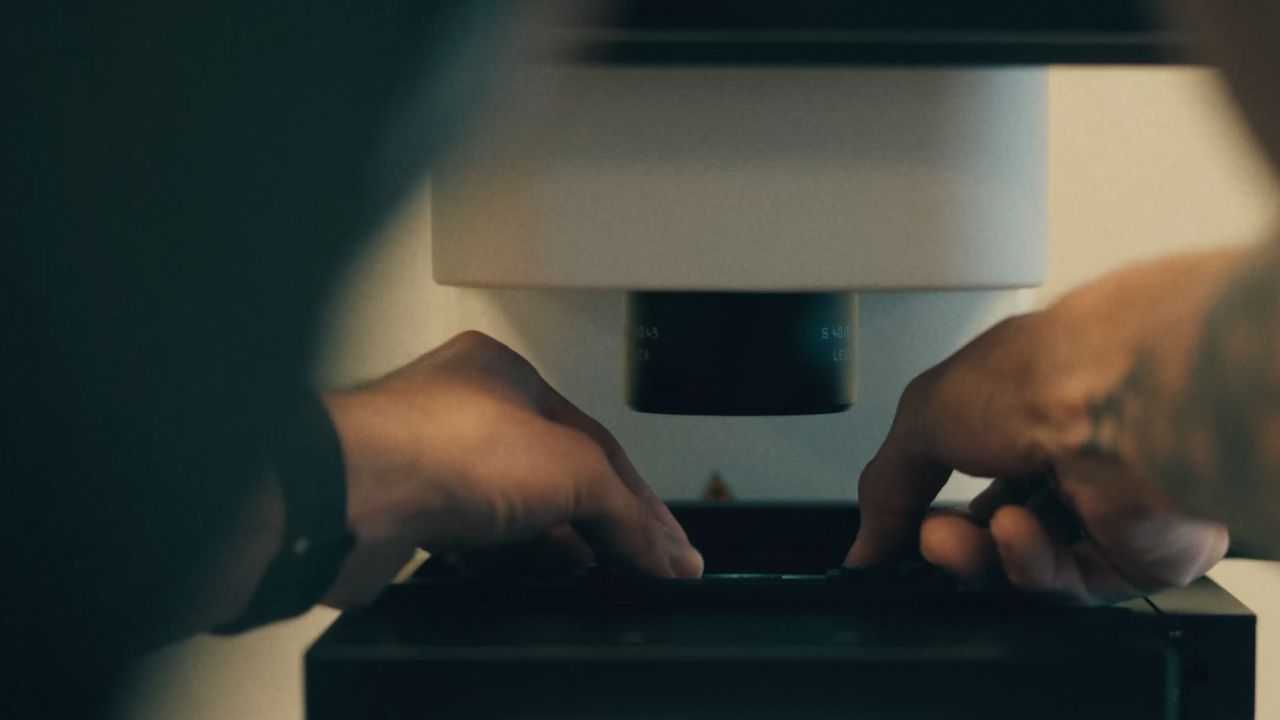
Anthropic has introduced the Model Hardware Standard (MHS), a breakthrough specification allowing AI agents to safely operate physical laboratory and manufacturing equipment. This standard promises to slash integration times from months to minutes.
- MHS is a shared specification enabling AI agents to operate devices like robotic arms and microscopes.
- It reduces hardware integration time from weeks or months to mere hours or minutes.
- Developed through a collaboration between Anthropic and HHMI Janelia Research Campus.
- The standard is model-agnostic and works with any device featuring a programmable interface.
In a landmark development for the field of artificial intelligence, Anthropic has announced a research preview of the Model Hardware Standard (MHS). This new specification is designed to bridge the gap between digital intelligence and physical action, allowing AI agents to safely and effectively operate complex hardware in scientific research and manufacturing environments.
Traditionally, integrating diverse hardware—such as liquid handlers, microscopes, and robotic arms—into a cohesive system has been a monumental task, often requiring specialists to build bespoke integrations that take months to complete. MHS aims to disrupt this bottleneck, enabling seamless communication between devices and AI agents in a fraction of the time.
Why This Matters
BozokMedia analysis shows that MHS represents a fundamental shift from AI as a conversational tool to AI as a physical operator. By providing a standardized way for agents to 'understand' and 'command' hardware, MHS allows for the orchestration of autonomous, 24/7 workflows. This means researchers can set up complex experiments—ranging from drug discovery to quantum computer calibration—and let AI agents manage the entire process, including real-time adjustments and error recovery.
MHS transforms hardware into something 'readable' for AI, effectively giving digital brains the hands they need to manipulate the physical world.
How MHS Works: The core of the standard is a standardized driver that translates between a computer's operating system and the hardware. Using simple primitives like "read" and "write," any programmable device can become part of an AI-driven network. Furthermore, MHS allows devices to share crucial physical characteristics—such as the weight of a robotic arm—via natural language tags, ensuring the AI operates within safe physical limits.
During testing, Claude demonstrated remarkable exploratory capabilities. Much like a human scientist, Claude was observed adjusting lasers, observing the visual output through cameras, and iteratively refining its approach until it could write a deterministic script to automate the entire alignment process.
Comparison: Traditional Integration vs. MHS
| Feature | Traditional Integration | MHS Standard |
|---|---|---|
| Integration Timeline | Weeks to Months | Hours to Minutes |
| Device Communication | Bespoke/Siloed | Standardized/Interoperable |
| AI Interaction | Highly Complex/Limited | Native/Seamless |
| Error Management | Manual Intervention | Autonomous Recovery |
Frequently Asked Questions (FAQ)
1. Is MHS limited to Anthropic's Claude models?
No, the standard is designed to be model-agnostic, allowing any agent harness to access it using standard protocols.
2. How does MHS ensure safety in physical environments?
MHS incorporates safety evaluations and allows users to define safety limits through natural language tags that the AI must respect.

