Chinese AI startups are outperforming giants like OpenAI and Anthropic by leveraging open-weights models and domestic hardware, effectively neutralizing US sanctions.
- Chinese startups like Zhipu AI and Alibaba are matching or exceeding the capabilities of US frontier models.
- The GLM-5.3-Flash model demonstrates that high-capacity AI can be built using Huawei chips, bypassing Nvidia bans.
- Global enterprises are shifting toward open-weight Chinese models (Qwen, Kimi) due to lower costs and flexibility.
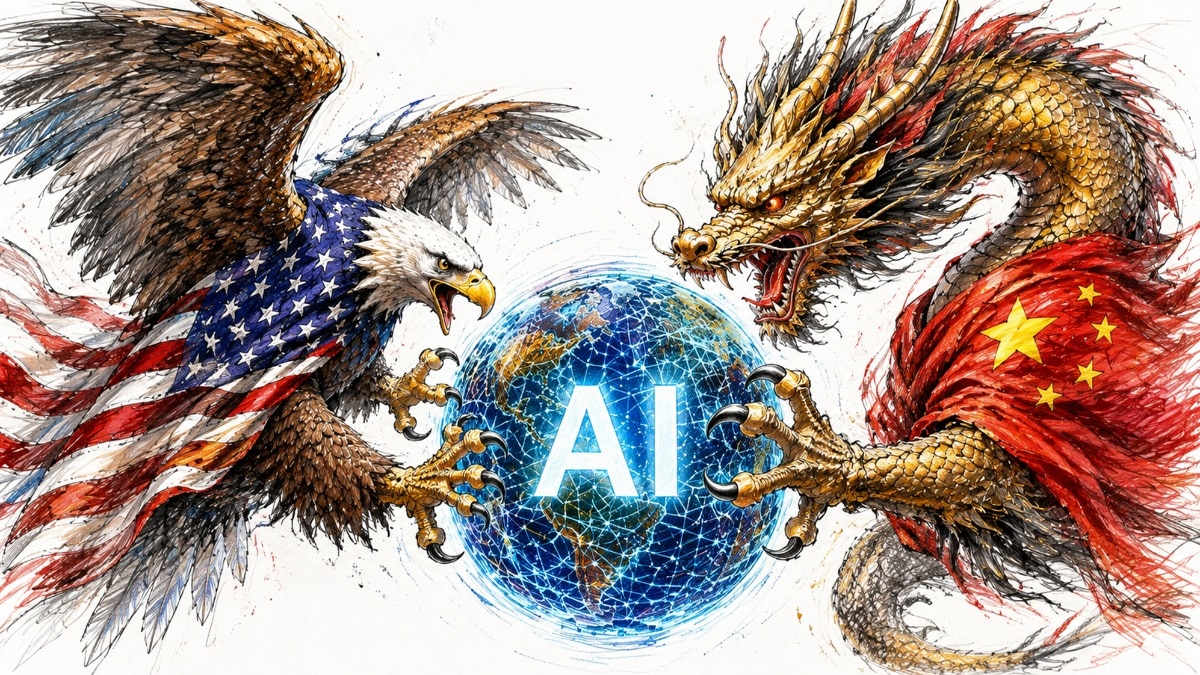
Regardless of the geopolitical stances of the UK, France, India, or Germany, the current AI landscape is a binary struggle between the United States and China. For years, the prevailing narrative among experts was that China lagged 6 to 12 months behind frontier models like GPT-4 or Claude. However, recent developments suggest this gap has not only closed but may have reversed.
The revelation of GLM-5.3-Flash (formerly known as Ox Alpha) by Zhipu AI—a startup with deep ties to Tsinghua University—is a watershed moment. While it is a 'Flash' model with a smaller parameter size (around 300 million), its efficiency is staggering. It signals that Zhipu's upcoming full-scale model, likely boasting a trillion parameters, could potentially outperform anything currently available in the American arsenal.
Perhaps more alarming for US policymakers is the hardware infrastructure. GLM-5.3-Flash is powered entirely by Huawei chips. By offering the model for free with a capacity of 100 trillion tokens per day, Zhipu AI has sent a clear message: the US hardware ban intended to cripple Chinese AI development has failed. China has successfully pivoted to domestic silicon.
Why This Matters
BozokMedia analysis shows that the strategic shift toward 'open-weights' is China's masterstroke. By making models like Qwen 2.8 27B available for local deployment, China is capturing the global developer market. Major entities such as Thomson Reuters and the legal tech firm Harvey are already integrating Chinese models to reduce their reliance on expensive, closed-source American APIs.
"The shift from closed-source hegemony to open-weight efficiency is where China has found its competitive edge over Silicon Valley."
The current silence from OpenAI and Anthropic is telling. It suggests a period of strategic recalibration in response to price pressure and technical parity from the likes of MoonShot and Alibaba. While Sam Altman hints at next-gen breakthroughs, the reality on the ground is that Chinese AI is no longer chasing the US—it is leading the charge in accessibility and cost-efficiency.
| Feature | US Models (OpenAI/Anthropic) | Chinese Models (Zhipu/Alibaba) |
|---|---|---|
| Access Model | Primarily Closed/Subscription | Increasingly Open-Weights |
| Hardware Base | Heavy Nvidia Dependence | Pivot to Huawei/Domestic Chips |
| Cost Efficiency | Premium Pricing | Highly Competitive/Low Cost |
Frequently Asked Questions
Q1: Has China officially won the AI race?
A: While the race continues, China has taken the lead in open-source adoption and hardware independence, making them a dominant force in practical AI deployment.
Q2: Why are US companies using Chinese AI models?
A: Because open-weight models like Qwen allow companies to retrain the AI on their own data locally, ensuring better privacy and significantly lower costs than using ChatGPT.