While artificial intelligence continues to disrupt industries, literary translation remains a distinct challenge that AI cannot easily conquer. At the Bhashavaad National Translation Conference in New Delhi, experts debated the limits of technology, emphasizing that cultural nuance, human experience, and deep context protect human translators from redundancy.
- AI can easily handle formulaic fiction but struggles significantly with literary translation requiring deep cultural context.
- The debate over copyright ownership arises when translators rely heavily on AI tools like ChatGPT or Gemini.
- Experts argue that translation is a form of knowledge production, not merely copying text from one language to another.
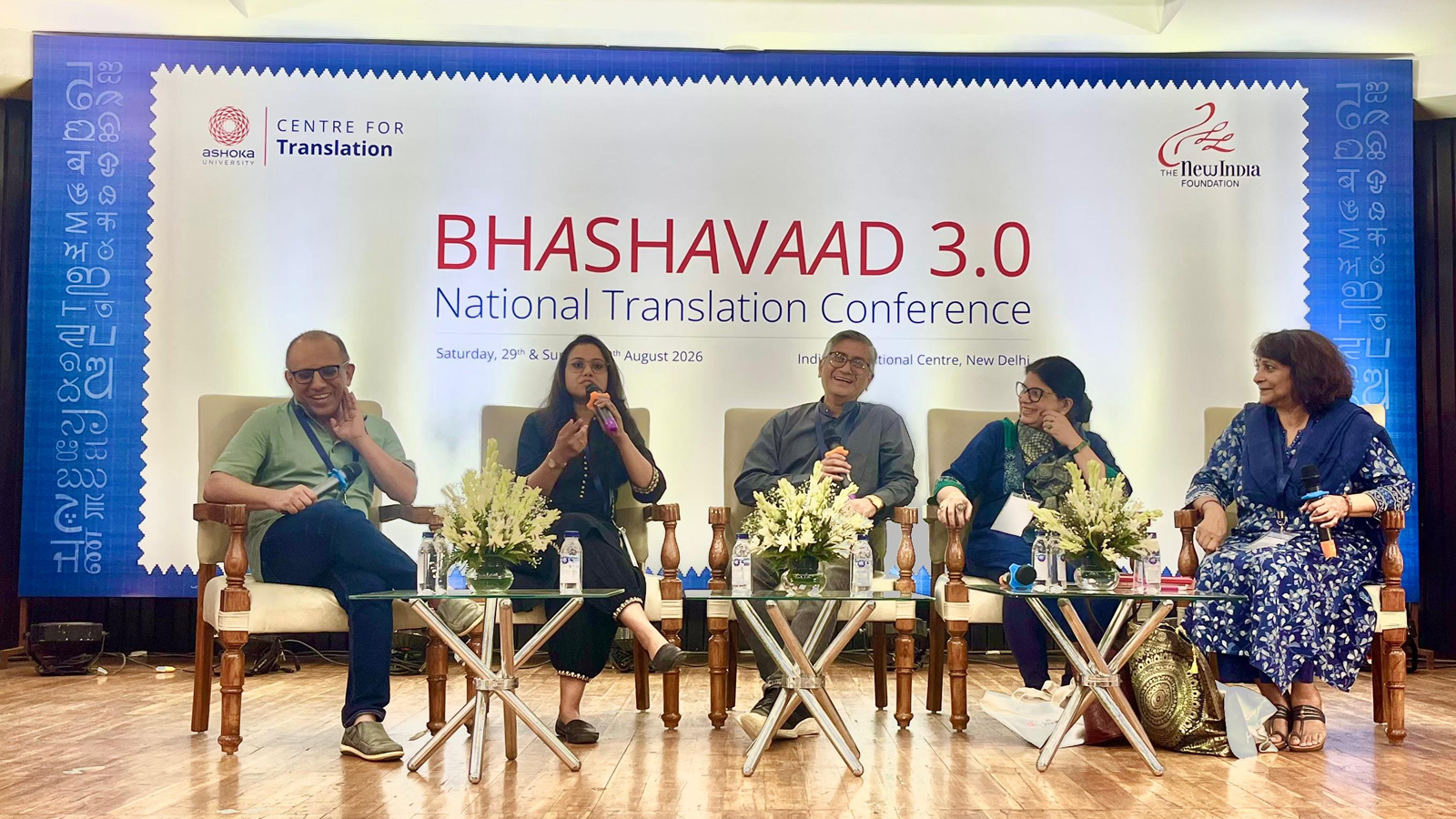
The rise of artificial intelligence has sparked intense debates across creative industries, and literary translation has emerged as a key battleground. While romantic fiction publishers like Harlequin have proposed using AI for initial drafts to save costs, human translators argue that literature requires a level of emotional depth that algorithms cannot replicate. This critical intersection of technology and art took center stage at the Bhashavaad National Translation Conference at the India International Centre in New Delhi.
Organized by Ashoka University’s Centre for Translation, the conference brought together prominent figures, including journalist-translator Poonam Saxena, Professor Nishat Zaidi, historian Murali Ranganathan, and editor Moutushi Mukherjee. Moderated by Arunava Sinha, the panel addressed the pressing question: "Are translators redundant?" The consensus was clear—while AI can manage predictable, formulaic prose, it falls incredibly short when confronting complex literary masterpieces.
To illustrate this, Poonam Saxena cited Munshi Premchand’s classic novel Gaban. In the story, a character facing a crisis says a line that translates literally to: "Then there would be nothing left for him except Triveni." To an AI, this refers to a geographic location. However, in the context of the novel set in Prayagraj, it implies committing suicide by drowning at the Triveni Sangam. Without accrued human experience, AI tools fail to grasp these profound cultural nuances.
| Feature | Human Translator | AI Translator |
|---|---|---|
| Cultural Nuance | Excellent (Understands idioms & local context) | Poor (Translates literally) |
| Speed & Volume | Slow (Requires deep research) | Instant (Processes millions of words) |
| Originality | High (Produces new knowledge) | Low (Mimics existing patterns) |
Why This Matters
BozokMedia analysis shows that the rapid integration of AI in publishing risks flattening linguistic diversity and erasing localized cultural idioms. If publishers prioritize cost-cutting over creative integrity, global literature may lose the unique voices that define human storytelling. Moreover, the ethical boundaries of AI training remain highly controversial, as machine models are trained on the intellectual property of human writers without consent.
"AI will always be pretending because it does not know, will never know what it is like to be a living body." — David Szalay, Booker Prize-winning author
Publishers are also facing unprecedented challenges regarding copyright. Moutushi Mukherjee of Penguin Random House India noted that editors are now actively scanning manuscripts for "tells"—over-elaborate, jargon-heavy sentences typical of AI-generated text. If a translator relies too heavily on AI, the legal ownership of the translation becomes murky, threatening the traditional publishing model.
Despite these challenges, some see potential for collaboration. An audience member shared how Google Gemini successfully translated Spanish directly into Hindi, preserving the original voice better than English-mediated translations. However, the panelists emphasized that aspiring translators must first read widely and understand human complexities before relying on technological aids.
Frequently Asked Questions
Q1: Why can't AI translate classic literature accurately?
A1: Classic literature relies on cultural context, local idioms, and historical background that AI models cannot fully grasp without lived human experience.
Q2: What are "tells" in AI-translated texts?
A2: "Tells" are over-elaborate, repetitive, or jargon-heavy sentence structures that editors look for to identify AI-generated content in manuscripts.