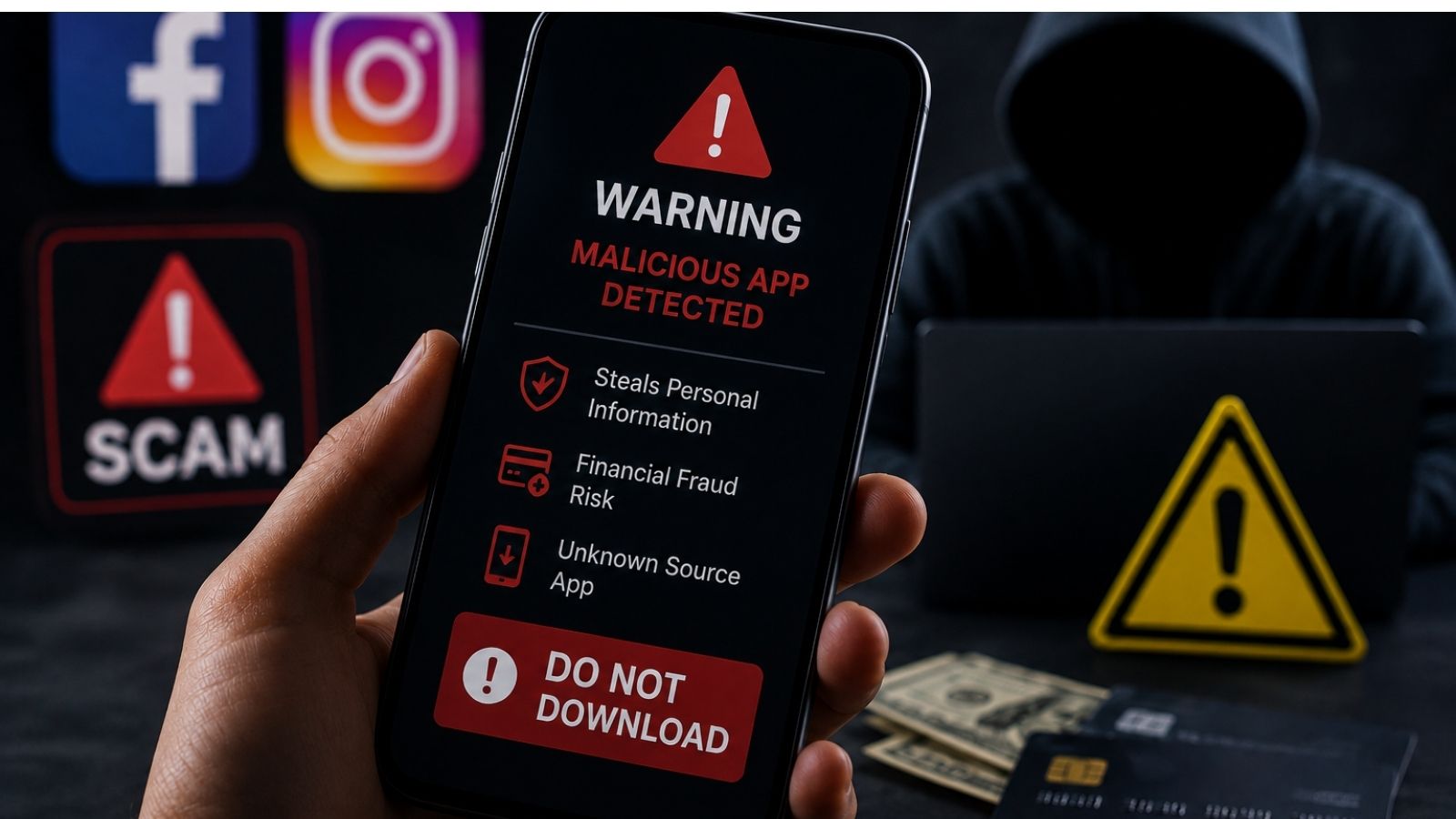
The Indian Cyber Crime Coordination Centre (I4C) has issued an urgent advisory regarding malicious Android apps disguised as adult content to facilitate financial fraud.
- Malicious apps like 'Night Play' and 'Vimo' promoted via Facebook and Instagram ads.
- Apps abuse accessibility permissions to gain full device control.
- Urgent advisory to avoid third-party APKs and protect sensitive banking data.
The National Cybercrime Threat Analytics Unit (NCTAU), operating under the Ministry of Home Affairs' Indian Cyber Crime Coordination Centre (I4C), has flagged a dangerous surge in financial frauds. Cybercriminals are leveraging the allure of pornography to trick Android users into installing malware that compromises personal and financial security.
According to the advisory, applications operating under names such as ‘Night Play’, ‘Reloop’, ‘Kyss’, ‘Vimo’, ‘Rivo’, ‘Nexo’ and ‘Vixa’ are being circulated through targeted advertisements on social media platforms like Facebook and Instagram. These ads redirect users to external websites where they are prompted to download an APK (Android Package Kit) file.
The Mechanism of Attack
Once installed, these apps request extensive permissions, specifically targeting 'accessibility services.' By abusing these permissions, the malware can effectively take over the device, monitor user activity, and execute unauthorized financial transactions. Furthermore, some of these apps install a VPN to mask criminal traffic and may even disable the user's ability to uninstall the app through standard settings.
Why This Matters
BozokMedia analysis shows that the weaponization of adult content is a strategic pivot by threat actors to target a demographic that is less likely to report the crime due to social stigma. This 'shame-based' exploitation ensures that many victims remain silent, allowing the fraud networks to operate with impunity.
"The move from Play Store apps to direct APK installations is a red flag; users must treat every off-store download as a potential security breach."
The government has cautioned citizens against sharing sensitive information such as OTPs, PINs, passwords, or CVV numbers. There is a rising trend of fraudsters impersonating law enforcement, bank officials, or courier executives to create a sense of urgency regarding KYC updates or government schemes.
Frequently Asked Questions
Q1: What should I do if I have already installed one of these apps?
Immediately disconnect from the internet, attempt to uninstall the app, and perform a factory reset of your device. Contact your bank to freeze accounts and report the incident to 1930.
Q2: How can I report cyber fraud in India?
Victims can report incidents to the national cybercrime helpline at 1930 or via the official portal at www.cybercrime.gov.in.