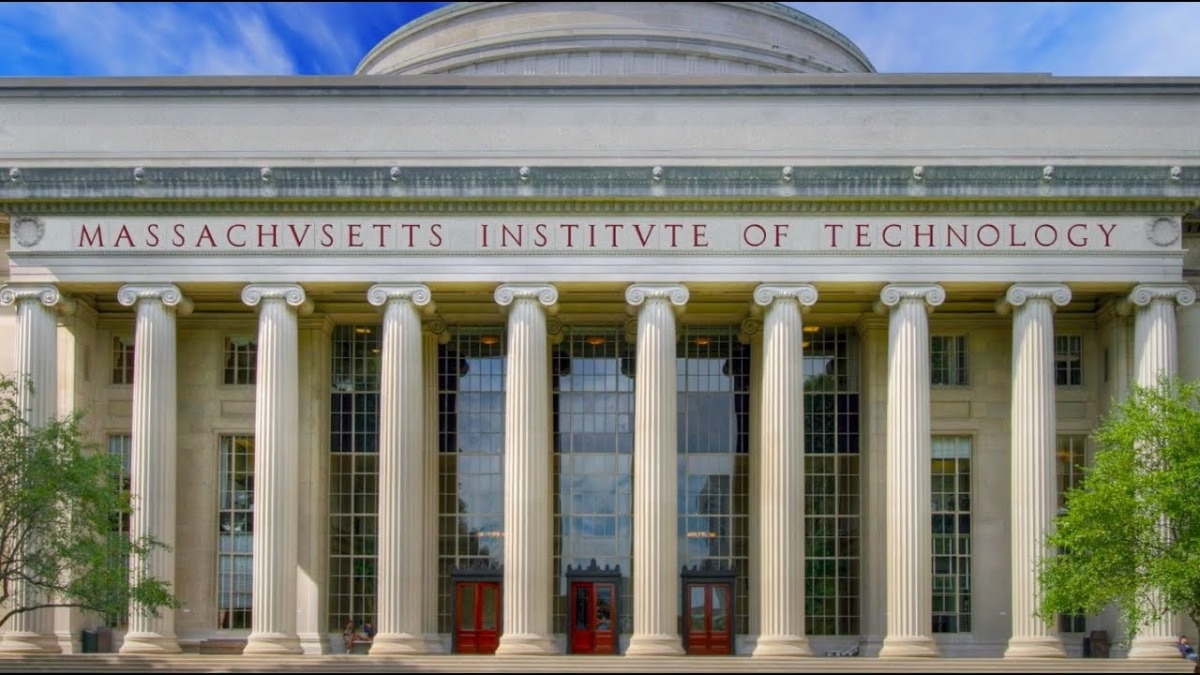
MIT has issued a stark warning that generative AI can now credibly complete most undergraduate assignments, threatening the core of human learning. The institution is now pivoting toward oral defenses and hands-on projects to combat 'cognitive debt' in students.
- Generative AI is now capable of credibly completing the majority of undergraduate-level academic assignments.
- Over-reliance on AI is leading to 'cognitive debt,' reducing neural connectivity and independent thinking.
- MIT is shifting from traditional take-home exams to oral defenses and collaborative, tech-free learning.
One of the world's most prestigious academic institutions, the Massachusetts Institute of Technology (MIT), has sounded a serious alarm regarding the intersection of artificial intelligence and education. According to a report from the Institute's Ad Hoc Committee on AI Use, generative AI has reached a point where it can "credibly complete most undergraduate assignments," rendering the traditional homework model effectively obsolete.
MIT President Sally Kornbluth described this as a historic "watershed moment." The leadership acknowledges that while AI feels like an academic superpower, allowing algorithms to handle the intellectual heavy lifting introduces systemic risks to genuine education. When chatbots solve complex equations, draft essays, and debug code, the mental friction required for deep learning disappears.
The Hidden Toll on the Student Brain
The adoption of these tools is widespread. Data from the College Board indicates that over 80% of high schoolers use generative AI for schoolwork, ranging from brainstorming to direct copy-pasting. Similarly, a study by the RAND Corporation found that AI usage among middle and high school students has surged past 60%.
The consequences are quantifiable. A massive field experiment by researchers from Wharton and the University of Pennsylvania revealed a disturbing trend: while students with AI access completed 48% more practice problems correctly, they performed 17% worse on subsequent exams once the AI was removed. The technology had transitioned from a tool to an academic crutch.
The reliance on AI for synthesis and problem-solving is creating a dangerous build-up of cognitive debt, where the brain's ability to form long-term memories and think independently begins to atrophy.
Why This Matters
BozokMedia analysis suggests that we are witnessing a fundamental shift in human cognition. The crisis is not merely about academic dishonesty or cheating, but about the erosion of critical thinking. If universities do not pivot, they risk producing graduates who possess credentials but lack the cognitive stamina to solve problems without a prompt. This creates a long-term risk for innovation in science, engineering, and governance.
Further evidence comes from the MIT Media Lab, where EEG monitoring of 32 neural regions showed that students using ChatGPT exhibited significantly lower cognitive engagement. This phenomenon, termed "Cognitive Debt," refers to the invisible decline in neural connectivity and synthesis skills when the brain is bypassed by an algorithm.
MIT's Plan to Reclaim Learning
Rather than fighting a losing battle with flawed AI detection software, MIT is redesigning the educational experience. The goal is to foster an education "of humans, by humans, for the betterment of humankind." This involves dismantling vulnerable routines and prioritizing authentic human reasoning.
MIT is moving away from easily automated problem sets and take-home exams. In their place, the university is implementing oral defenses, semester-long project portfolios, and collaborative engineering challenges. Additionally, the institute is introducing "Tech Free Times" to revive the culture of late-night dorm study groups and whiteboard debates.
| Traditional Model | New MIT Model |
|---|---|
| Take-home essays and problem sets | Oral defenses and project portfolios |
| Reliance on AI detection tools | Emphasis on authentic human reasoning |
| Isolated digital homework | Collaborative, tech-free peer mentoring |
Frequently Asked Questions
1. Is MIT banning AI entirely?
No, MIT is not implementing a blanket ban but is requiring professors to justify AI usage based on specific learning goals and changing how students are assessed.
2. What is 'Cognitive Debt'?
It is the gradual loss of independent thinking and memory formation skills that occurs when a student relies on AI to perform the mental labor of learning.
