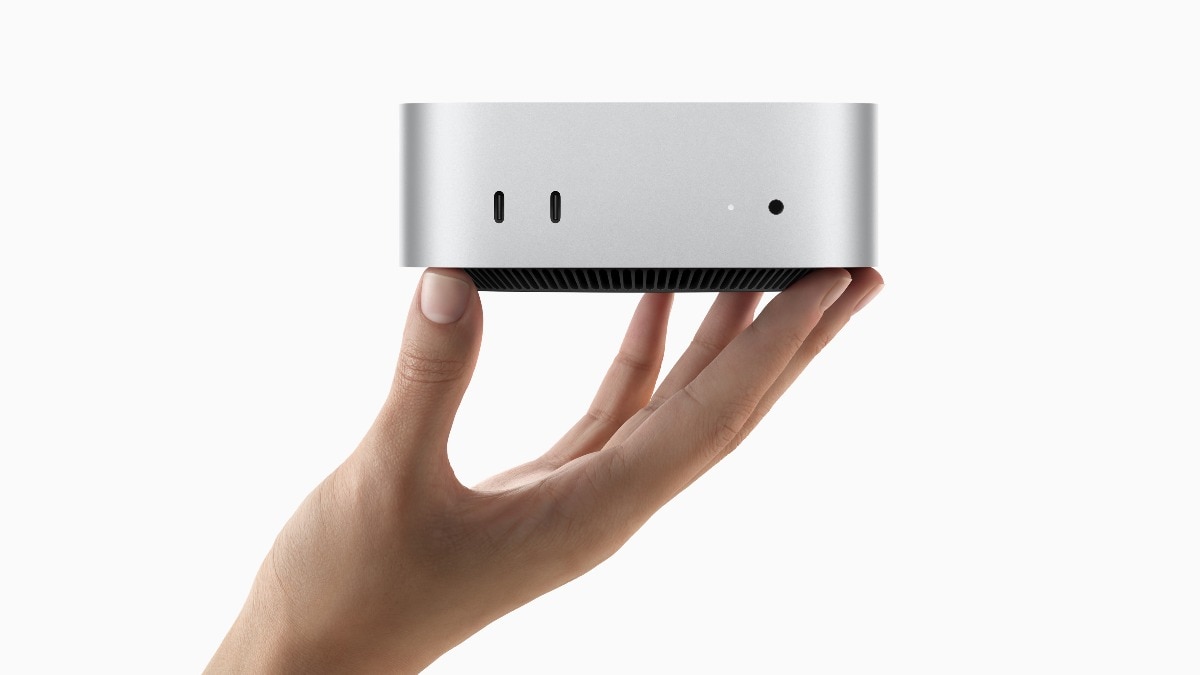
In a surprising move, OpenAI has reportedly purchased tens of thousands of Mac mini and Mac Studio devices to train advanced AI agents and reinforcement learning models.
- OpenAI has acquired tens of thousands of Mac mini and Mac Studio systems for AI training.
- Anthropic is reportedly renting Mac minis via Amazon Web Services (AWS).
- Apple's Unified Memory Architecture is a key driver for AI developers.
- Mac revenue surged by 29% due to unexpected enterprise demand.
The landscape of Artificial Intelligence development is undergoing a tectonic shift. While massive Nvidia GPU clusters have long been the gold standard for training large-scale models, AI giants like OpenAI and Anthropic are increasingly turning to Apple's desktop hardware. Reports indicate that OpenAI has purchased tens of thousands of Mac mini and Mac Studio units to facilitate the training of sophisticated AI agents.
This strategic pivot focuses heavily on Reinforcement Learning (RL)—a method where AI learns through iterative trial and error. OpenAI is specifically leveraging these Macs to develop 'computer-use' AI agents. These agents are designed to navigate software interfaces, execute complex multi-step workflows, and interact with digital environments in a manner that closely mimics human behavior.
Why This Matters
BozokMedia analysis shows that the primary catalyst for this shift is Apple's proprietary Unified Memory Architecture. Unlike traditional architectures that suffer from latency when moving data between CPU and GPU, Apple's silicon allows large AI models to access massive amounts of memory with extreme efficiency. This makes the Mac mini and Mac Studio highly cost-effective for specialized AI workloads.
Apple's hardware is transcending its consumer roots to become a critical pillar of the global AI development infrastructure.
The surge in demand has had a profound impact on Apple's bottom line. The company reported a nearly 29% year-on-year increase in Mac revenue, reaching $10.3 billion in the latest quarter. This unexpected enterprise rush even forced Apple to accelerate its product cycle, releasing the M6-powered Mac mini and M5 Max/Ultra Mac Studio ahead of its traditional autumn schedule.
However, this trend has ignited a new competitive front. Nvidia, the undisputed leader in AI computing, now views Apple as a significant competitor in the local AI space. In response to this emerging threat, Nvidia has reportedly moved to launch the 'DGX Spark' to maintain its dominance in the high-end compute market.
Historical Background
Historically, the AI boom was synonymous with massive, energy-hungry data centers. However, the recent evolution toward 'Agentic AI'—AI that can act on behalf of users—requires high-speed, low-latency computing that can handle diverse software tasks. This has shifted the focus from pure raw power to architectural efficiency, where Apple excels.
Frequently Asked Questions
1. What are AI agents being trained on Macs?
OpenAI is training agents capable of navigating software and performing human-like digital tasks using reinforcement learning.
2. How does Anthropic use Apple hardware?
Unlike OpenAI which buys hardware, Anthropic is reportedly renting Mac minis through Amazon Web Services (AWS).