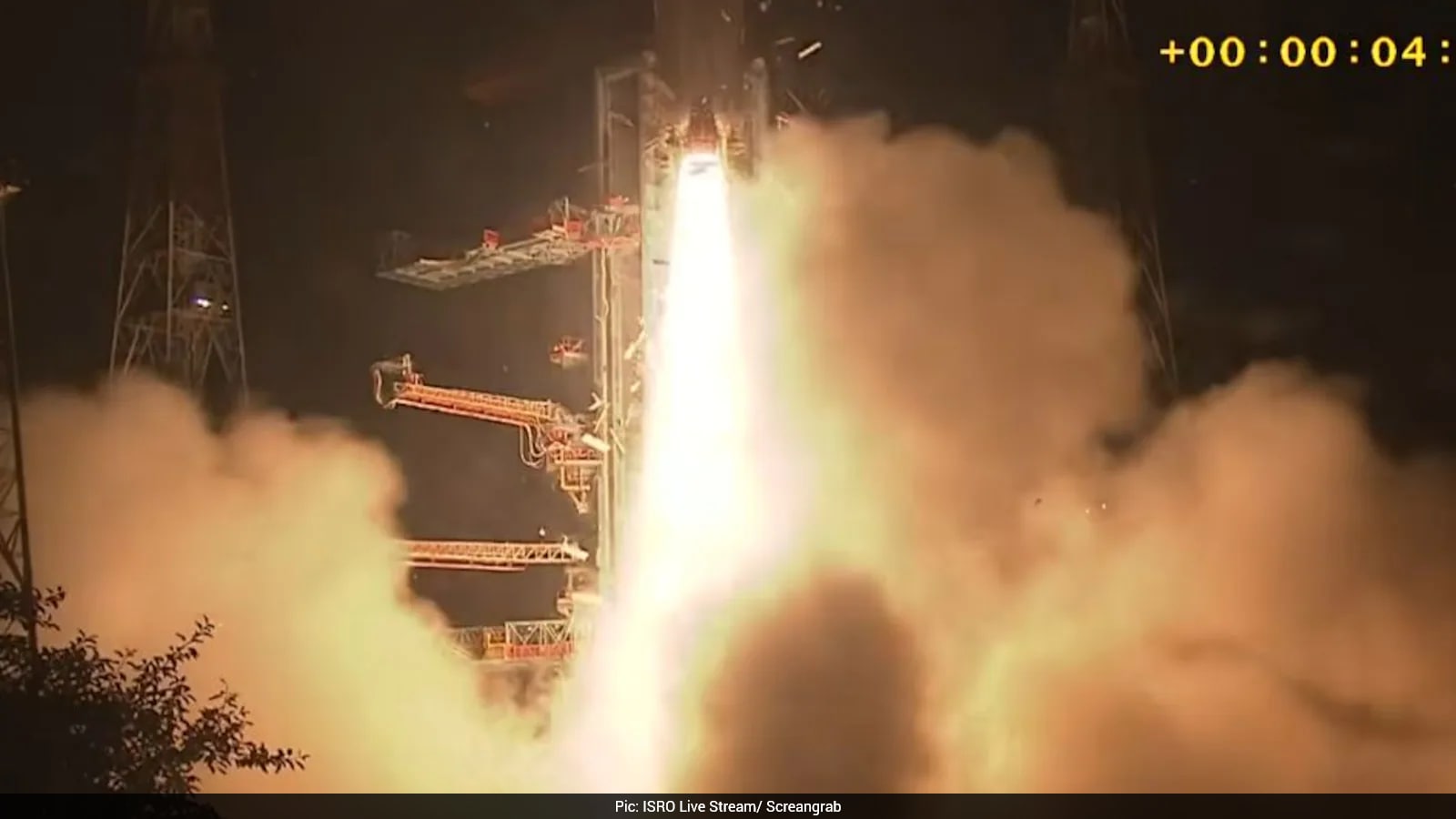
In a spectacular pre-dawn mission, ISRO successfully launched the GSLV F17 rocket from Sriharikota, carrying the advanced EOS-05 earth observation satellite into orbit.
- GSLV F17 successfully deployed the EOS-05 imaging satellite.
- The launch took place at 2:55 AM from the Satish Dhawan Space Centre, Sriharikota.
- The 51.7-meter tall rocket had a liftoff mass of 420.5 tonnes.
- EOS-05 will provide continuous high-altitude Earth observation from 36,000 km.
The Indian Space Research Organisation (ISRO) achieved a significant milestone on Friday with the successful launch of the GSLV F17 rocket. Carrying the EOS-05 earth observation satellite, the mission commenced in the early hours of the morning from the spaceport in Sriharikota, Andhra Pradesh. The liftoff, occurring at 2:55 AM, illuminated the dark, rain-swept skies, marking a triumphant moment for India's space program.
The GSLV-F17, a massive launch vehicle standing 51.7 meters tall, roared to life from the second launch pad at the Satish Dhawan Space Centre. With a total liftoff mass of 420.5 tonnes, this rocket remains one of India's most formidable assets in its arsenal of space exploration tools.
Why This Matters
BozokMedia analysis shows that the deployment of EOS-05 is a strategic masterstroke for India's surveillance and resource management. By providing a continuous 'bird's eye view' from an altitude of nearly 36,000 kilometers, the satellite will significantly enhance the nation's ability to monitor environmental changes, manage urban sprawl, and bolster national security through real-time data acquisition.
This mission solidifies India's position as a premier provider of high-end satellite services in the global space economy.
The EOS-05 satellite is engineered for high-precision imaging. Its ability to capture detailed data from geostationary altitudes will be instrumental for various sectors, including agriculture, disaster management, and maritime surveillance, providing a vital layer of intelligence for the Indian government.
Historical Background
The development of the Geosynchronous Satellite Launch Vehicle (GSLV) series has been a cornerstone of ISRO's journey toward self-reliance. Transitioning from the smaller PSLV to the heavy-lift capabilities of the GSLV, India has mastered the complex cryogenic technology required to place heavy communication and observation satellites into high-altitude orbits.
Frequently Asked Questions
1. What is the significance of the GSLV F17?
It is a heavy-lift launch vehicle capable of carrying sophisticated satellites like EOS-05 into high-altitude orbits.
2. How will EOS-05 benefit India?
It will provide continuous, high-resolution monitoring of the Earth's surface, aiding in everything from climate tracking to national security.


