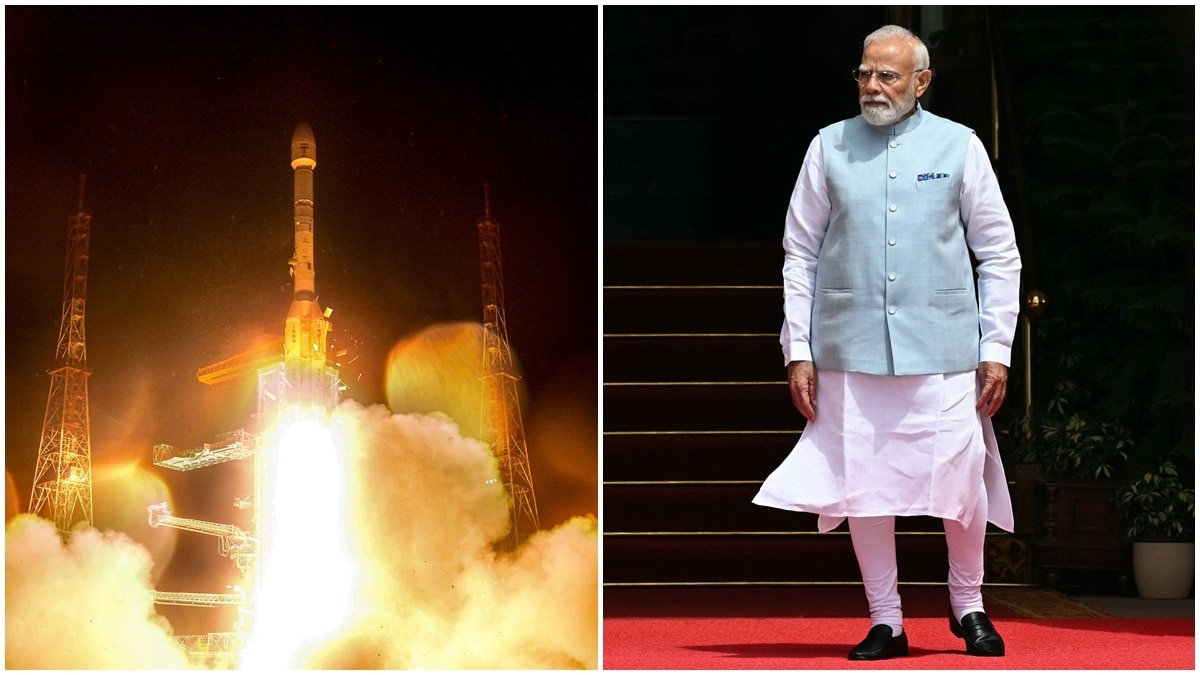
India's space agency, ISRO, has successfully launched the EOS-05 satellite via the GSLV-F17 rocket. Prime Minister Narendra Modi and other national leaders have lauded the scientists for this historic achievement.
- The GSLV-F17 rocket successfully deployed the 2,367-kg EOS-05 satellite into a Sub-Geosynchronous Transfer Orbit.
- EOS-05 is India's first imaging satellite designed to operate from a geosynchronous orbit at 36,000 km.
- The mission marks ISRO's first successful orbital mission of the current financial year.
In a moment of national triumph, the Indian Space Research Organisation (ISRO) successfully executed the launch of the GSLV-F17 rocket, carrying the EOS-05 satellite into space on Friday. The launch took place at 2:55 am IST from the Second Launch Pad at the Satish Dhawan Space Centre in Sriharikota, marking a significant comeback for the agency.
A New Era in Earth Observation
The EOS-05 mission is a game-changer for India's space capabilities. As the nation's first imaging satellite to operate from a geosynchronous orbit—nearly 36,000 km above Earth—it will possess the unique ability to observe large geographical regions repeatedly. This capability is critical for advanced Earth observation, weather forecasting, and national security monitoring. The satellite is equipped to handle complex imaging across visible, infrared, multispectral, and hyperspectral bands.
Political Leaders Hail the Achievement
The successful mission drew immediate praise from across the political spectrum. Prime Minister Narendra Modi took to social media to describe the event as an "outstanding achievement" and a "proud moment for our nation," emphasizing the growing innovation within India's space sector. Home Minister Amit Shah highlighted that this mission sends a strong message to the world regarding India's self-reliance. Union Minister Jitendra Singh called it a "giant leap," while Congress leader Priyanka Gandhi Vadra congratulated the brilliant team of scientists for taking India's space journey to new heights.
Why This Matters
BozokMedia analysis shows that this launch is vital for ISRO's momentum. Following the setback of the PSLV-C62/EOS-N1 mission in January, the success of EOS-05 restores technical confidence and sets the stage for a highly ambitious year. ISRO is currently preparing for several more launches, including the highly anticipated uncrewed Gaganyaan mission scheduled for later in 2026.
The successful deployment of EOS-05 solidifies India's position as a dominant force in the global commercial and scientific space arena.
Frequently Asked Questions
Question 1: What makes the EOS-05 mission unique?
Answer: It is India's first imaging satellite designed to operate from a geosynchronous orbit, allowing for continuous observation of specific regions.
Question 2: Which rocket was used for this launch?
Answer: The satellite was launched using the GSLV-F17 rocket.