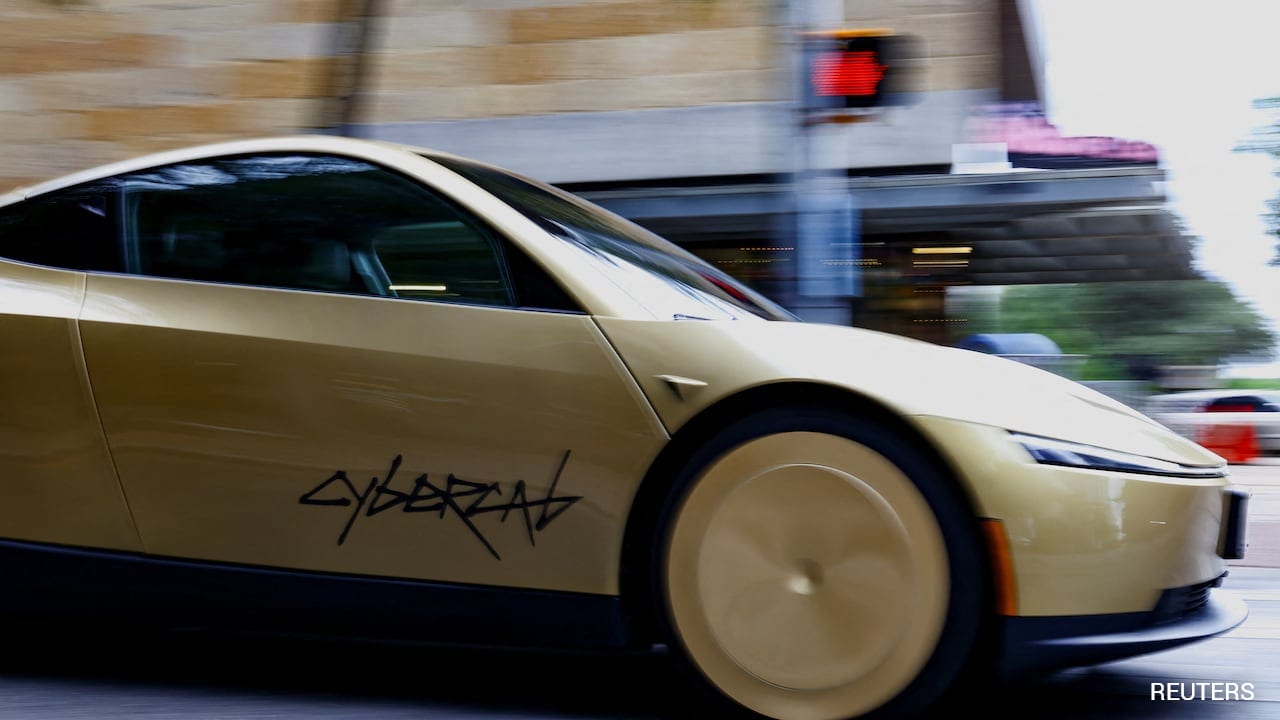
Elon Musk has deployed dozens of steering-wheel-less Cybercabs in Austin, Texas, betting that passengers will overcome their fear of driverless rides. This move marks a massive leap toward fully autonomous transportation.
- Musk's Cybercabs feature no steering wheels or brake pedals.
- The deployment is currently taking place in Austin, Texas.
- The experiment aims to test public acceptance of zero-control rides.
In a move that challenges the very definition of driving, Elon Musk has deployed dozens of self-driving Cybercabs onto the streets of Austin, Texas. These vehicles are strikingly devoid of traditional controls; there is no steering wheel and no brake pedals. Musk is making a high-stakes bet that Americans will eventually overcome their innate fear of rides involving 'no control' and embrace the convenience of autonomous transport.
The launch, which included an invitation-only event, represents a pivotal moment for Tesla and the broader automotive industry. By removing human interfaces, Musk is forcing a paradigm shift from 'driving' to 'being transported.'
Why This Matters
BozokMedia analysis shows that this move is not merely about luxury or novelty; it is a direct assault on the traditional automotive business model. If successful, it could render the concept of a 'driver' obsolete, fundamentally altering urban planning, insurance, and global logistics.
The absence of a steering wheel is the ultimate statement of confidence in artificial intelligence.
Historically, every major leap in transportation—from the first steam engines to the advent of aviation—was met with intense public skepticism. The transition from animal-drawn carriages to automobiles faced similar fears of losing control. Musk is attempting to bypass this psychological barrier through direct exposure and rapid iteration.
However, the deployment is not without significant legal and ethical hurdles. Regulators are already questioning the liability frameworks required for vehicles that lack any manual override. The transition from human error to software error remains a contentious debate in global safety standards.
Frequently Asked Questions
1. How safe are these cars without manual controls?
The vehicles rely on advanced AI and redundant sensor systems designed to handle complex driving scenarios without human intervention.
2. Will these taxis be available for public booking soon?
Currently, the deployment is part of a controlled testing and launch phase in specific regions like Austin.