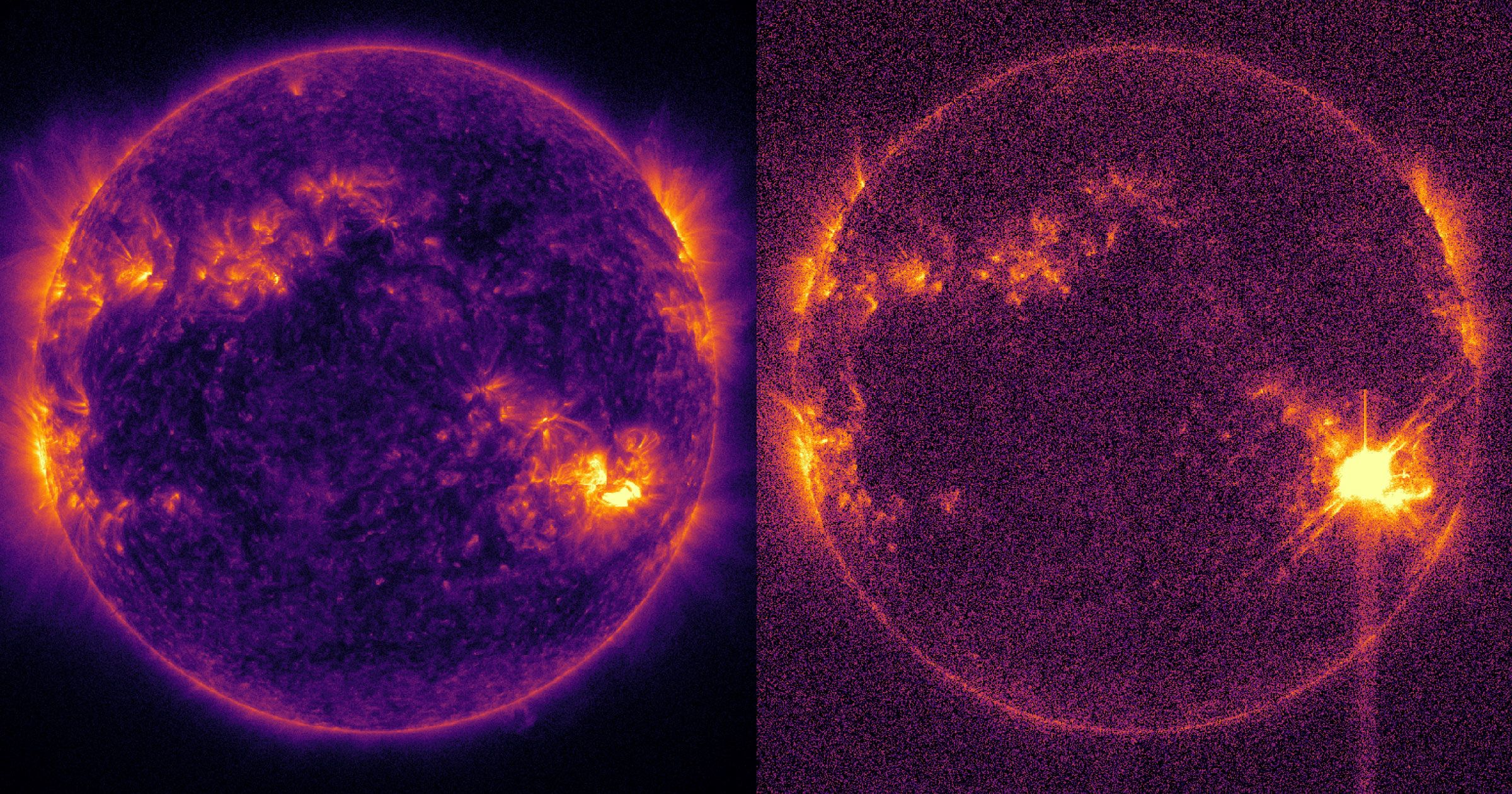
New research warns that a massive solar storm, similar to the historic Carrington Event, could cause billions in damages to the US economy and power infrastructure.
- A massive solar storm could trigger widespread power grid failures across the US.
- The US economy could face losses of $1.5 to $2 billion per day.
- The Northeast and Northern Plains are identified as the most vulnerable regions.
- The next major event could occur at any time, without a fixed schedule.
The sun periodically spews radiation and superheated ionized gas toward Earth, creating both beauty and chaos. In May 2024, the sun delivered its most significant display in over two decades. While the world witnessed stunning auroras, the event also disrupted radio signals and forced aircraft to reroute. However, scientists are now asking a much darker question: What if the storm had been significantly stronger?
A new study published in AGU Advances provides a chilling answer. Researchers modeled the impact of a 'Carrington-level' event—a geomagnetic storm so intense it could cripple modern civilization. The historic Carrington Event of 1859 disrupted telegraph systems globally; a modern equivalent would target our most sensitive digital and electrical infrastructures.
Why This Matters
BozokMedia analysis shows that our globalized, high-tech society is uniquely vulnerable to space weather. Unlike the 19th century, we rely on a complex web of satellites, GPS-guided agriculture, and high-voltage power grids. The May 2024 'Gannon storm' already caused an estimated $500 million to $1 billion in economic losses due to GPS disruptions in the agricultural sector alone.
"Think about a rubber band, twisting it and bending it and stretching it. It's going to break," said Shawn Dahl of NOAA, describing the snapping of solar magnetic field lines.
According to the research, a 250-year solar storm would pose the greatest risk to the Northeast and Northern Plains of the United States. Such a storm induces electric currents in the ground, which can overwhelm transformers and cause voltage drops, forcing grid operators to disconnect parts of the network to prevent total equipment destruction.
| Event | Intensity | Primary Impact |
|---|---|---|
| Gannon Storm (2024) | Moderate | GPS disruption, economic loss |
| 1989 Quebec Storm | High | 6 million people without power |
| Carrington Event (1859) | Extreme | Global telegraph failure |
While the Gannon storm was described as a 'bullet dodged,' the warning remains clear. Even though solar activity is currently declining from its peak, the potential for a catastrophic event remains. Experts emphasize that we must improve our preparedness to handle storms that could be three times more powerful than recent ones.
Frequently Asked Questions
1. How does a solar storm affect electricity?
It induces extra electrical currents in power lines, which can overheat and damage transformers.
2. Is there a way to predict these storms?
Yes, agencies like NOAA monitor the sun constantly, but the exact timing of a major eruption remains unpredictable.