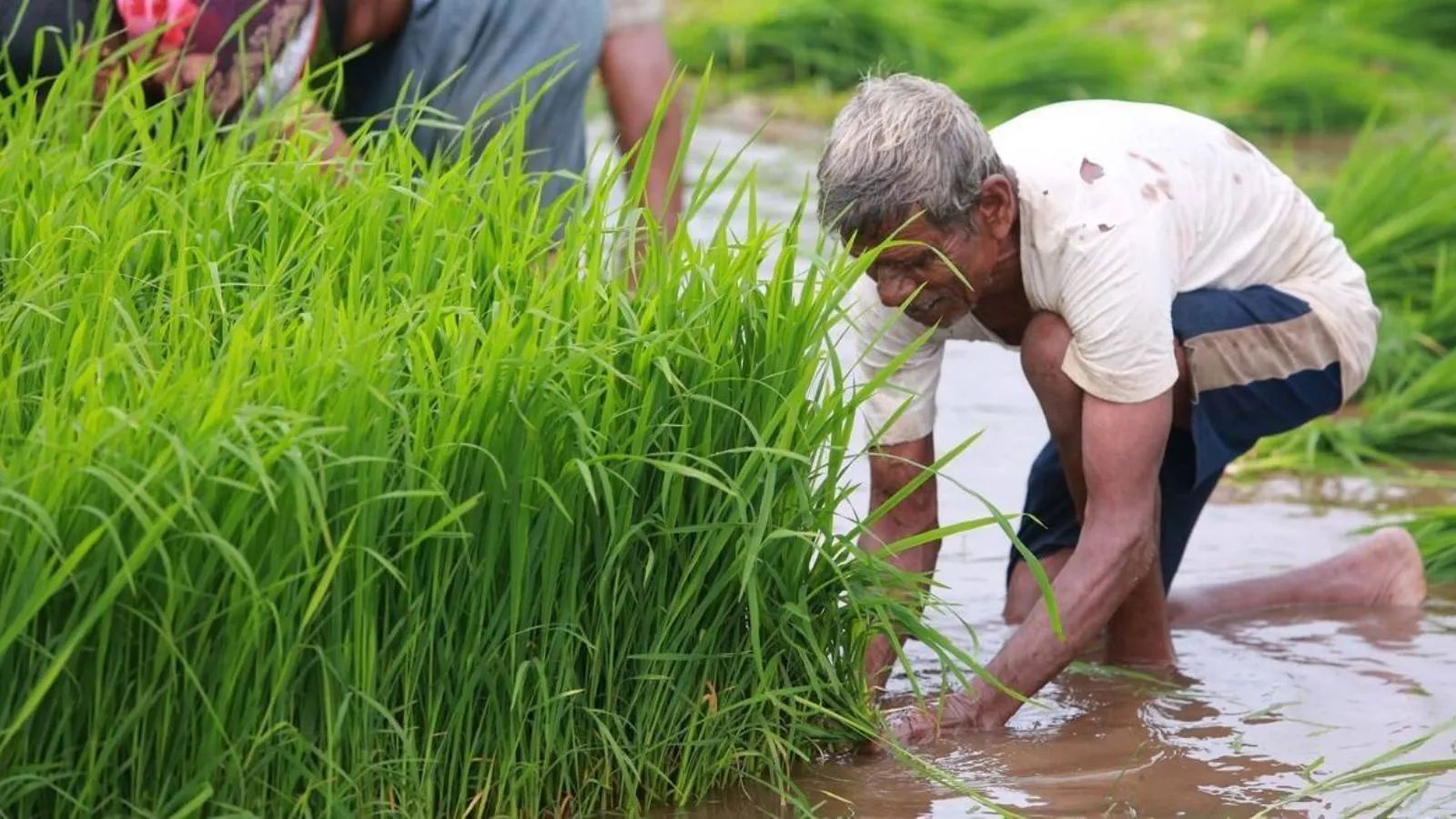
Google DeepMind executive Alok Talekar explains how advanced satellite-based AI can empower Indian farmers without replacing traditional wisdom. The new 'AnthroKrishi' models aim to bridge the data gap in rural agriculture.
- Google DeepMind has created satellite-based AI models for real-time crop monitoring.
- The technology aims to provide hyper-local data for individual farmers rather than district-level generalizations.
- The 'AnthroKrishi' team uses a dual-layer AI system to map fields and track 12 major crops.
- AI acts as a decision-support tool to improve resource efficiency and sustainability.
For centuries, the backbone of the Indian economy—its farmers—has relied on traditional metrics, seasonal patterns, and historical observations to manage crops. However, as climate change introduces unprecedented volatility, the role of Artificial Intelligence (AI) is shifting from a luxury to a necessity. AI literacy is rapidly becoming as vital as agronomic expertise for the modern farmer.
Alok Talekar, lead for agriculture and sustainability research at Google DeepMind, emphasizes that technology plays a critical role in a data-scarce environment like India. Currently, most government policies and agricultural interventions are designed at the district level, failing to address the nuanced needs of an individual farmer. AI bridges this gap by providing pinpointed, cost-effective insights.
Why This Matters
BozokMedia analysis shows that the integration of frontier technology into agriculture is essential to mitigate the risks posed by weather uncertainty and shrinking natural resources. By moving from generalized to individualized data, India can significantly boost its agricultural productivity and economic resilience.
The AnthroKrishi team at Google DeepMind has developed a sophisticated dual-layer AI system. The first layer utilizes 15 years of satellite imagery to segment fields, trees, and water bodies. The second layer provides near-real-time monitoring of 12 specific crops, tracking everything from sowing to harvesting stages using data refreshed twice a month.
We are not trying to influence actions one way or the other; we want to support effective decision-making through data.
A major concern in traditional farming is the overexploitation of resources, such as excessive flooding in rice fields, which can lead to long-term desertification. AI-driven insights can guide farmers toward more sustainable practices, optimizing water and fertilizer use to protect the environment while maintaining yields.
Frequently Asked Questions
1. How does AI help in pest management?
AI analyzes satellite and environmental data to predict pest outbreaks, allowing farmers to take preventive measures before crops are damaged.
2. Will AI replace traditional farming knowledge?
No, AI is designed to complement traditional knowledge by providing precise, real-time data to support better decision-making.