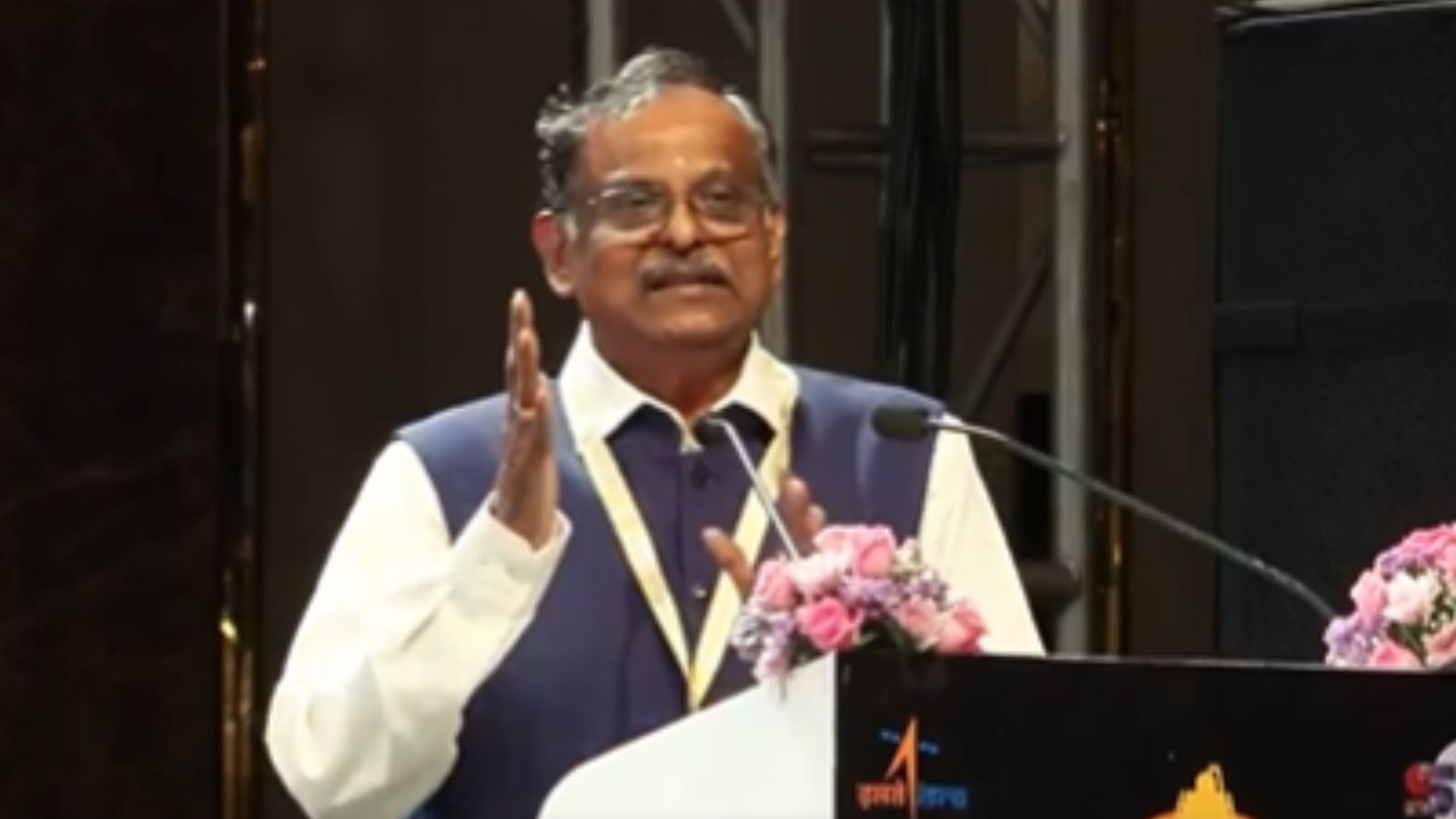
Responding to internal concerns, ISRO has stated that the opening of the space sector is an ecosystem expansion designed to multiply capabilities rather than reduce the agency's core research mandate.
- ISRO defines the new space policy as 'ecosystem expansion' rather than privatization.
- Private players will handle mature technologies, freeing ISRO for frontier R&D.
- India aims to grow its space economy from $8.4 billion to $44 billion by 2033.
The Indian Space Research Organisation (ISRO) has issued a definitive statement addressing concerns raised by its own staff regarding the increasing involvement of the private sector. The agency clarified that the implementation of the Indian Space Policy 2023 and progressive FDI policies are intended to create a larger, more robust, and globally competitive Indian space ecosystem.
This clarification follows reports that key employee associations had written to ISRO Chairperson Dr. V. Narayanan, questioning the implications of the privatization drive on the existing workforce and the agency's future trajectory. ISRO has firmly countered these fears, stating that industry, startups, and academia are being enabled to participate across the space value chain to multiply ISRO's existing capabilities.
Why This Matters
BozokMedia analysis shows that this strategic pivot is crucial for India to transition from a government-led space program to a global space powerhouse. By delegating the production of mature launch vehicles and routine satellites to the private sector or PSUs, ISRO can pivot its elite scientific manpower toward high-stakes, frontier technologies that require deep expertise.
The strategic shift allows ISRO to focus on deep-space exploration while the industry scales routine space logistics.
The agency's roadmap includes highly ambitious milestones: the establishment of the Bharatiya Antariksh Station by 2035, a crewed lunar mission by 2040, and the development of next-generation reusable launch systems. These missions are technologically demanding and necessitate that ISRO remains the primary authority in advanced scientific research.
Economically, the stakes are massive. India's current space economy is valued at approximately $8.4 billion. However, with the influx of private capital and industrial capacity, India aims to capture a $44 billion share of the global market by 2033. ISRO acknowledges that such scale is unattainable through government resources alone.
Frequently Asked Questions
1. Is ISRO being privatized?
No. ISRO views the current reforms as 'capability multiplication' where the private sector handles mature systems while ISRO focuses on frontier research.
2. What is the goal of the Indian Space Policy 2023?
It aims to foster a competitive ecosystem by involving private players, startups, and academia in the space value chain.


