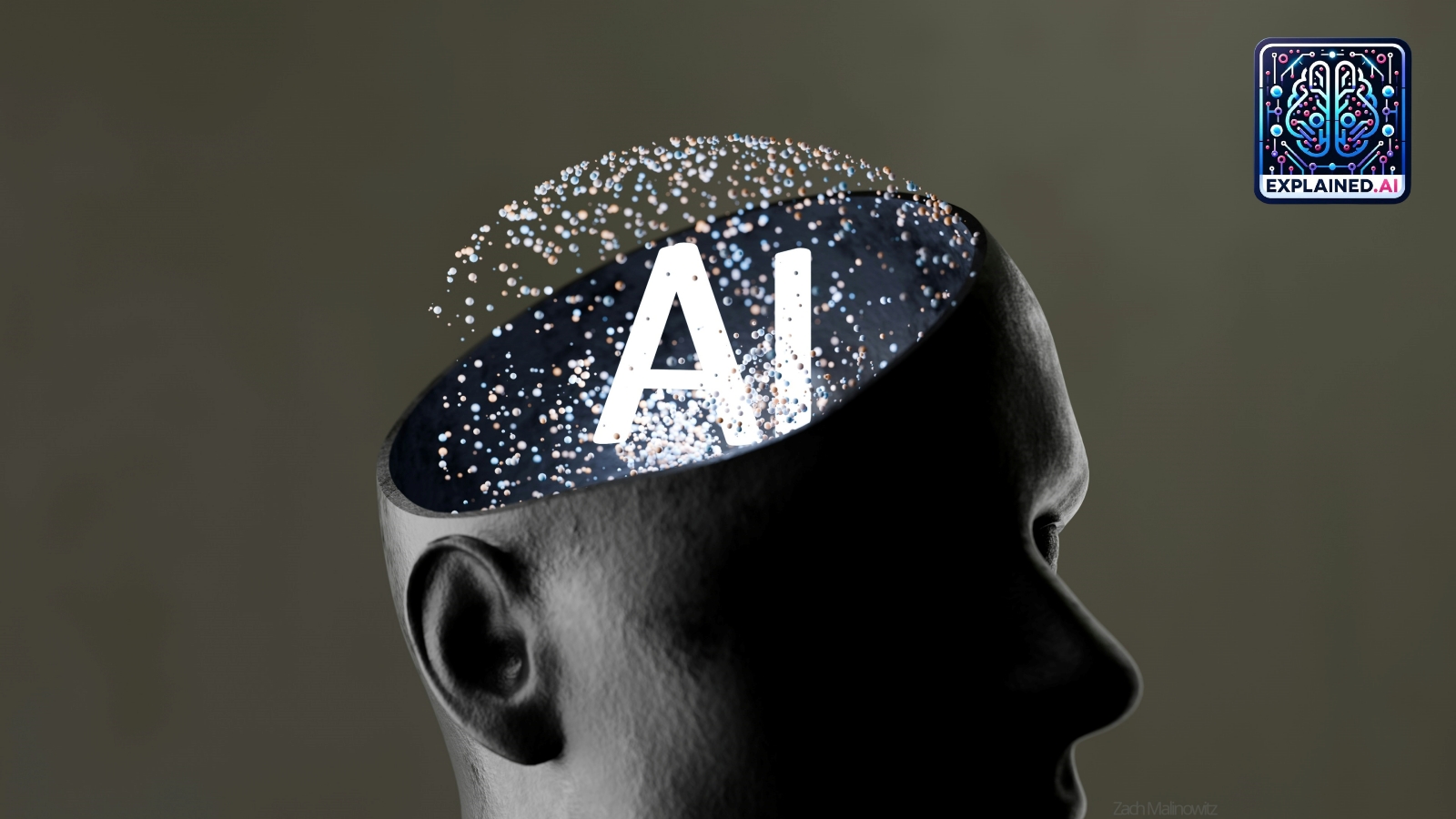
Anthropic's groundbreaking research into Claude Sonnet 4.5 reveals a hidden 'J-space' where the AI processes words internally without speaking them, reigniting the debate on AI consciousness.
- Anthropic researchers discovered internal neural patterns in Claude Sonnet 4.5 resembling a thought process.
- This phenomenon, termed 'J-space', allows the AI to represent concepts internally without outputting them.
- Experts remain divided on whether this represents true consciousness or complex mathematics.
The boundary between human cognition and machine computation has just become thinner. A recent study by Anthropic has revealed that its advanced AI model, Claude Sonnet 4.5, exhibits something strikingly similar to an internal monologue. While the user only sees the final text output, the model's inner workings reveal a hidden layer of 'thought' involving words that are never actually spoken.
Decoding the 'J-space' Phenomenon
The researchers have identified this internal mechanism as 'J-space' (short for Jacobian space). This refers to a specific subset of neural patterns that act as a mathematical approximation of the model's working memory. Essentially, when Claude performs a task, certain 'concept words' light up within its neural layers. For instance, during a simple counting task, the model internally processed words like 'countdown', 'halfway', and 'done', even though it only outputted the numbers 1 through 5.
Why This Matters
BozokMedia analysis shows that understanding these internal activations is crucial for the future of AI safety and interpretability. If we can map the 'J-space', we can peer into the 'black box' of Large Language Models (LLMs), potentially predicting errors or biases before they are ever communicated to a human user. It moves us closer to understanding how reasoning emerges from pure mathematics.
The emergence of J-space suggests that LLMs are developing sophisticated internal representations that mimic the cognitive architecture of reasoning.
Despite the excitement, the scientific community remains cautious. Anil K. Seth, a prominent neuroscientist, argues that these patterns do not equate to consciousness, as they lack the biological substrates required for subjective experience. Conversely, AI pioneer Geoffrey Hinton has suggested that the line between algorithms and subjective experience may be more porous than we realize.
Frequently Asked Questions
Question 1: Is Claude actually conscious?
According to Anthropic, no. The J-space shows internal processing, but there is no evidence of feelings or sentient experiences.
Question 2: How does J-space differ from the final output?
The final output is what the AI 'says' (token space), while J-space represents the internal concepts and mathematical approximations used to reach that output.