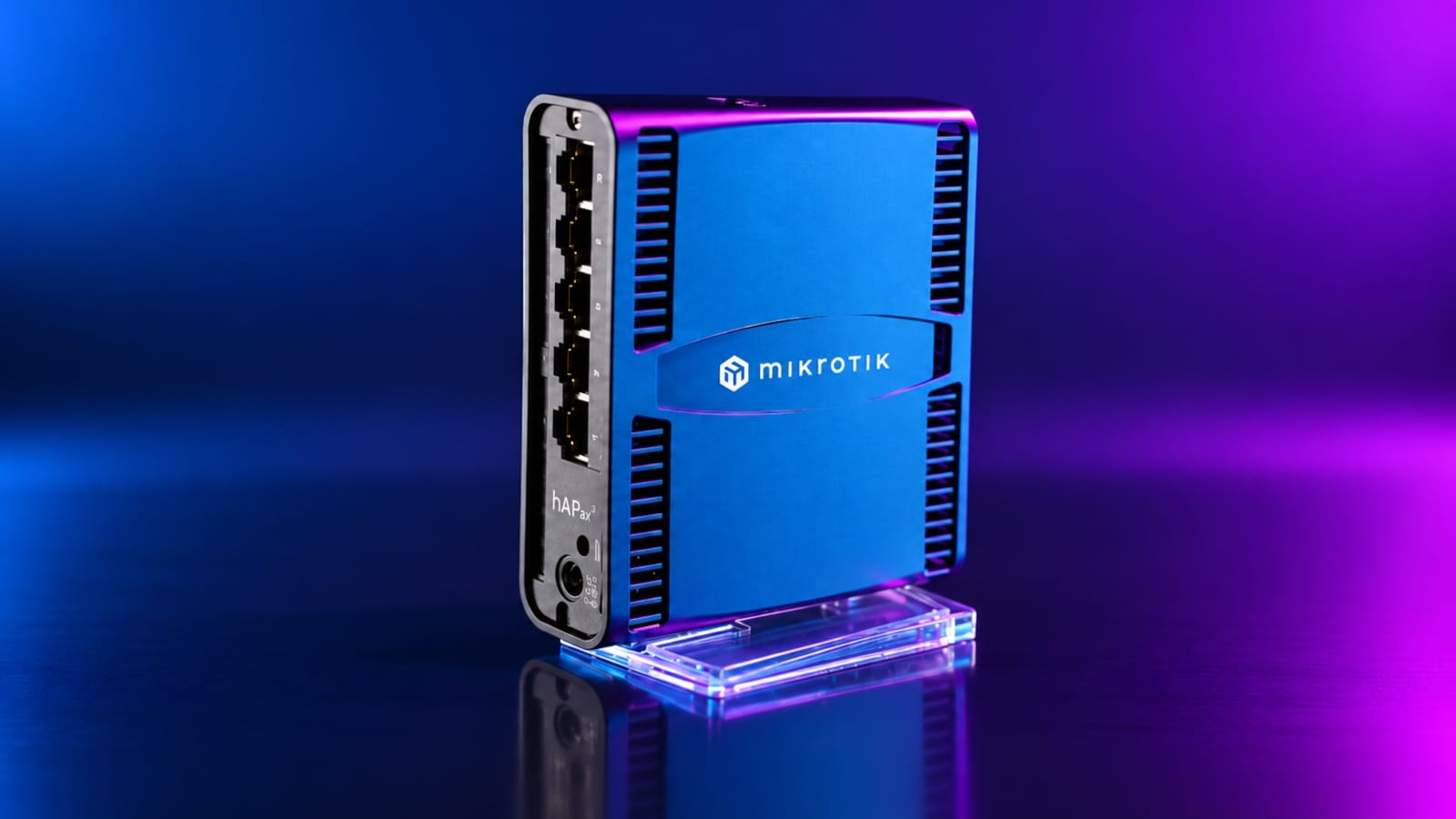
A dangerous exploit chain dubbed 'MikroTrick' is allowing hackers to gain full administrative control over MikroTik routers. Security experts urge immediate updates to prevent widespread hijacking.
- Hackers are using a chain of two vulnerabilities (CVE-2026-67276 and CVE-2026-86060) to bypass SSH authentication.
- The exploit, named 'MikroTrick' by Poland's CERT, allows for full administrative privilege escalation.
- Immediate firmware updates to RouterOS 7.24.2, 7.23.4, or 6.49.21 are required.
A severe security crisis is unfolding in the networking sector as hackers exploit a sophisticated chain of vulnerabilities in MikroTik RouterOS. By leveraging two recently disclosed flaws, attackers are successfully hijacking routers that have SSH services exposed to the public internet, gaining complete control over the hardware.
The Anatomy of the 'MikroTrick' Exploit
The attack, which has been dubbed “MikroTrick” by Poland's CERT agency, relies on a two-step process. The first vulnerability, CVE-2026-67276, is an SSH authentication bypass flaw caused by improper validation of RSA public keys. This allows an attacker to craft a fraudulent key and log in without needing the legitimate private key, provided they know the username and the public modulus.
Once initial access is gained, attackers utilize a second flaw, CVE-2026-86060, which is an SSH privilege escalation vulnerability. By using specially crafted usernames, hackers can manipulate the SSH session to escalate their status to full administrative user, effectively owning the device.
Why This Matters
BozokMedia analysis shows that the discovery of these flaws—aided by advanced AI models like GPT-5.5-cyber—highlights a new era of automated vulnerability discovery. The danger is compounded by the fact that once an attacker has valid credentials, traditional prevention measures often fail, with the Blue Report 2026 noting that only 37% of post-access actions are blocked.
The 'MikroTrick' exploit chain demonstrates how attackers are moving from simple intrusion to total device dominance through automated exploitation.
The implications are massive. According to data from The ShadowServer Foundation, as of early September, approximately 122,500 MikroTik devices had exposed SSH interfaces. This creates a massive attack surface for botnets and large-scale network espionage.
Historical Background: The Evolution of Router Exploits
Router vulnerabilities have historically been a cornerstone of large-scale cyberattacks. From the infamous Mirai botnet to recent Zero-day exploits in enterprise hardware, routers remain the primary target because compromising a single gateway provides a foothold into an entire network of connected devices.
Remediation and Defense
MikroTik has released critical security updates to mitigate these risks. Users should immediately update to RouterOS 7.25beta3, 7.24.2, 7.23.4, or 6.49.21. For those unable to update instantly, experts recommend disabling external SSH, WWW, and bandwidth-test services.
Frequently Asked Questions
1. How can I tell if my router was hacked?
Check your logs for entries like 'login failure for user -2' or 'user added by ssh:-2'.
2. Is a factory reset enough?
A factory reset is recommended, but only after preserving logs and rebuilding the configuration from a known trusted source.