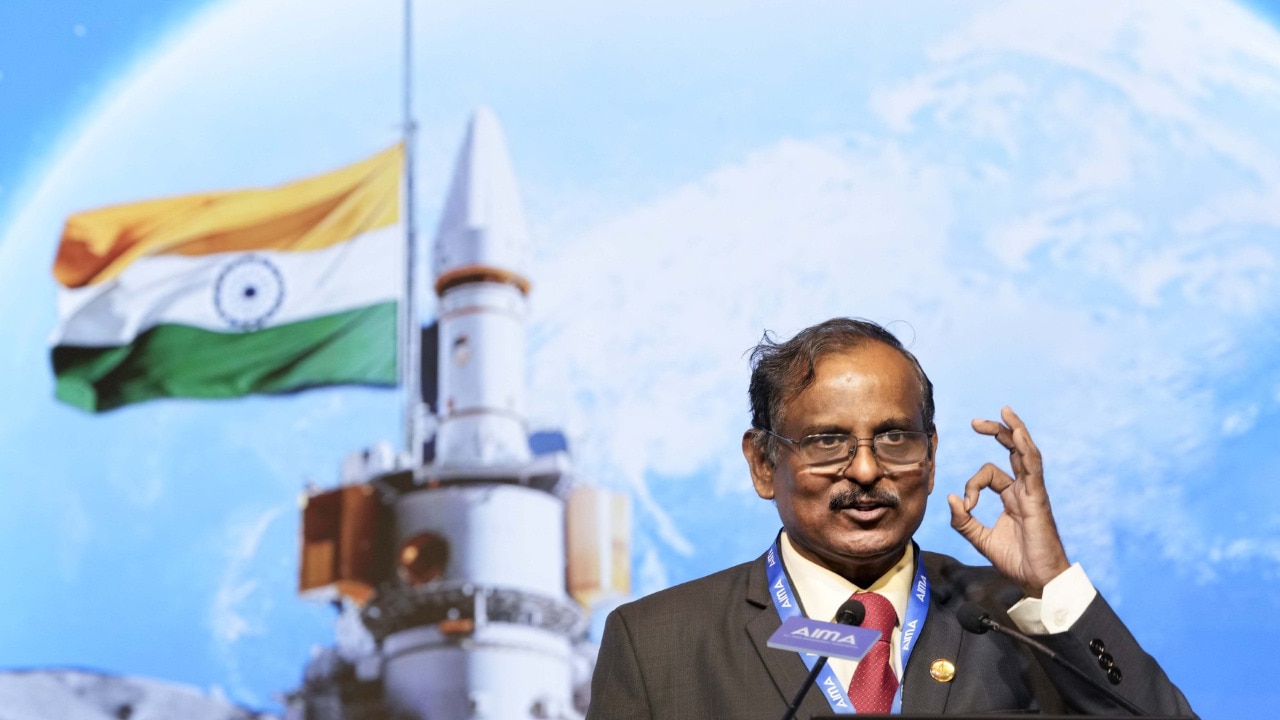
ISRO Chairman Dr. V. Narayanan has categorically denied rumors of privatization, stating that the agency's goal is to mentor the private sector to build a robust space ecosystem. He emphasized that private industry already plays a massive role in India's space successes.
- ISRO Chairman categorically rejects privatization claims.
- The goal is to handhold the private sector to grow the space ecosystem.
- Nearly 450 Indian companies are already supporting ISRO's missions.
- India aims to achieve a capacity of 50 launch vehicles per year.
In a significant move to quell internal anxieties, the Chairman of the Indian Space Research Organisation (ISRO), Dr. V. Narayanan, has officially clarified that the national space agency is not undergoing privatization. Speaking on the sidelines of the Bengaluru Space Expo, Dr. Narayanan responded to concerns raised by employee associations regarding the government's aggressive push to increase private sector participation in the space domain.
Addressing the workforce's fears about job security and the agency's core role, Narayanan explained that the space sector reforms initiated six years ago were designed to create a collaborative environment. "We are supposed to handhold the private sector and grow the space ecosystem," he stated, emphasizing that the agency's evolution is about expansion, not replacement.
Why This Matters
BozokMedia analysis shows that India is positioning itself to become a global launch hub. With a projected requirement of 50 launch vehicles annually, the scale of operations required far exceeds the solo capacity of a government entity. Integrating private industry is a strategic necessity to meet this massive logistical and manufacturing demand.
The integration of private industry is not a sign of ISRO's retreat, but a blueprint for India's dominance in the global space economy.
Providing a deep look into the current operational model, the Chairman revealed that the collaboration is already deeply entrenched. He noted that for every PSLV or GSLV launch, approximately 80% of the budget involves investment or contribution from Indian industries. Currently, around 450 companies are actively working alongside ISRO to manufacture critical components and launch vehicle structures.
Historical Background
Historically, ISRO has functioned as a centralized government body focused on self-reliance. However, the recent shift toward a 'facilitator' model marks a paradigm shift in India's space policy, moving from a purely state-led approach to a public-private partnership model aimed at commercializing space technology.
Frequently Asked Questions
1. Is ISRO losing its core capabilities to private firms?
No, the chairman clarified that the goal is to expand the ecosystem, not diminish ISRO's role or capabilities.
2. How many companies currently work with ISRO?
Approximately 450 Indian industries are currently supporting ISRO's space programs.