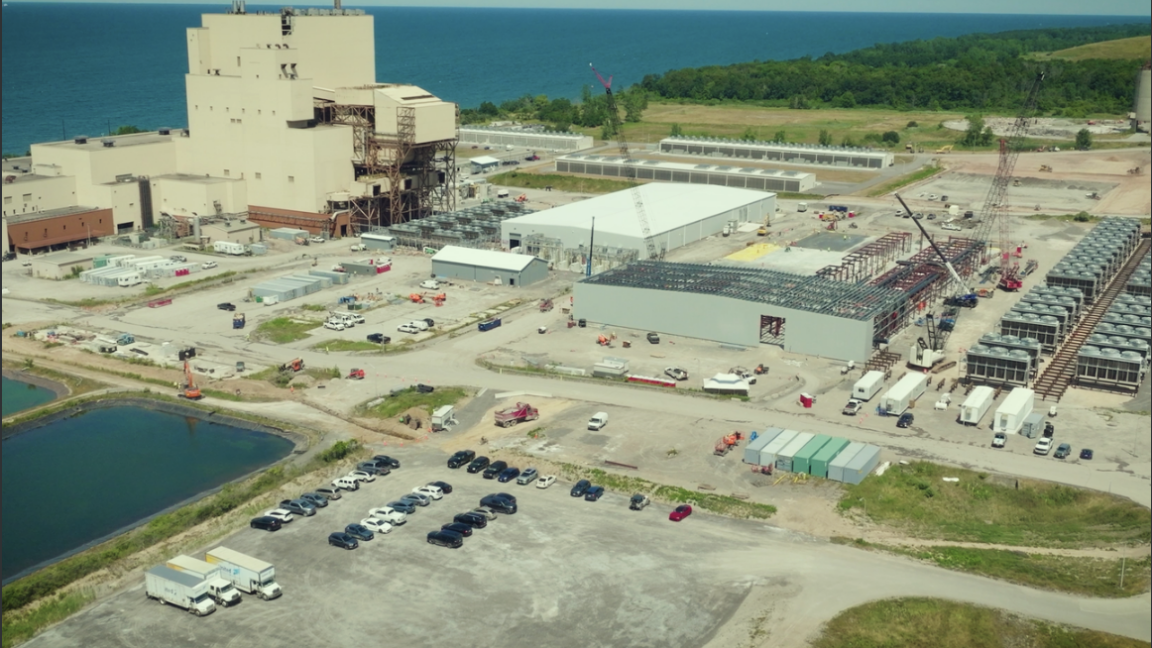
A devastating fire at the Lake Mariner data center in New York has exposed dangerous safety deficiencies and a labyrinthine corporate structure involving tech giants.
- A major fire at the Lake Mariner data center in Somerset, NY, revealed a total lack of functional safety systems.
- The $3.2 billion facility involves a complex web of stakeholders including TeraWulf, Fluidstack, Google, and Anthropic.
- Emergency responders faced extreme risks due to non-functional hydrants and missing chemical safety documentation.
In early June, a fire erupted at the unfinished Lake Mariner data center in Somerset, New York, stripping away the veneer of high-tech sophistication to reveal a grim reality of negligence. The $3.2 billion campus, situated on a former coal mine site on Lake Ontario, is intended to be a cornerstone of the region's AI infrastructure. However, the blaze has brought to light profound questions regarding safety protocols and corporate accountability.
According to Steve Matisz, chief of the Barker Fire Department, first responders were forced to enter the building "blind." The facility reportedly lacked working fire alarms, suppression systems, and even functional hydrants. Most critically, the safety data sheets required to identify potentially hazardous chemicals were allegedly destroyed in the fire, leaving firefighters to navigate heavy black smoke without knowing the risks they were facing.
A Labyrinth of Ownership
The complexity of the Lake Mariner project extends far beyond its physical construction. The ownership structure is a dense web of interlocking interests. TeraWulf owns and operates the facility, yet it leases the land from a company owned by its own CEO. This internal loop of ownership complicates the lines of liability.
Furthermore, the operational and financial layers are equally convoluted. Fluidstack, a UK-based AI company, is slated to run the center, while Google holds warrants for a future 14 percent equity stake and has stepped in to guarantee Fluidstack’s lease payments. Meanwhile, AI giants like Anthropic are among the primary clients whose massive compute demands drive the existence of this facility. When a disaster occurs in such a multi-layered ecosystem, determining who is legally and financially responsible becomes an immense challenge.
Why This Matters
BozokMedia analysis shows that the race to build AI infrastructure is currently outpacing the implementation of rigorous safety and regulatory oversight. As corporations create complex legal structures to manage assets, the ability for local authorities to enforce safety standards and assign blame during emergencies is significantly diminished.
The intersection of massive capital and complex corporate layering creates a 'responsibility vacuum' that can be fatal during industrial accidents.
As the world rushes toward an AI-driven future, the Lake Mariner incident serves as a stark reminder: the digital revolution relies on physical infrastructure that must be held to the highest standards of human and environmental safety.
Frequently Asked Questions
1. What went wrong during the Lake Mariner fire?
The facility lacked functional alarms, fire suppression systems, and working hydrants, making it extremely dangerous for firefighters.
2. Which major companies are linked to this data center?
The project involves TeraWulf, Fluidstack, Google, and serves clients like Anthropic.