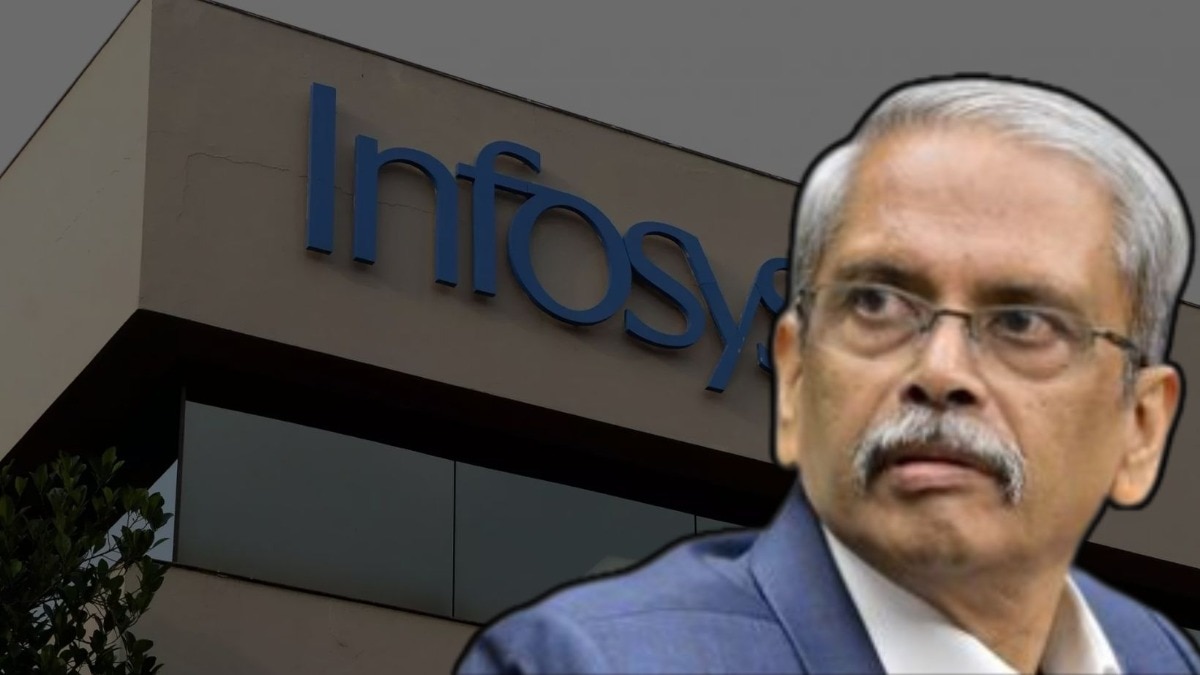
Infosys cofounder Kris Gopalakrishnan addresses the growing fear of AI-driven job losses, arguing that AI will transform the nature of work rather than simply eliminating it.
- AI will reshape job roles rather than causing total employment collapse.
- Human creativity and strategic decision-making will become higher-value assets.
- Continuous upskilling is the only way to remain relevant in the AI era.
The rapid proliferation of Artificial Intelligence (AI) has sparked a global wave of anxiety regarding job security. Addressing this concern, Kris Gopalakrishnan, cofounder of the IT giant Infosys, has provided a nuanced perspective on how the workforce should perceive this technological shift. He suggests that AI should be viewed as a tool for augmentation rather than a replacement for human intelligence.
Gopalakrishnan posits that history provides a blueprint for this transition. Every major industrial revolution—from the steam engine to the personal computer—initially caused fear of mass unemployment. However, these shifts ultimately created entirely new industries and job categories that were previously unimaginable. The AI revolution is expected to follow a similar trajectory.
Why This Matters
BozokMedia analysis shows that the value proposition of a professional is shifting from 'execution' to 'orchestration.' In a world where AI can write code or generate reports in seconds, the human ability to define the right problem and validate the AI's output becomes the primary differentiator in the corporate hierarchy.
"AI is not a threat to those who know how to collaborate with it, but a threat to those who resist the evolution of their skill set."
The core of the argument lies in the distinction between 'routine tasks' and 'cognitive judgment.' While AI excels at pattern recognition and data processing, it lacks true empathy, ethical reasoning, and complex interpersonal negotiation. Gopalakrishnan emphasizes that professionals who double down on these 'human-centric' skills will find themselves more indispensable than ever.
To survive and thrive, the modern employee must adopt a mindset of 'lifelong learning.' The era of a single degree lasting a 40-year career is over. The new paradigm requires a fluid approach to education, where professionals constantly pivot their skills to stay ahead of the automation curve.
| Traditional Work Model | AI-Augmented Work Model |
|---|---|
| Manual data entry and analysis | Automated processing with human oversight |
| Static skill sets (Fixed) | Dynamic and adaptive learning |
| Process-oriented execution | Strategic and creative orchestration |
Frequently Asked Questions
Q1: Will AI cause mass layoffs in the IT sector?
A: While repetitive roles may decrease, AI will create new demands for prompt engineers, AI auditors, and strategic consultants.
Q2: What are the most important skills for the AI era?
A: Critical thinking, emotional intelligence (EQ), and the ability to integrate AI tools into business workflows.
