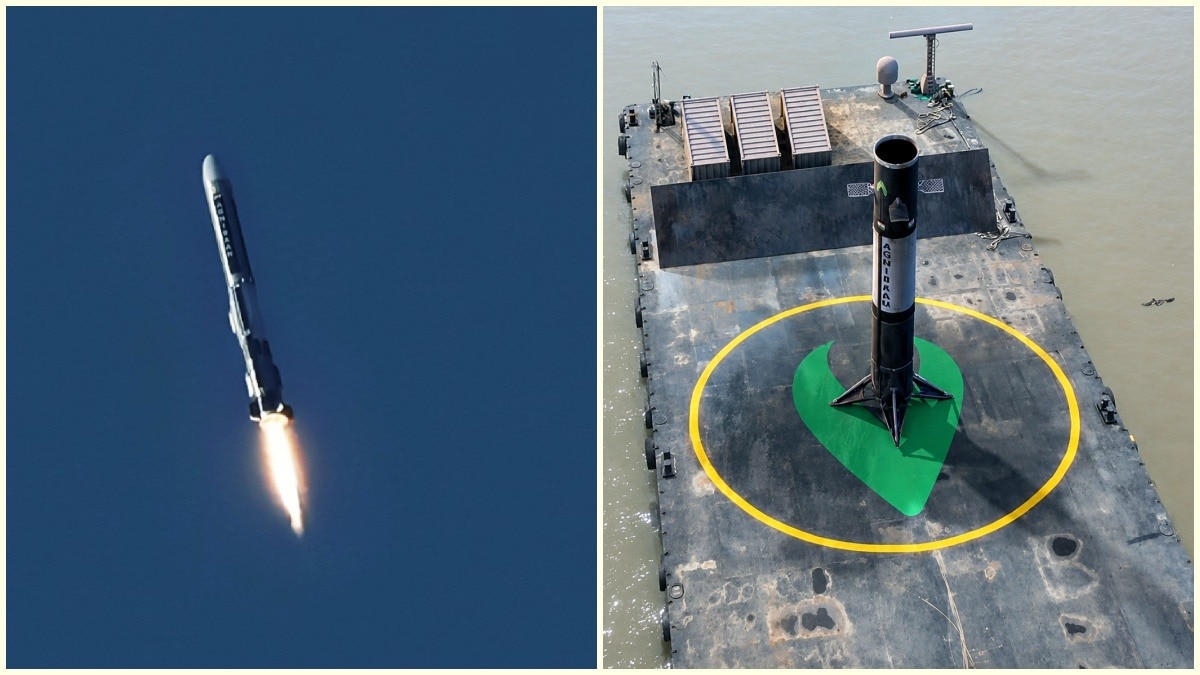
Indian space startup Agnikul has inaugurated state-of-the-art assembly and testing facilities dedicated to building reusable rockets. This milestone aims to slash launch costs and boost India's presence in the global space economy.
- Agnikul has launched new high-tech facilities for assembling and testing reusable rockets.
- The technology focuses on reducing the cost of space access significantly.
- This marks a major step for India's private space sector competitiveness.
In a significant move for the global aerospace industry, Agnikul Cosmos has officially inaugurated its advanced assembly and testing facilities. These specialized infrastructures are designed to facilitate the development, integration, and rigorous testing of reusable rockets, a technology that is set to redefine space exploration.
The inauguration marks a transition from theoretical development to industrial-scale manufacturing capabilities. By establishing these facilities, Agnikul aims to streamline the production cycle of its launch vehicles, ensuring that every component meets the stringent safety standards required for multi-mission reuse.
Why This Matters
BozokMedia analysis shows that the ability to reuse rocket stages is the single most important factor in making space travel economically viable for large-scale commercial operations. As the global demand for satellite constellations grows, companies that can provide low-cost, high-frequency launch services will dominate the market. Agnikul's move positions India as a formidable competitor to established players like SpaceX.
The shift toward reusability is not just an engineering challenge; it is the economic key to unlocking the next era of human civilization in space.
These new facilities will allow for advanced propulsion testing and structural integrity checks, which are critical for rockets intended to withstand the extreme stresses of multiple atmospheric entries and re-entries. This capability ensures that the hardware is not just powerful, but durable enough for repeated use.
Historical Background
For decades, space launches were dominated by government agencies using expendable launch vehicles (ELVs). However, the paradigm is shifting toward reusable launch vehicles (RLVs). Following the foundational work laid by ISRO, the emergence of private players like Agnikul represents the 'New Space' era in India, characterized by rapid innovation and commercial agility.
Frequently Asked Questions
1. What makes a rocket 'reusable'?
A reusable rocket is designed so that its primary stages can land safely after a mission, allowing them to be refurbished and flown again.
2. How will this benefit the commercial satellite industry?
Lower launch costs mean more affordable access to space for telecommunications, weather monitoring, and internet satellite companies.
