Google has launched version 3 of its WeatherNext AI model, integrating real-time satellite data to drastically reduce forecast lag and computing costs.
- Integration of satellite data reduces the lag between current conditions and forecasts.
- AI models offer performance comparable to traditional systems but with significantly lower computing requirements.
- WeatherNext V3 utilizes 'reanalysis' to create a consistent global atmospheric snapshot.
Google has solidified its position as a titan in the machine learning landscape with the release of WeatherNext version 3. While traditional meteorological models have long relied on massive supercomputing clusters, Google's AI-driven approach aims to democratize high-accuracy forecasting by requiring far less computational horsepower. This efficiency allows for more frequent updates, providing a near-real-time window into atmospheric changes.
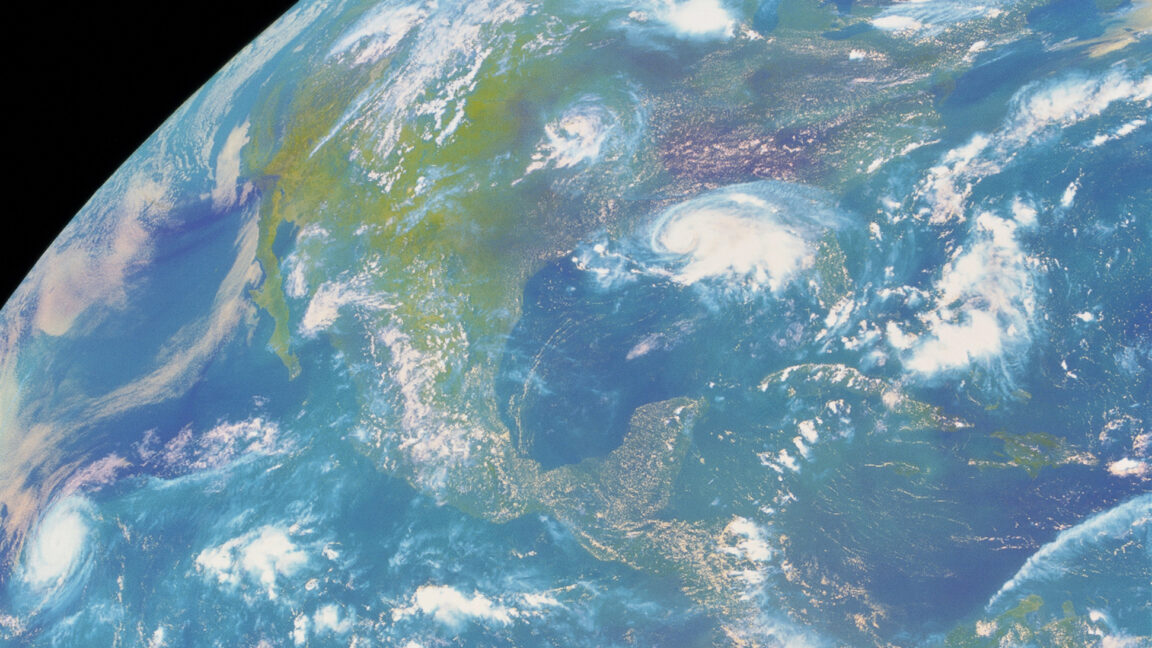
The cornerstone of the latest update is the ingestion of direct satellite weather data. Previously, AI models often suffered from a 'data lag'—the time gap between the observation of a weather event and the generation of a forecast. By integrating satellite inputs, Google has shortened this window, allowing the model to react almost instantaneously to emerging storm patterns or temperature shifts.
Why This Matters
BozokMedia analysis shows that the shift toward AI-driven meteorology is not just about speed, but about scalability. Traditional numerical weather prediction (NWP) models are energy-intensive and slow. By optimizing the process through machine learning, Google is proving that high-fidelity global forecasts can be generated in a fraction of the time, potentially saving lives through faster extreme weather warnings.
The integration of real-time satellite telemetry into neural networks marks a pivotal shift from static historical prediction to dynamic atmospheric intelligence.
A critical component of this system is the use of "reanalysis." In meteorological terms, reanalysis acts as a secondary model that synthesizes diverse data streams into a single, consistent global snapshot of the atmosphere. This is essential because the Earth has vast regions—such as the open oceans—where physical sensors are absent. Reanalysis fills these gaps with high-probability estimates, ensuring the AI has a complete global canvas to work with.
Historical Background
For decades, weather forecasting was the exclusive domain of government agencies using physics-based equations. However, the rise of Big Data and Deep Learning has allowed companies like Google to treat weather as a pattern-recognition problem. By training on decades of historical climate data, AI can now predict outcomes that previously required hours of complex fluid dynamics calculations.
| Feature | Traditional NWP Models | Google WeatherNext V3 |
|---|---|---|
| Compute Power | Extremely High (Supercomputers) | Low to Moderate (AI Optimized) |
| Update Frequency | Slower (Periodic) | High (Frequent/Real-time) |
| Data Input | Physical Stations/Sensors | Satellite + Reanalysis Data |
Frequently Asked Questions
Q: Does AI replace traditional weather forecasting?
A: No, it complements it. AI models use the data generated by traditional physics-based models to speed up the prediction process.
Q: What is the main benefit of WeatherNext V3?
A: The primary improvement is the reduction of lag time through the inclusion of satellite data, making forecasts more current.