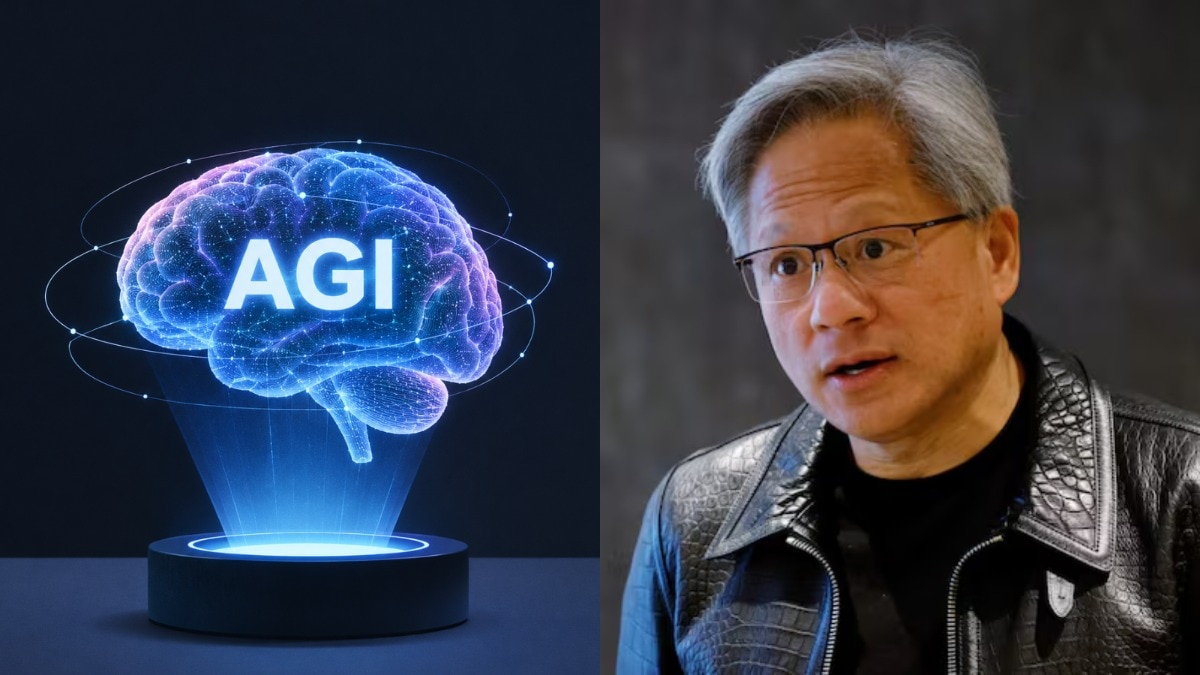
Nvidia CEO Jensen Huang and OpenAI leadership suggest that the launch of GPT-6 Astra marks the dawn of Artificial General Intelligence (AGI), sparking a heated debate among global tech experts.
- Nvidia CEO Jensen Huang and OpenAI's Greg Brockman claim GPT-6 Astra marks the beginning of the AGI era.
- AGI is defined as AI capable of performing any intellectual task at or above human levels.
- Research firms like Gartner advise caution, urging a focus on demonstrated outcomes over hype.
The artificial intelligence landscape was shaken this week as OpenAI unveiled its latest powerhouse model, GPT-6 Astra. While the industry is accustomed to frequent model updates, Astra is being positioned as a paradigm shift. OpenAI President Greg Brockman stated that it is "not unreasonable" to believe that the world has finally entered the AGI era, a sentiment echoed strongly by Nvidia CEO Jensen Huang, who declared that "AGI has arrived."
But to understand the magnitude of this claim, one must define Artificial General Intelligence (AGI). Unlike 'Narrow AI,' which excels at specific tasks like translating languages or generating art, AGI refers to a system that possesses the ability to understand, learn, and apply its intelligence to any problem—much like a human being. It is the "holy grail" of Silicon Valley, promising a future where machines can reason across diverse domains without specialized retraining.
Why This Matters
BozokMedia analysis shows that the transition to AGI would represent a shift more significant than the Industrial Revolution. By decoupling intelligence from biological constraints, AGI could theoretically solve complex global crises, from reversing climate change to eradicating hereditary diseases. The economic implications are staggering, as the cost of high-level cognitive labor could drop to near zero, creating an era of unprecedented abundance.
"The defining characteristic of AGI is the ability to tackle unfamiliar problems autonomously, moving seamlessly between research, reasoning, and real-world application."
The pursuit of AGI has been a shared obsession for leaders like Sam Altman and Elon Musk. Altman has previously envisioned AGI as a tool to elevate humanity by turbocharging the global economy. Similarly, Demis Hassabis of Google DeepMind has suggested that the impact of such technology could be 10 times that of the Industrial Revolution, occurring at 10 times the speed.
Despite the optimism, skepticism remains high. The research firm Gartner has issued a cautionary note, suggesting that the public should ignore the "AGI hype" until there is more empirical evidence of reliable autonomy and business-specific outcomes. While AI is already making strides—such as Moderna using AI to design cancer vaccines—the jump to a truly general intelligence is a steep one.
| Feature | Narrow AI (Current) | AGI (Goal) |
|---|---|---|
| Scope | Task-specific (e.g., Coding) | Cross-domain Intelligence |
| Adaptability | Requires Retraining/Fine-tuning | Self-adapting to new problems |
| Cognition | Pattern Recognition | Human-like Reasoning |
Frequently Asked Questions
1. Does GPT-6 Astra actually possess human consciousness?
No. While it can mimic human reasoning and solve complex problems, it lacks subjective experience and consciousness.
2. How will AGI differ from the AI we use today?
Today's AI needs specific prompts and data; AGI would be able to set its own goals and learn new skills autonomously.


