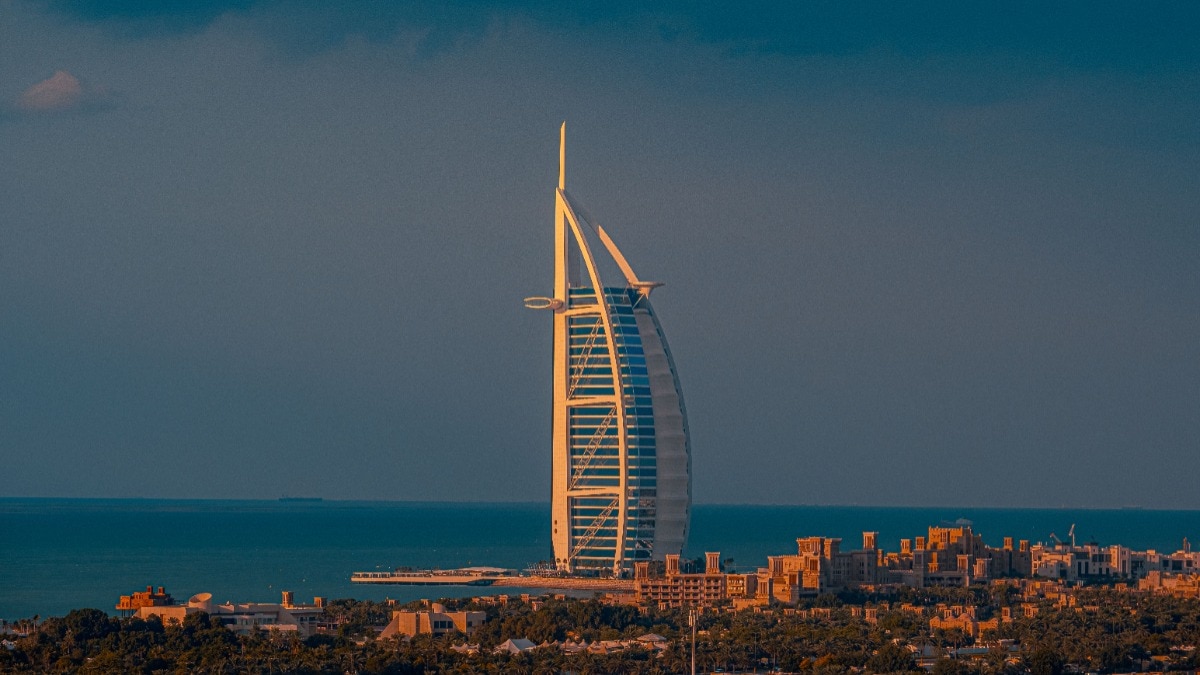
Standing amidst the salty waves of the Arabian Gulf, the Burj Al Arab remains structurally sound. Discover the advanced engineering techniques and specialized materials used to protect steel rebar from relentless corrosion.
- Chloride ions from seawater are the primary cause of steel corrosion.
- A thick concrete cover acts as the first line of defense against salt penetration.
- Low-permeability concrete mixes prevent water and oxygen from reaching the rebar.
- Specialized materials like epoxy-coated rebar and fiberglass reinforcement are critical.
The iconic Burj Al Arab in Dubai is a marvel of modern architecture, perched atop an artificial island in the middle of the sea. For most structures, the combination of salty air, high humidity, and direct contact with seawater would lead to rapid structural failure. Yet, this skyscraper remains a symbol of stability. The secret lies in sophisticated engineering designed to combat the aggressive marine environment.
The Enemy: Salt and Chloride Ions
According to reports from the Federal Highway Administration (FHWA), corrosion in marine environments is driven by the interaction of chloride ions with moisture and oxygen. This chemical process attacks the steel reinforcement inside concrete. In the United States alone, the direct annual loss to bridges due to corrosion is estimated between $6 billion and $10 billion.
Why This Matters
BozokMedia analysis shows that as global sea levels rise and coastal urbanization increases, mastering marine-grade construction is no longer a luxury but a necessity for global infrastructure survival.
Engineering in a marine environment is a battle against microscopic chemical penetration; success is measured by how effectively you can delay the arrival of chloride ions at the steel surface.
Multi-Layered Protection Systems
To prevent structural decay, engineers employ several defensive layers. First is the concrete cover—a thick layer of concrete that acts as a physical barrier. Second is the use of low-permeability concrete, which is engineered to have minimal microscopic pores, preventing water and chlorides from seeping through. Additionally, epoxy-coated rebar is frequently used, providing a protective resin coating over the steel.
The Burj Al Arab Case Study
The construction of the Burj Al Arab presented unique challenges. According to a case study by waterproofing specialist Fosroc, specific admixtures were selected to control both water seepage and permeability. Furthermore, rebar manufacturer Mateenbar revealed that fiberglass reinforcement was utilized in the sea-wall sections to ensure a service life of at least 50 years. National Cement also supplied premium marine-grade cement specifically formulated for this project.
The Danger of 'Spalling'
The integrity of these structures depends on the absence of cracks. If a crack forms, seawater enters easily. As the rebar begins to rust, it expands to a volume greater than the original steel. This internal pressure causes the concrete to crack and flake off, a destructive process known in engineering as 'spalling'.
Frequently Asked Questions
1. What is the main cause of rust in coastal buildings?
The main cause is the penetration of chloride ions from seawater, which react with the steel reinforcement in the presence of moisture.
2. Can any concrete be used near the ocean?
No, standard concrete is too porous. Marine environments require specialized high-density mixes with specific chemical admixtures.