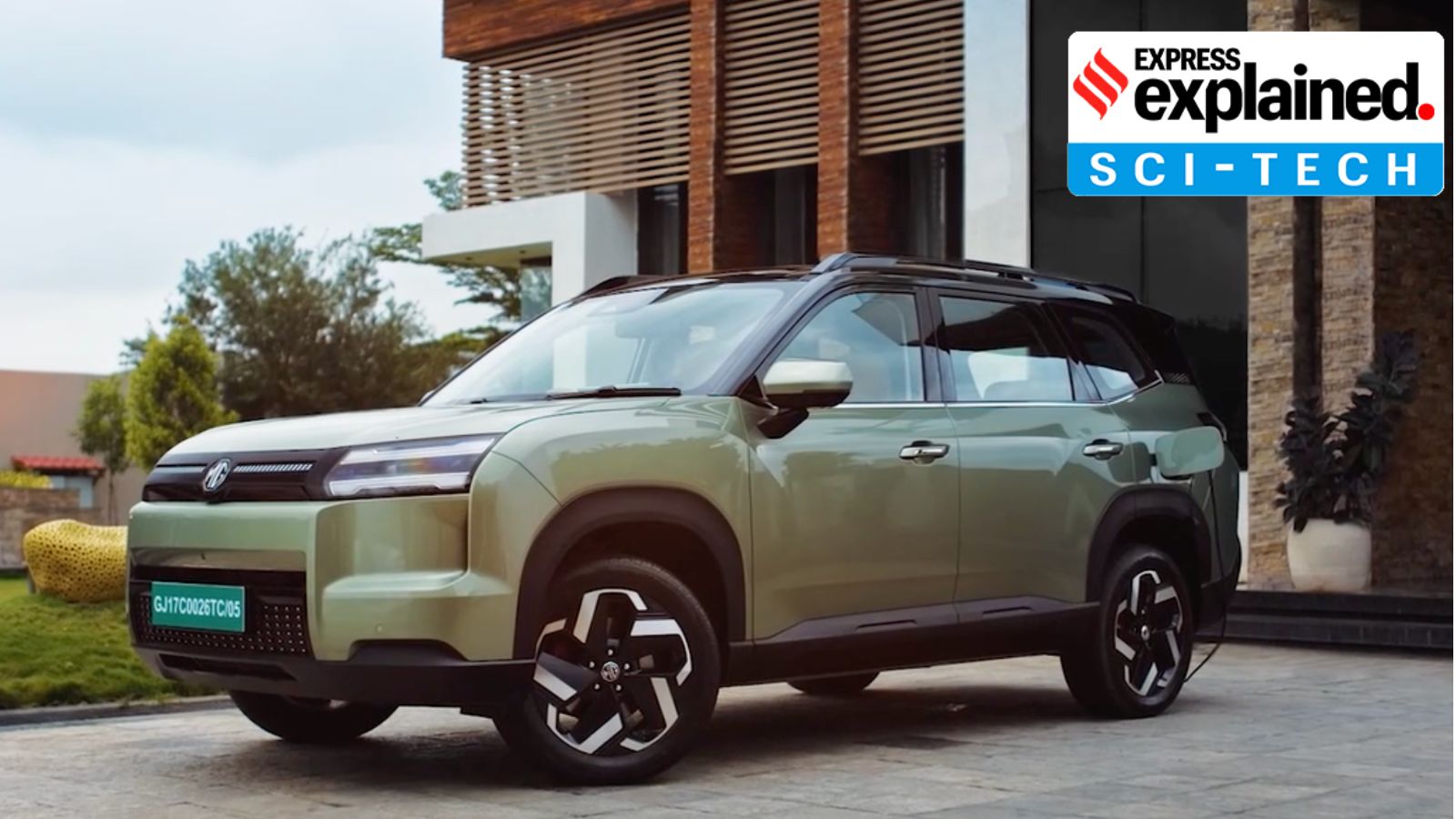
JSW MG Motor India has launched the Hector Tomahawk, the country's first mainstream plug-in hybrid SUV, blending the benefits of external charging with the reliability of a petrol engine.
- The MG Hector Tomahawk is India's first mainstream plug-in hybrid (PHEV) SUV.
- It boasts over 115km of electric-only range and a combined efficiency of 40+ kmpl.
- The vehicle can cover over 1,100km on a single full tank and full charge.
JSW MG Motor India has strategically entered the Indian market with the MG Hector Tomahawk. Named after the iconic American long-range cruise missile, the Tomahawk PHEV is designed to emphasize one critical factor: range efficiency. By introducing a plug-in hybrid, MG is addressing the gap between traditional internal combustion engines and fully electric vehicles.
Understanding the PHEV Technology
A Plug-in Hybrid Electric Vehicle (PHEV) is a sophisticated middle ground in the spectrum of New Energy Vehicles. While a Battery Electric Vehicle (BEV) relies solely on a battery and a Hybrid Electric Vehicle (HEV) uses a small battery charged only through the engine or braking, a PHEV allows for external charging via a power socket.
This means a PHEV possesses a larger battery than a standard hybrid, enabling it to operate in 100% electric mode for significant distances—ideal for daily city commutes. However, for long-distance highway travel, the petrol engine takes over, eliminating the dreaded 'range anxiety' associated with pure EVs.
Why This Matters
BozokMedia analysis shows that MG is pivoting toward a 'multi-powertrain' strategy. In a market where charging infrastructure is still evolving, the PHEV acts as a psychological bridge. It allows consumers to transition to electric driving without the fear of being stranded, making it a pragmatic choice for the Indian landscape.
"PHEVs represent the most realistic transition phase for emerging markets, offering the cost-savings of EVs with the infrastructure-independence of ICE vehicles."
HEV vs. PHEV: The Key Differences
To the untrained eye, all hybrids look the same. However, the technical divergence between a conventional Hybrid (HEV) and a Plug-in Hybrid (PHEV) is substantial.
| Feature | Hybrid (HEV) | Plug-in Hybrid (PHEV) |
|---|---|---|
| Charging Method | Self-charging only | External Plug + Self-charging |
| Battery Size | Small | Large |
| Electric-only Range | Very Limited | Significant (e.g., 115km+) |
| Purchase Price | Lower | Higher |
The ADAPT Platform: A Modular Future
The Tomahawk is built on MG's ADAPT (Advance Drive Architecture) platform. This modular architecture allows the company to produce EVs, HEVs, PHEVs, and Range-Extender Electric Vehicles (REEVs) on the same base. This flexibility ensures that MG can rapidly scale its offerings based on real-time consumer data and government policy shifts.
Frequently Asked Questions
1. Do I need to plug in a PHEV every day?
While not mandatory, plugging it in daily maximizes the electric-only range and lowers running costs. If not charged, it functions as a standard hybrid.
2. Is a PHEV better than a full EV?
It depends on your use case. For those with long-distance travel requirements and limited access to fast-chargers, a PHEV is currently superior to a BEV.