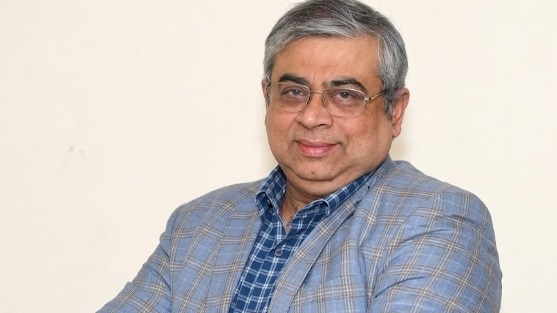
An esteemed professor from IIT Kanpur has been awarded the prestigious NASI Fellowship for his groundbreaking work connecting microchip technology with advanced water purification solutions.
- IIT Kanpur professor awarded the prestigious NASI Fellowship.
- Research bridges the gap between microchip technology and clean water access.
- The innovation promises highly efficient and scalable water purification solutions.
In a significant milestone for Indian academia, a distinguished professor from the Indian Institute of Technology (IIT) Kanpur has been conferred with the National Academy of Sciences, India (NASI) Fellowship. This prestigious recognition celebrates his transformative research that integrates microchip technology with the critical mission of providing clean water.
The professor's work delves into the sophisticated intersection of micro-electronics and environmental engineering. By utilizing advanced microchips, his research enables highly precise monitoring and filtration of water contaminants, offering a technological leap over traditional, bulky purification systems. This approach makes water treatment more portable, intelligent, and cost-effective.
Why This Matters
BozokMedia analysis shows that the convergence of semiconductor technology and environmental science is the next frontier in global sustainability. As water scarcity intensifies due to climate change, the ability to deploy smart, chip-based sensors for real-time water quality assessment becomes indispensable. This research directly addresses the United Nations' Sustainable Development Goals regarding clean water and sanitation.
True scientific excellence is measured by the ability to translate complex micro-scale engineering into macro-scale societal benefits.
Historical Background: Historically, water purification has relied on large-scale chemical or mechanical processes that are often energy-intensive and difficult to manage in rural or remote areas. The advent of microfluidics and nanotechnology has revolutionized this, allowing for 'lab-on-a-chip' technologies that can detect pathogens and toxins at an unprecedented scale.
This fellowship not only validates the professor's individual brilliance but also underscores IIT Kanpur's position as a global leader in multidisciplinary research. The integration of electronic intelligence into environmental hardware is set to redefine how we interact with our most precious resource.
Frequently Asked Questions
1. What is the significance of the NASI Fellowship?
The NASI Fellowship is one of India's highest honors for scientists, recognizing exceptional contributions to the advancement of science and technology.
2. How do microchips help in water purification?
Microchips power smart sensors that can detect impurities and automate the filtration process with extreme precision.